

In industrial sectors with inherent risks, such as petroleum, chemical, pharmaceutical, and energy, every detail of the piping system is integral to overall safety. As precision components safeguarding pipe openings, explosion-proof stopping plugs have become an indispensable element for ensuring safe industrial operations, thanks to their professional design and reliable performance.
- Explosion-Proof Stopping Plugs: Critical Safety Components
- Material Analysis: Matching Diverse Operational Requirements
- 1. Stainless Steel
- 2. Carbon Steel
- 3. Brass
- 4. Aluminum Alloy
- 5. Specialty Alloys
- 6. Engineering Plastics
- Core Advantages: Safe, Reliable, and Durable
- 1. Multi-Layered Safety Assurance
- 2. Exceptional Durability
- 3. Easy Installation and Maintenance
- 4. Certifications and Quality Systems
- Selection Guide: Scientific Decision-Making for Precise Matching
Explosion-Proof Stopping Plugs: Critical Safety Components
An explosion-proof stopping plug is a safety device specifically designed to seal openings in pipes, vessels, or equipment. Its core function extends beyond leak-proof sealing; it effectively contains spark propagation during abnormal internal pressure events, thereby preventing the ignition of surrounding flammable and explosive atmospheres.
Primary Application Areas Include:
- Petrochemical: Refining and chemical piping systems
- Pharmaceutical Industry: Reactors and material transfer lines
- Energy Sector: Natural gas transmission and storage facilities
- Food Processing: Production lines for flammable products like alcohol and edible oils
- Mining Safety: Underground gas drainage and control systems
Material Analysis: Matching Diverse Operational Requirements
1. Stainless Steel
Stainless steel explosion-proof stopping plugs (AGC can offer)are renowned for their excellent corrosion resistance, high strength, and high-temperature performance. Among them, 304 stainless steel offers well-balanced overall properties, while 316 stainless steel performs more prominently in resisting chloride-induced corrosion due to its added molybdenum content.
Applicable Scenarios:
- High-corrosion, high-humidity environments like offshore platforms and chemical processing units
- Process piping handling corrosive media such as acids and alkalis
- High-temperature or high-pressure operating conditions
Key Parameters:
- Operating Temperature Range: -196°C ~ 800°C (depending on grade)
- Pressure Rating: Up to PN100
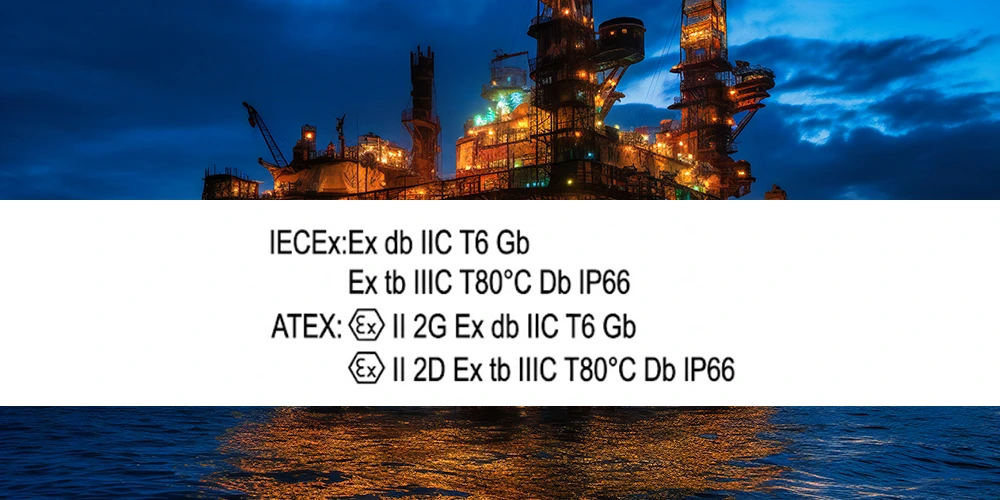
- Explosion-Proof Rating: Ex d IIC T6 (high-level protection)
2. Carbon Steel
Carbon steel explosion-proof stopping plugs achieve an optimal balance between high strength and cost-effectiveness. Heat treatment significantly enhances their mechanical properties. Surfaces are typically treated with galvanizing, nickel plating, or anti-corrosion coatings to extend service life.
Applicable Scenarios:
- General industrial environments
- Dry gases or non-corrosive oil-based media
- Large-scale applications with cost control requirements
Main Advantages:
- High cost-performance ratio, suitable for batch use
- Good machinability, adaptable to complex structural designs
- Mature surface treatment processes with strong environmental adaptability
3. Brass
Brass explosion-proof stopping plugs possess good electrical conductivity, thermal conductivity, and corrosion resistance. Their characteristic of minimizing spark generation upon impact makes them particularly suitable for flammable and explosive locations.
Applicable Scenarios:
- Hazardous areas such as gas stations and paint shops
- Low-pressure systems and environments requiring electrostatic dissipation
- Vicinity of precision instruments (benefiting from its non-magnetic properties)
Salient Features:
- Naturally possesses explosion-proof characteristics
- Good conductivity, facilitating electrostatic discharge
- Easily machined to produce precision threads
4. Aluminum Alloy
Aluminum alloy explosion-proof stopping plugs are lightweight, corrosion-resistant, and offer good thermal conductivity. After anodizing treatment, the surface hardness is significantly enhanced, approaching ceramic levels.
Applicable Scenarios:
- Lightweight application scenarios like mobile equipment and aerospace
- Humid but non-highly corrosive environments
- Systems requiring efficient thermal management
Performance Highlights:
- Weight is only 1/3 that of steel, effectively reducing system load
- Post-treatment surface hardness can reach HV400 or above
- Superior thermal conductivity, aiding in heat management
5. Specialty Alloys
Designed for extreme operating conditions, these exhibit outstanding performance in corrosion resistance, high-temperature tolerance, and high strength, making them suitable for harsh environments where conventional materials fall short.
Common Types and Applications:
- Monel Alloy: Resistant to seawater corrosion, suitable for offshore platforms and marine systems.
- Hastelloy Alloy: Resistant to strong acid corrosion, widely used in chemical reaction and processing equipment.
- Titanium Alloy: High strength-to-weight ratio, corrosion-resistant, suitable for aerospace and high-end medical equipment.
6. Engineering Plastics
Characterized by excellent electrical insulation, extremely light weight, chemical corrosion resistance, and absence of metallic contamination. Suitable for high-cleanliness, high-purity scenarios like electronics, food, and pharmaceuticals.
Typical Materials:
- PTFE (Polytetrafluoroethylene): Resistant to most chemicals, with a wide operating temperature range.
- PEEK (Polyether Ether Ketone): High strength, high-temperature resistant, suitable for demanding conditions.
- Nylon: Cost-effective with good mechanical properties.
Core Advantages: Safe, Reliable, and Durable
1. Multi-Layered Safety Assurance
Complete Range of Explosion-Proof Ratings: Covers various types, including Ex d (Flameproof), Ex e (Increased Safety), and Ex m (Encapsulation).
Reliable Structural Design: Precision threading, multi-seal systems, and tamper-resistant designs ensure long-term tightness and safety.
Wide Pressure Adaptability: Supports requirements from PN10 to PN420.
2. Exceptional Durability
- Corrosion Resistance Verification: e.g., 316 stainless steel withstands salt spray testing for over 1000 hours.
- Broad Temperature Range Applicability: Engineering plastics can adapt from -50°C to 260°C, while specialty alloys can withstand temperatures above 1000°C.
- Mechanical Strength Guarantee: Verified through tests like tensile and compression, ensuring structural integrity.
3. Easy Installation and Maintenance
- Can be installed using standard tools without specialized training.
- Some products feature pre-applied sealant for ready-to-use installation.
- Inspection is recommended every 6-12 months; high-quality products can have a service life exceeding 10 years.
4. Certifications and Quality Systems
Products generally hold international certifications such as ATEX, IECEx, UL, and CSA, and comply with industry standards like ISO 9001, API, and GB 3836. Full-process quality control is implemented from raw materials to finished products.
Selection Guide: Scientific Decision-Making for Precise Matching
Material Properties Quick Reference
|
Property |
Stainless Steel |
Carbon Steel |
Brass |
Aluminum Alloy |
Engineering Plastic |
|
Corrosion Resistance |
⭐⭐⭐⭐⭐ |
⭐⭐ |
⭐⭐⭐⭐ |
⭐⭐⭐ |
⭐⭐⭐⭐⭐ |
|
Mechanical Strength |
⭐⭐⭐⭐⭐ |
⭐⭐⭐⭐⭐ |
⭐⭐⭐ |
⭐⭐⭐ |
⭐⭐ |
|
Explosion-proof Safety |
⭐⭐⭐⭐ |
⭐⭐⭐ |
⭐⭐⭐⭐⭐ |
⭐⭐⭐ |
⭐⭐⭐⭐ |
|
Cost-effectiveness |
⭐⭐⭐ |
⭐⭐⭐⭐⭐ |
⭐⭐⭐⭐ |
⭐⭐⭐⭐ |
⭐⭐⭐⭐ |
|
Temperature Range |
⭐⭐⭐⭐⭐ |
⭐⭐⭐⭐ |
⭐⭐⭐ |
⭐⭐⭐ |
⭐⭐⭐⭐ |
|
Weight Advantage |
⭐⭐ |
⭐⭐ |
⭐⭐⭐ |
⭐⭐⭐⭐⭐ |
⭐⭐⭐⭐⭐ |
|
Electrical Conductivity |
✅ |
✅ |
✅ |
✅ |
❌ |
|
Non-magnetic |
Some Grades |
❌ |
✅ |
✅ |
✅ |
- New Material Applications: Technologies like composite materials, smart sensing materials, and nano-coatings continuously enhance product performance.
- Intelligence Upgrade: Integration of condition monitoring, wireless transmission, and predictive maintenance functions.
- Green Manufacturing: Promotion of recyclable materials, long-life design, and environmentally friendly production processes.
Although a small component, the explosion-proof stopping plug bears significant responsibility for industrial safety. Correct selection requires systematic consideration of material properties, operating conditions, safety standards, and economic benefits. We recommend collaborating with professional teams to conduct detailed risk assessments and product comparisons, selecting explosion-proof stopping plugs that truly fit your system's requirements. This builds a robust safety barrier for personnel and equipment, contributing to sustainable safe production.