
In high-stakes industrial environments, selecting the right electrical equipment is not just a matter of performance—it’s a matter of life and death.
Navigating the maze of IECEx, ATEX, and North American (NEC/CEC) standards can be daunting.
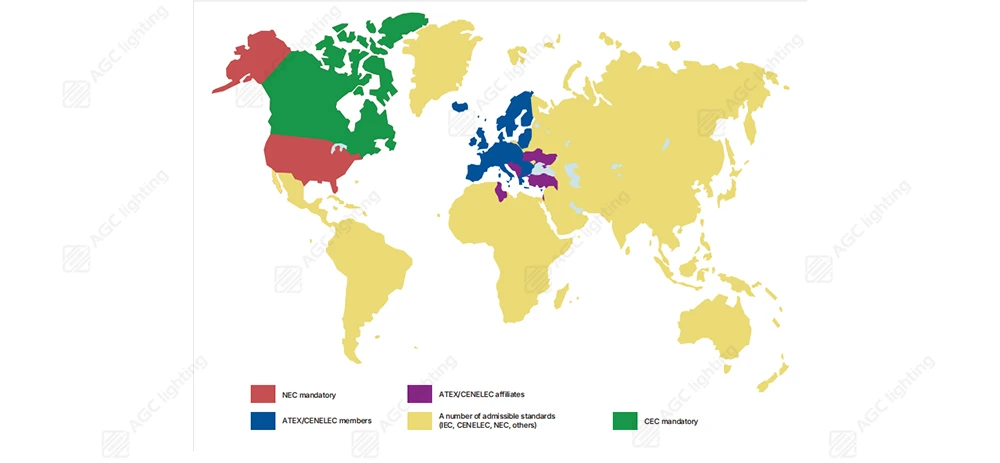
The Global Landscape: Which Standard Rules Your Region?
While safety is universal, the rules governing it are divided into two philosophical camps. Understanding this distinction is the first step toward compliance.
The Zone-Based Philosophy (IECEx & ATEX)
Predominantly used in Europe and most of the world, this system categorizes hazards based on the frequency and duration of the explosive atmosphere.
IECEx: Think of it as the "International Passport" for Ex-equipment. It facilitates global trade by providing a unified standard (IEC 60079).
ATEX: The mandatory legal framework for the European Union. While it aligns with IECEx, it includes specific EU-market requirements.
The Division-Based Philosophy (NEC & CEC)
Traditional in the USA and Canada, this system groups hazardous materials (Class) and their presence (Division).
The Modern Shift: North America now recognizes the Zone system (often marked as AEx in the US), allowing for more granular safety assessments in modern facilities.

Understanding the Risk Levels
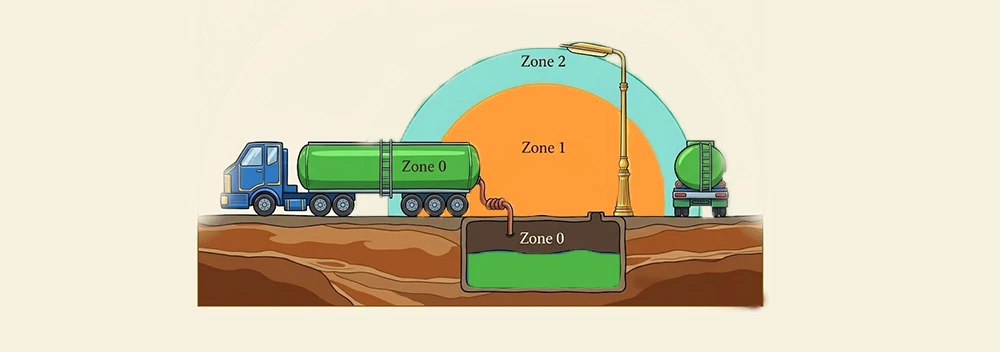
Before reading a label, you must know your environment. Hazardous areas are defined by how long a flammable substance is present:
| Zones | Description | Duration of hazardous atmosphere |
| 0 (gas/vapor) / 20 (dust) | Area in which an explosive gas/dust mixture is continuously present or present for long periods |
Constant (Continuous Danger) |
| 1 (gas/vapor) / 21 (dust) | Area in which an explosive gas/dust mixture is likely to occur for short periods in normal operation |
Likely (Potential Danger) |
| 2 (gas/vapor) / 22 (dust) | An area in which an explosive gas/dust mixture is present for a very short time due to an abnormal condition |
Seldom (Accidental Danger) |
Anatomy of a Marking: Decoding Ex db IIC T6 Gb
When you look at an Ex-label, you are reading a summary of the device's engineering. Let’s break down a typical IECEx/ATEX string:

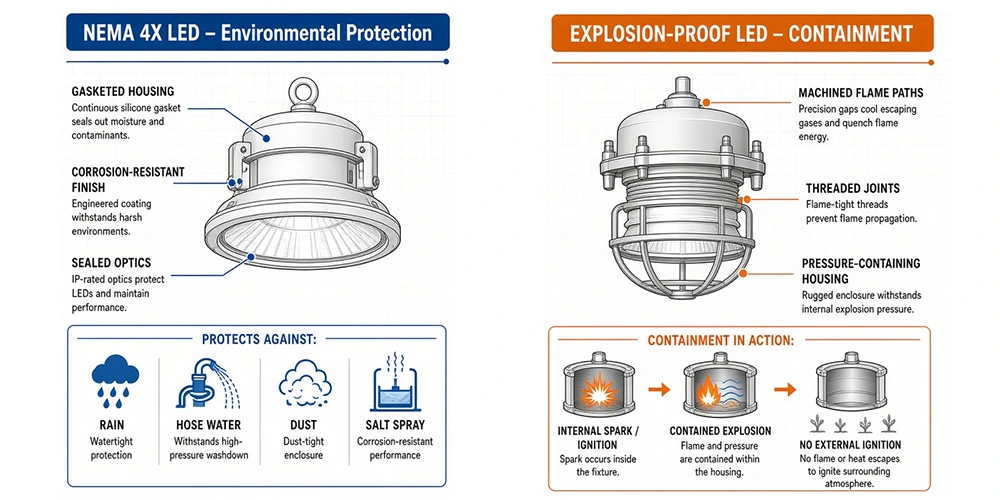
- Ex db (Protection Concept): This identifies the "Flameproof" method. It means the enclosure is designed to contain an internal explosion without letting it ignite the outside air.
- IIC (Gas Group): This is the most stringent group, covering highly volatile gases like Hydrogen and Acetylene. A device rated IIC is also safe for IIB (Ethylene) and IIA (Propane) environments
- T6 (Temperature Class): The "Gold Standard" of thermal safety. It guarantees the device's surface will never exceed 85°C, preventing auto-ignition of even the most sensitive gases.
- Gb (EPL): High protection level for explosive gas atmospheres (typically for Zone 1).
The Digital Audit: How to Spot a Fake Certificate
A physical label is only as good as the paperwork behind it. In a globalized market, "self-declared" compliance is a major risk. Use these professional verification steps:
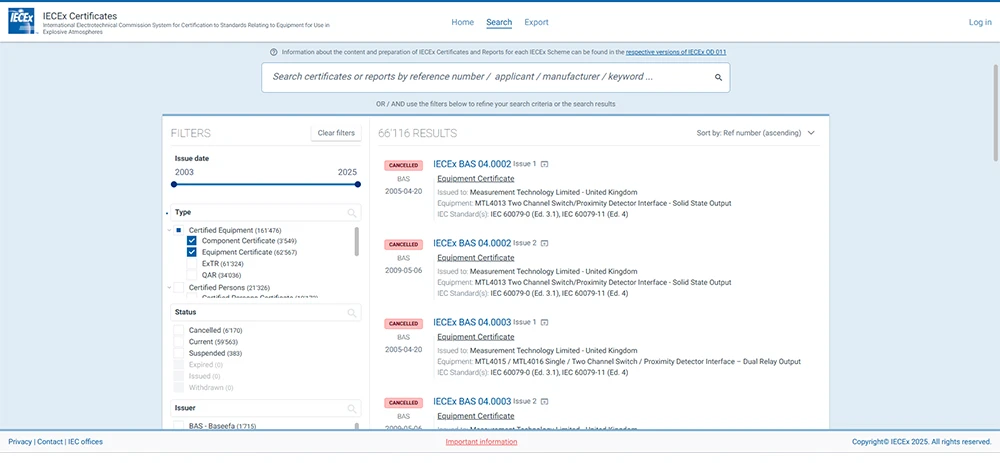
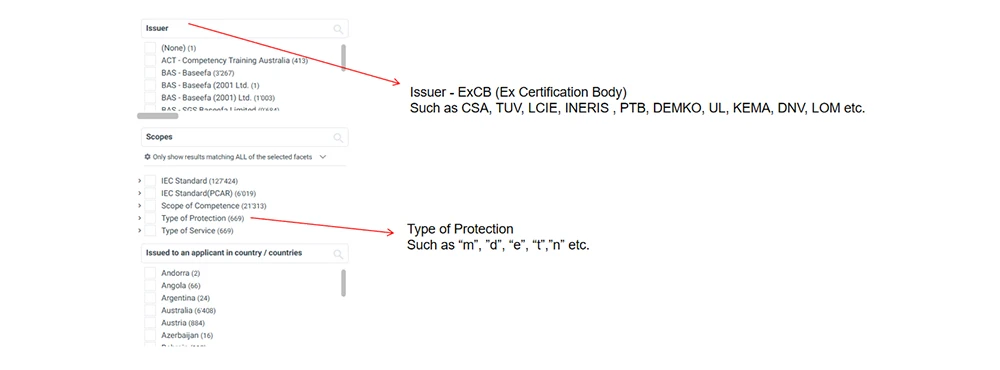
The IECEx Online Certificate System
Visit the IECEx website:https://www.iecex-certs.com/ to check the Equipment Certificate.
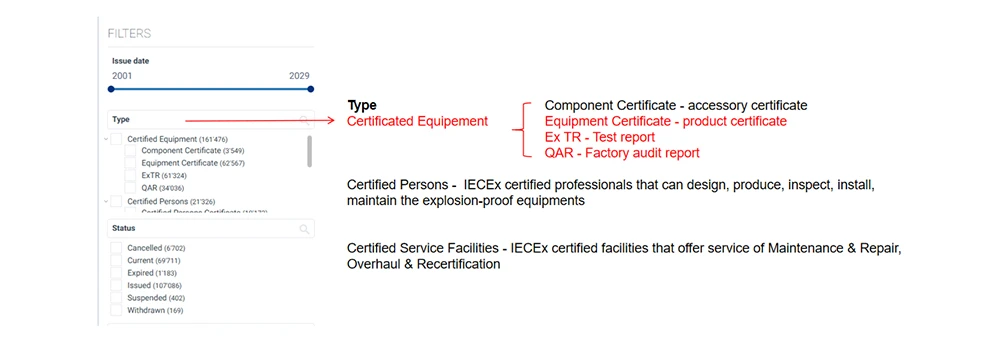
What to look for: Ensure the ExTR (Test Report) and QAR (Quality Assessment Report) are listed as "Linkable" and "Current." A certificate without a valid QAR means the factory is no longer being audited.
North American Verification (UL, CSA, ETL)
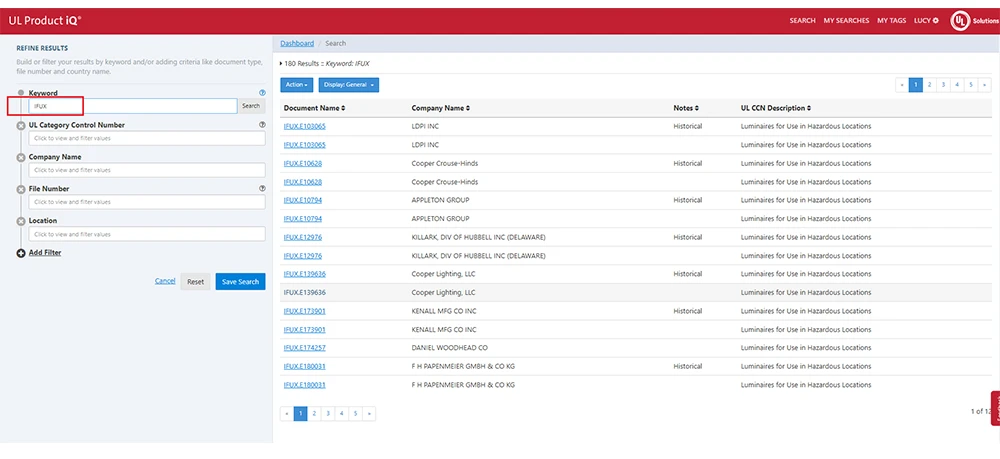
In the US and Canada, look for the CCN (Category Control Number).
For example, CCN: IFUX identifies luminaires for use in hazardous locations.
Verify the file number directly on the UL Product iQ or CSA Group databases.
The ATEX Catch
Unlike IECEx, there is no single central database for all ATEX certificates. You must verify the certificate directly with the Notified Body (e.g., TUV, DNV, UL, or Intertek) that issued it.
Verifying certificates is critical for safety compliance. Here are the official verification platforms:
| Ex Standards | Official Website for Verification | |
| NEC & CEC Standards | UL | https://iq.ulprospector.com/en |
| ETL | https://ramuk.intertekconnect.com/webclients/its/dlp/products.nsf/$$search?openform | |
| CSA | https://www.csagroup.org/testing-certification/product-listing/ | |
| IECEx | https://www.iecex-certs.com/#/home | |
| ATEX | not available online, contact the Ex CB for verification | |
Safety in hazardous locations isn't just about choosing a "tough" product; it's about matching the equipment's certification to the specific risks of your site. Always cross-reference the Gas Group, Temperature Class, and Zone suitability before installation.