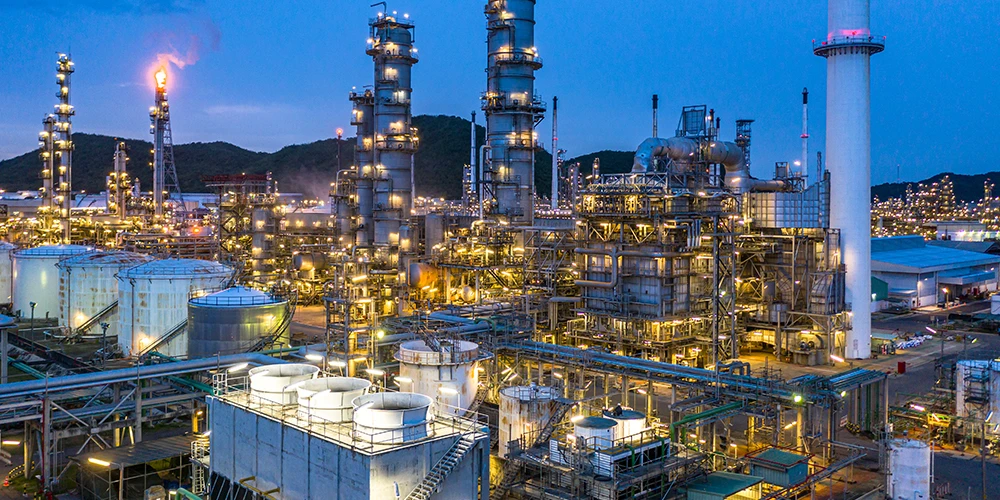

In environments where flammable gases, vapors, or combustible dusts are present, general-purpose lighting fixtures are not only inefficient but also unsafe. Standard luminaires can generate sparks or arcs, creating a serious risk of ignition. This is why explosion-proof lighting is essential in hazardous areas.
Choosing the right lighting solution, however, is not always simple. Overlapping classification systems, evolving international standards, and different certification requirements often make it difficult to make confident decisions.
At AGC Lighting, we specialize in hazardous area lighting solutions. With extensive experience serving oil and gas, chemical processing, mining facilities, and other hazardous locations, we understand both the technical and regulatory challenges these environments present.
In this post, we will explore what makes an area hazardous, what explosion-proof lights are, and the relevant requirements, standards, and certifications to help you select safe, reliable, and compliant lighting for hazardous areas.
What Makes an Area "Hazardous"?
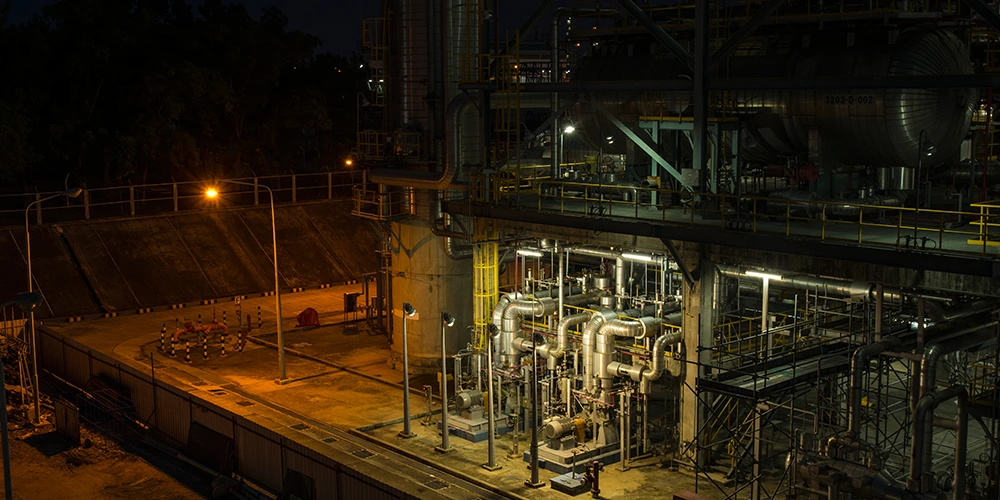
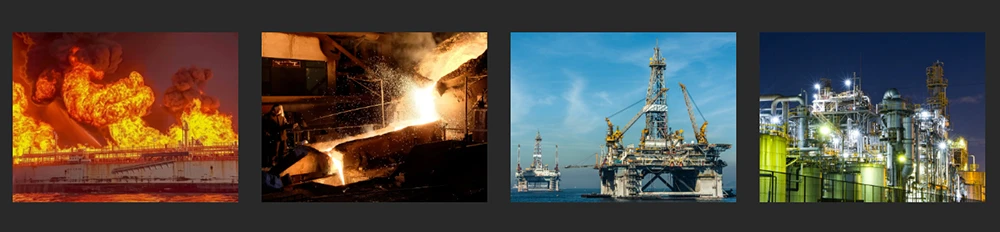
A hazardous area is any location where flammable or combustible materials exist in sufficient concentrations to create an explosion risk. These materials can be:
- Gases and vapors: methane, propane, hydrogen, gasoline vapors, chemical solvents, paint fumes.
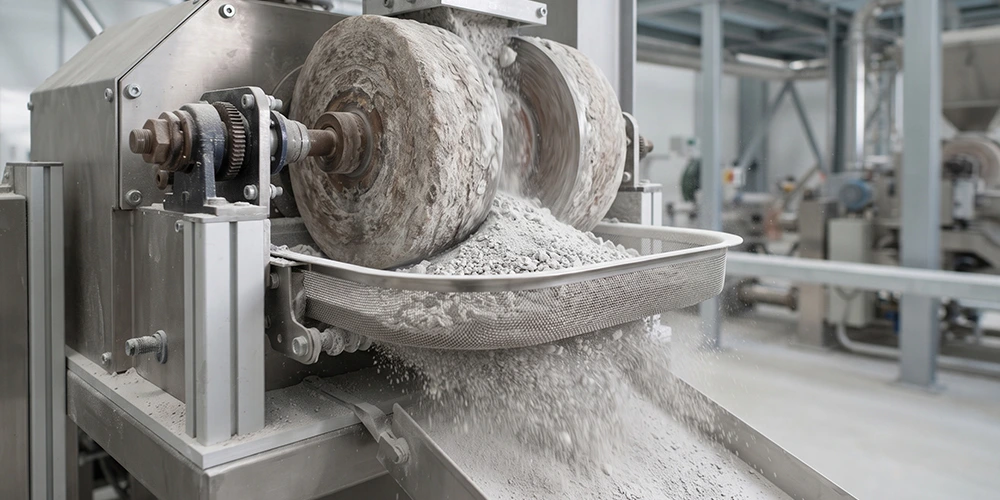
- Combustible dusts: coal dust, grain dust, metal powders, pharmaceutical powders, sugar, flour, wood dust, plastics.
- Fibers and flyings: textile fibers, paper particles (less commonly the primary concern for lighting applications)
But the critical factor isn’t just the presence of these materials, it’s their concentration in the air and the likelihood of that concentration reaching explosion levels during normal operations or under foreseeable failure conditions.
So what causes an explosion?
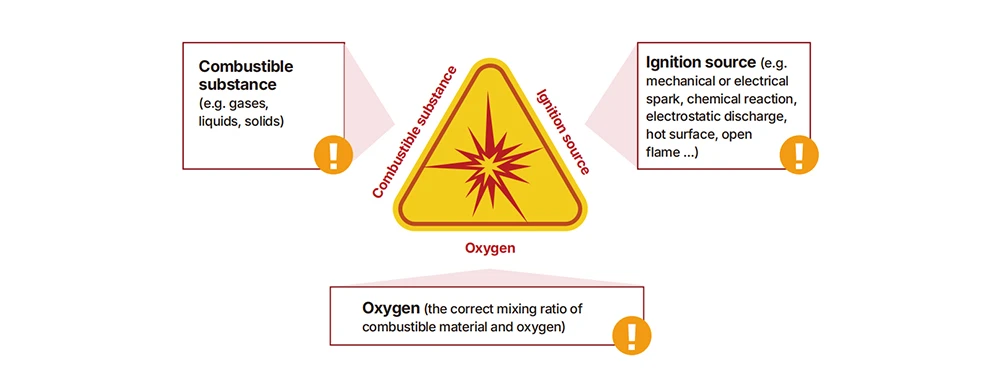
An explosion is a sudden release of energy due to a chemical reaction between a combustible substance and oxygen. For an explosion to occur, three elements must be present simultaneously:
- Combustible substance: e.g. gases, liquids, solids.
- Ignition source: e.g. mechanical or electrical spark, chemical reaction, electrostatic discharge, hot surface, open flame...
- Oxygen: the correct mixing ratio of combustible material and oxygen.
What Are Explosion-proof Lights?
Explosion-proof lights are specialized lighting fixtures designed to operate safely in hazardous environments where flammable gases, vapours, liquids, or combustible dust may be present. Their purpose is to prevent the light fixture from igniting an explosive atmosphere.
How Lighting Fixtures Can Become Ignition Sources?
When the combustible substance, ignition source, and oxygen are present in the right mixture and are exposed to sufficient heat, it can result in an explosion.
For lighting fixtures in hazardous locations, the danger lies in the fixture itself becoming the second element: the ignition source.
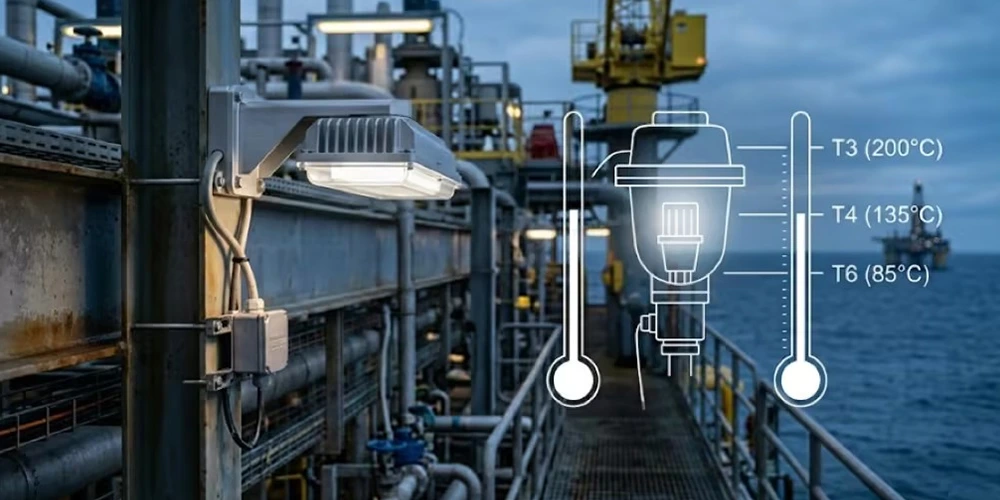
High surface temperature
Every lighting fixture generates heat. The heat of LED fixtures is concentrated in driver components rather than the light-emitting surface. Every hazardous gas, vapor, or dust has an auto-ignition temperature (AIT), the lowest temperature at which it will spontaneously ignite without an external spark or flame. Therefore, if the heat raises the exterior surface temperature of the fixture too high, it can ignite the surrounding atmosphere even without a visible spark or flame.
Sparking or arcing
The lighting system contains connections, switches, and components that can produce sparks or arcs during normal operation, component failure, or maintenance.
An electrical fault, such as a loose terminal connection, a short circuit, or the arching that occurs when changing a lighting fixture, can generate a high-energy spark. This spark provides the necessary activation energy to initiate combustion in a flammable mixture, resulting in an immediate explosion.
Now, you have a better understanding of what explosion-proof lights are. Explosion-proof lights don’t prevent explosions in the room. Instead, they are built so that if an internal spark or ignition occurs inside the light, it cannot escape and ignite the surrounding environment.
Main Standards for Lighting Used in Hazardous Areas
To ensure consistent safety practices across industries and regions, lighting used in hazardous areas is regulated by established standards. Selecting the right lighting solution starts with understanding the regulatory framework that applies to the location.
Globally, two systems are most widely used: the North American Class and Division system defined by NEC and CEC, and the European and international Zone system governed by ATEX and IECEx.
NEC/CEC Standards
In the United States and Canada, electrical installations, including lighting, are governed by the National Electrical Code (NEC, or NFPA 70) and the Canadian Electrical Code (CEC). Both utilize the Class and Division system to categorize hazardous locations.
The Class/Division system categorizes hazardous areas based on the type of hazardous material (Class), the likelihood of hazardous concentrations being present (Division), and the specific material properties (Group).
Classes:
- Class I: Flammable gases or vapors
- Class II: Combustible dusts
- Class III: Ignitable fibers or flyings
Divisions:
- Division 1: Hazardous concentrations exist under normal operating conditions or frequently during maintenance
- Division 2: Hazardous concentrations exist only under abnormal conditions or are prevented by positive mechanical ventilation
Groups (Class I):
- Group A: Acetylene
- Group B: Hydrogen, manufactured gases containing hydrogen
- Group C: Ethylene, cyclopropane
- Group D: Gasoline, hexane, propane, natural gas, alcohols (most common)
Groups (Class II):
- Group E: Metal dusts (aluminum, magnesium)
- Group F: Carbonaceous dusts (coal, carbon black, charcoal)
- Group G: Agricultural dusts (grain, flour, starch), chemical dusts, plastic dusts
|
Classes |
Divisions |
Group |
|
Class I (flammable gases and vapors may be present) |
Division 1 (present during normal conditions) Division 2 (present only in abnormal conditions) |
Group A - acetylene Group B - hydrogen Group C - ethylene Group D - propane * Group A is the most dangerous in its ranking |
|
Class II (Combustible dusts may be present) |
Division 1 present during normal conditions) Division 2 (present only in abnormal conditions) |
Group E - combustible metal dust (Division 1 only) Group F - combustible carbonaceous dust Group G - Other Combustible Dusts (flour, grain, wood, plastic, etc.) * Group E is the most dangerous in its ranking |
|
Class III (Easily ignitable fibers or flyings) |
not applied |
not applied |
If a fixture is marked “Class I, Division 1, Groups C and D”, it means it is suitable for Division 1 areas with ethylene or common flammable liquids.
IEC/ATEX/IECEx Standards
IEC (International Electrotechnical Commission) is the global organization that creates the technical standards for electrical equipment, including explosion-protection standards. Both ATEX (ATmosphères EXplosibles) and IECEx (IEC System for Certification to Standards Relating to Equipment for Use in Explosive Atmospheres) are based on these IEC standards.
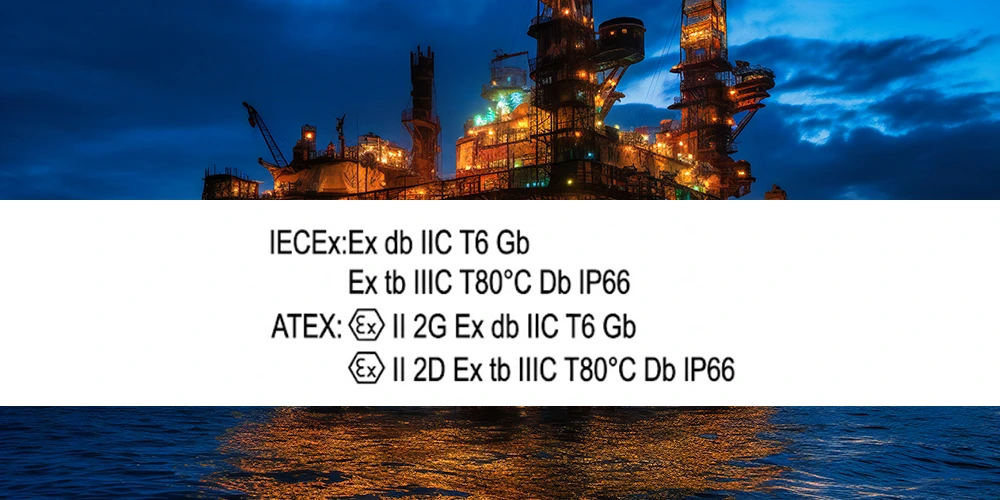
ATEX is a European Union directive that legally regulates equipment used in explosive atmospheres. The explosion-proof lights must carry the distinct "Ex" mark. IECEx is an international certification scheme that verifies equipment complies with IEC standards.
The IEC/Zone system categorizes areas based on the frequency and duration of explosive atmosphere presence, using different zone numbers for gases/vapors versus dusts.
For Gases and Vapors:
- Zone 0: Explosive atmosphere present continuously or for long periods (>1000 hours/year)
- Zone 1: Explosive atmosphere likely to occur during normal operations occasionally
- Zone 2: Explosive atmosphere not likely during normal operations, or if it occurs, only briefly
For Combustible Dusts:
- Zone 20: Combustible dust cloud present continuously or frequently
- Zone 21: Combustible dust cloud likely to occur occasionally during normal operations
- Zone 22: Combustible dust cloud unlikely during normal operations, or if present, only briefly
|
Flammable materials |
Zone |
Frequency of Explosive Atmosphere |
|
Gases and Vapors |
Zone 0 |
Explosive atmosphere present continuously or for long periods (>1000 hours/year) |
|
Zone 1 |
Explosive atmosphere likely to occur during normal operations occasionally |
|
|
Zone 2 |
Explosive atmosphere not likely during normal operations, or if it occurs, only briefly |
|
|
Combustible Dusts |
Zone 20 |
Combustible dust cloud present continuously or frequently |
|
Zone 21 |
Combustible dust cloud likely to occur occasionally during normal operations |
|
|
Zone 22 |
Combustible dust cloud unlikely during normal operations, or if present, only briefly |