
Safety is the unshakable cornerstone of steady operations in plastic recycling plants, a sector defined by continuous material processing, grinding, and melting. These facilities harbor a silent yet deadly hazard: fine plastic dust and volatile organic compound (VOC) fumes released during shredding, granulating, and sorting processes. When suspended in the air, these combustible substances form explosive mixtures that can be ignited by even the smallest electrical spark or high-temperature surface from non-compliant lighting.
In plastic recycling plants, explosion-proof lights are far more than a lighting solution—they are the critical last line of defense against catastrophic explosions and fires.
For plant managers, industrial engineers, and equipment procurement professionals seeking to mitigate these risks, key questions emerge: What specific explosion hazards do ordinary lights pose in plastic recycling plants? What core standards must explosion-proof lights meet for this unique environment? And how to select and deploy these lights correctly?
This blog breaks down the essential knowledge of explosion-proof lighting for plastic recycling facilities in professional, accessible language, helping you build a comprehensive, reliable safety lighting system that aligns with global regulations and on-site operational needs.
- Why Plastic Recycling Plants Demand Explosion-Proof Lighting
- Core Requirements for Explosion-Proof Lights in Plastic Recycling Plants
- Dual Explosion-Proof Performance for Dust and Gas Hazards
- Optimal Lighting Performance for Safety and Operational Efficiency
- Practical Installation and Low-Maintenance Design
- The Value of Compliant Explosion-Proof Lights: Beyond Just Safety
- 1. Eliminate catastrophic explosion and fire risks
- 2. Ensure regulatory compliance and avoid severe penalties
- 3. Reduce operational and maintenance costs
- 4. Protect brand reputation and stakeholder trust
- Safety Lighting as the Cornerstone of Plastic Recycling Plant Operations
Why Plastic Recycling Plants Demand Explosion-Proof Lighting
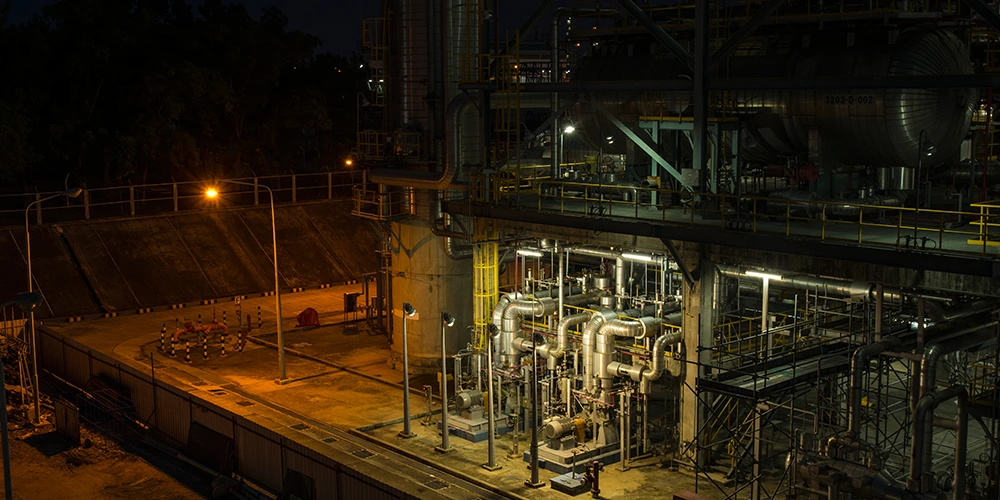
Plastic recycling plants are classified as dual hazard zones—where both combustible dust clouds and flammable gas/vapor mixtures are present—making electrical lighting a high-risk operational link. Understanding these layered risks is the first step to achieving regulatory compliance and on-site safety.
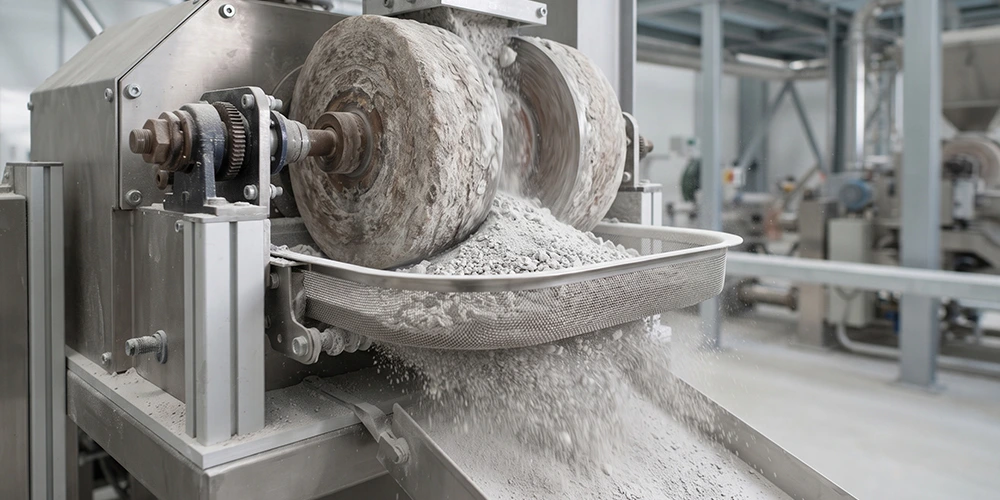
Plastic dust, including particles from PET, HDPE, PP, and PVC shredding, is a highly combustible solid dust with a low minimum ignition energy (MIE), often as low as 1-10 mJ (compared to 30-40 mJ for grain dust). When its airborne concentration reaches the explosion limit (typically 20-600 g/m³, varying by plastic type) and encounters an ignition source, a violent dust explosion occurs—often followed by secondary blasts as dispersed dust is disturbed by the initial detonation.
Additionally, heating and melting processes release flammable VOC fumes (e.g., styrene from polystyrene, vinyl chloride from PVC) that form explosive gas mixtures with air, compounding the risk. Data from the International Electrotechnical Commission (IEC) shows that over 60% of plastic processing accidents are linked to non-compliant electrical equipment igniting dust or gas mixtures.
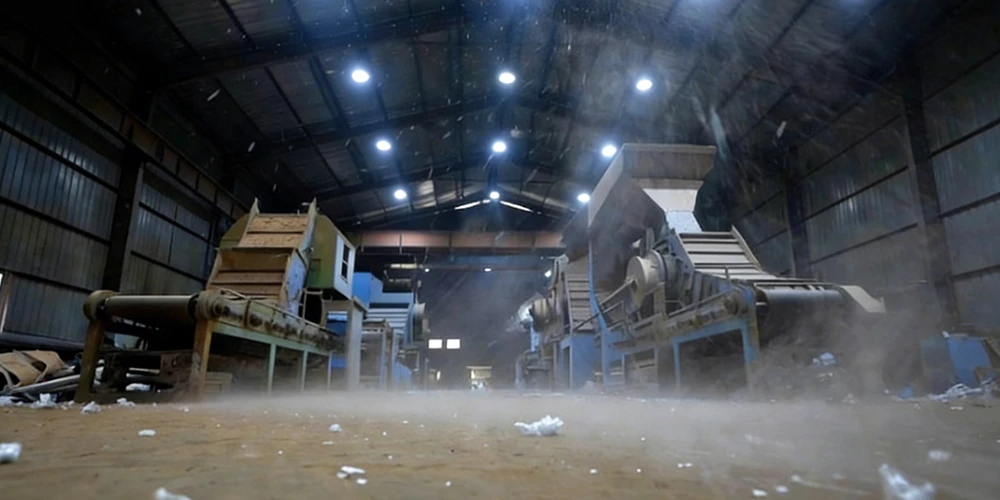
Plastic recycling beyond the primary explosion risk, plastic recycling plants present a host of environmental challenges that amplify lighting-related hazards:
- Extreme dust accumulation: Grinding and sorting generate massive amounts of fine plastic dust that settles on all surfaces, including light fixtures. Ordinary lights trap dust in heat dissipation ports and gaps, leading to overheating, short circuits, and ignition.
- Corrosive and abrasive conditions: Cleaning agents, plastic degradation byproducts, and abrasive dust corrode ordinary electrical components, compromising their insulation and safety.
- Continuous operation: Most plants run 24/7 to meet production demands, placing extreme stress on lighting equipment—ordinary lights are prone to burnout and failure, which can create ignition sources mid-operation.
- Fluctuating temperatures and humidity: Melting processes generate high heat, while outdoor storage and cleaning create moisture buildup, leading to condensation and electrical malfunctions in non-sealed lighting.
Globally, plastic recycling plants are strictly classified by hazardous zone standards:
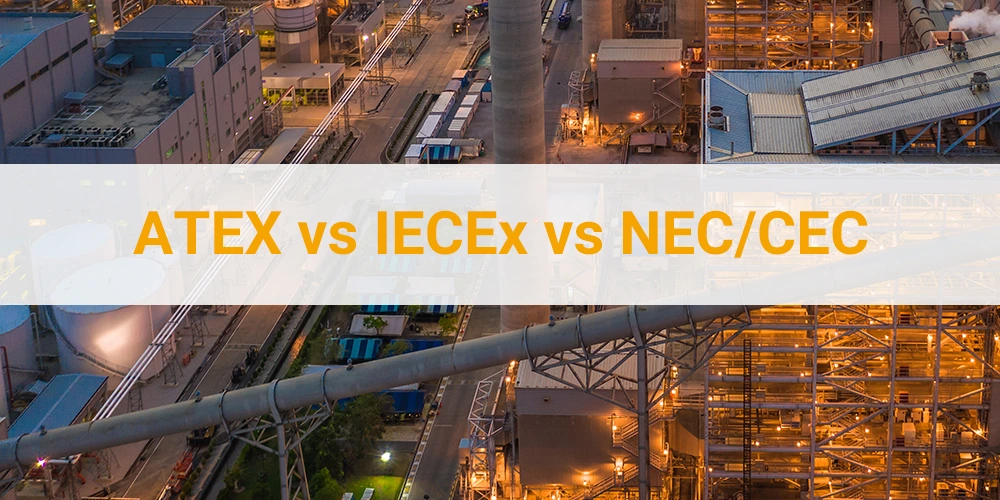
- The EU’s ATEX Directive categorizes dust-prone areas (shredding/granulating) as Zone 21 (frequent combustible dust clouds) or Zone 22 (occasional dust clouds), and gas/vapor-prone areas (melting/extrusion) as Zone 1 (frequent flammable gas) or Zone 2 (occasional flammable gas).
- The IECEx Standard aligns with ATEX zone classifications, mandating dual protection for equipment in mixed dust-gas hazard zones.
- North America’s NEC/NFPA 654 (dust) and NFPA 497 (gas) require certified explosion-proof electrical equipment, with Canada’s CEC including matching clauses.
- Non-compliant lighting in these zones can result in hefty fines, indefinite facility shutdowns, and even legal liability in the event of an accident—costs that far outweigh the investment in proper explosion-proof lighting.
Core Requirements for Explosion-Proof Lights in Plastic Recycling Plants
To withstand the harsh, multi-hazard environment of plastic recycling plants, explosion-proof lights must meet rigorous, multi-dimensional standards. Compliance with global explosion-proof certifications is the foundation, while adaptability to on-site operational scenarios is the key to long-term safety and efficiency.
Dual Explosion-Proof Performance for Dust and Gas Hazards
The most critical requirement is certification for both combustible dust and flammable gas protection—a non-negotiable standard for plastic recycling’s mixed hazard zones. Prioritize lights with combined ratings such as:
- Combines dust ignition-proof protection (Ex tb) for Zones 21/22 with gas flameproof protection (Ex d IIC) for Zones 1/2, the highest gas protection class for industrial use.
- Intrinsically safe protection for both dust and gas, ideal for high-risk areas like melting stations where ignition sources must be eliminated entirely.
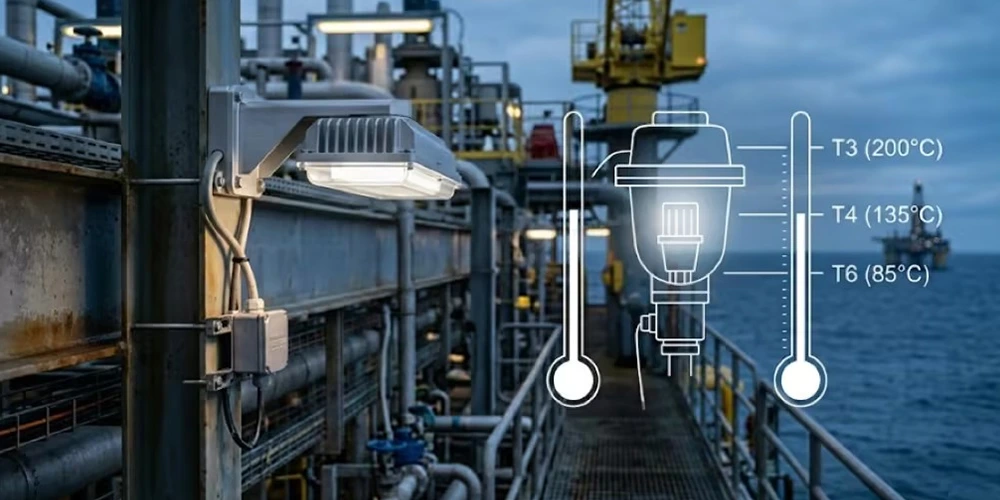
The temperature class is equally critical: plastic dust and VOCs have low minimum ignition temperatures (200-350°C for most plastics), so lamps must have a surface temperature rating of T3 (≤200°C) or lower (T4 ≤135°C for high-risk PVC/PP processing). All lights must hold internationally recognized certifications (ATEX, IECEx) and local approvals (UL/CSA for North America, CE for the EU) to ensure regulatory compliance.
Optimal Lighting Performance for Safety and Operational Efficiency
Plastic recycling plants feature large, high-ceilinged spaces (10-20 meters) with complex work zones (shredding, sorting, melting, packaging), so lighting performance must balance safety, visibility, and energy efficiency:
Wide-beam optical design: A beam angle of 120°+ ensures uniform illumination across grain piles, walkways, and operating platforms, eliminating dark areas that increase the risk of accidents (e.g., equipment malfunctions, slips).
Glare control: Lamps must be equipped with anti-glare diffusers or honeycomb covers—strong glare causes eye fatigue for operators sorting plastic materials or operating heavy machinery, leading to human error and safety incidents.
LED technology: LED explosion-proof lights are the gold standard for plastic recycling plants. They consume 50-70% less energy than traditional metal halide or high-pressure sodium lamps, have a service life of ≥50,000 hours (5+ years of 24/7 operation), and produce minimal heat—reducing both ignition risk and energy costs. Unlike traditional lamps, LEDs have no fragile filaments or glass, making them resistant to vibration from shredding equipment.
Practical Installation and Low-Maintenance Design
On-site usability is a key consideration for plastic recycling plants, where high-altitude maintenance and equipment vibration pose additional risks:
Versatile mounting options: Support ceiling, bracket, pendant, and pole mounting to adapt to different plant structures (e.g., pendant mounting for tall melting halls, bracket mounting for shredding stations). Mounting brackets must be anti-vibration and shock-resistant to withstand the constant vibration from grinding and processing equipment.
Explosion-proof cable management: Cable entries must use flame-retardant explosion-proof cable glands to prevent dust, moisture, or gas from entering through cable gaps. The cable itself should be rated for flame resistance and dust tightness (e.g., H07RN-F).
Tool-free maintenance: A detachable lamp cover design (no tools required) simplifies bulb replacement and dust cleaning—critical for reducing high-altitude maintenance time and risks. For large facilities, remote monitoring and fault alert functions are highly recommended to detect lamp malfunctions (e.g., overheating, burnout) in advance and avoid unplanned downtime.
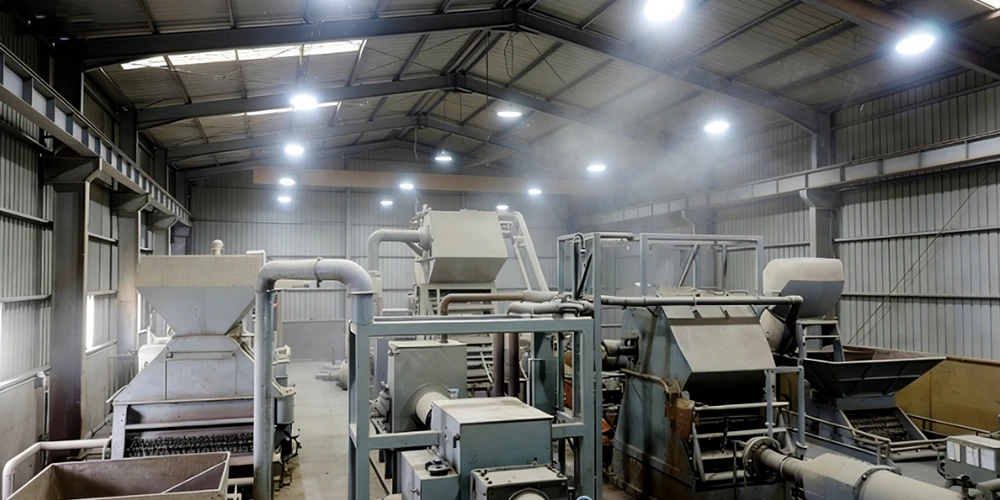
The Value of Compliant Explosion-Proof Lights: Beyond Just Safety
Investing in qualified, scenario-adapted explosion-proof lights is not an "additional cost" for plastic recycling plants—it is a long-term strategic investment that delivers tangible benefits across safety, compliance, operational efficiency, and brand reputation.
1. Eliminate catastrophic explosion and fire risks
The most critical benefit is fundamentally reducing ignition sources, the leading cause of accidents in plastic recycling plants. According to the U.S. Occupational Safety and Health Administration (OSHA), compliant explosion-proof electrical equipment lowers the risk of dust and gas explosions by over 90%.
A single plastic dust explosion can result in millions of dollars in direct losses (facility damage, material loss, production downtime), not to mention potential casualties and long-term business disruption—costs that far exceed the investment in proper lighting.
2. Ensure regulatory compliance and avoid severe penalties
Global regulations for plastic recycling plants are strict and enforceable:
- The EU’s ATEX Directive imposes fines of up to 10% of annual turnover on non-compliant facilities, with criminal liability for managers in the event of fatal accidents.
- U.S. OSHA can issue fines of up to $156,259 per serious violation and order indefinite facility shutdowns until hazards are corrected.
- Canadian regulators (CSA) and Asian standards (GB 3836 in China) enforce similar penalties for non-compliant electrical equipment.
Genuinely certified explosion-proof lights serve as your legal operation pass, ensuring your plant passes regulatory inspections without disruption or fines.
3. Reduce operational and maintenance costs
LED explosion-proof lights deliver significant long-term cost savings:
- Energy efficiency: 50-70% lower electricity bills than traditional metal halide lamps, a massive saving for 24/7 operating plants.
- Long service life: which means fewer lamp replacements—eliminating the risks and costs of high-altitude maintenance (e.g., cherry picker rentals, labor).
- Low maintenance: Dust-tight, corrosion-resistant designs and self-cleaning coatings reduce cleaning and repair time, allowing your staff to focus on core production operations.
4. Protect brand reputation and stakeholder trust
Plastic recycling is a sustainability-focused industry, and safety accidents directly damage brand reputation and erode trust with customers, investors, and regulatory bodies. A single explosion or fire can label your plant as "unsafe"—a stigma that is difficult to overcome in a sector built on environmental responsibility. Investing in compliant safety lighting demonstrates your commitment to workplace safety, environmental protection, and responsible operations, building a reliable brand image that attracts partners and customers.
Safety Lighting as the Cornerstone of Plastic Recycling Plant Operations
Plastic recycling plants are among the most high-risk industrial environments, where the combination of combustible plastic dust, flammable VOC fumes, and constant electrical operation creates a fatal hazard if unmitigated. Explosion-proof lights are not just a tool to "light up the space"—they are a core safety system that safeguards human lives, valuable assets, and continuous production.
When selecting explosion-proof lights for your plastic recycling plant, remember this golden rule: certification is the foundation, dual hazard protection is the key, and scenario adaptability is the bottom line. Prioritize dual-certified (dust + gas) LED lights with a minimum IP66 protection rating, T3/T4 temperature class, and durable, corrosion-resistant construction. These products will not only help you meet global regulatory requirements but also create a safe, efficient, and cost-effective operating environment that drives long-term business success.
If you need customized explosion-proof lighting solutions for specific plastic recycling scenarios—such as shredding halls, melting stations, outdoor storage yards, or sorting lines—our technical team of industrial hazard protection experts is ready to provide professional, tailored advice. We are committed to delivering compliant, reliable, and energy-efficient explosion-proof lighting products that meet the unique needs of plastic recycling facilities worldwide, helping you turn safety into a competitive advantage.