
In the field of explosion-proof lighting, emergency power supply is a critical lifeline—especially in high-risk environments like chemical plants, mines, oil refineries, and gas stations. When sudden power outages occur, reliable emergency lighting directly determines personnel evacuation safety, equipment protection, and compliance with explosion-proof (Ex) standards. Among rechargeable batteries for explosion-proof emergency lamps, two technologies stand out: Nickel-Cadmium (Ni-Cd) batteries, a veteran trusted in extreme industrial scenarios for decades, and Lithium Iron Phosphate (LiFePO₄ or LFP) batteries, a modern innovator reshaping the safety and efficiency of explosion-proof emergency power. Understanding their characteristics, strengths, and suitability for explosion-proof lighting is key to choosing a power solution that balances safety, durability, and compliance. Let’s dive into their unique value in explosion-proof emergency lighting.
- A Brief History: From Industrial Reliability to Explosion-Proof Innovation
- Nickel-Cadmium (Ni-Cd) Batteries: The Pioneer of Explosion-Proof Emergency Power
- Lithium Iron Phosphate (LiFePO₄) Batteries: The Modern Game-Changer for Explosion-Proof Lighting
- Core Characteristics: Why They Matter for Explosion-Proof Emergency Lighting
- Nickel-Cadmium (Ni-Cd) Batteries: Reliability in Extreme Explosion-Proof Environments
- Key Limitations for Explosion-Proof Lighting
- Lithium Iron Phosphate (LiFePO₄) Batteries: Safety and Efficiency for Modern Explosion-Proof Lighting
- Ni-Cd vs. LiFePO₄: Head-to-Head for Explosion-Proof Emergency Lighting
- Which Battery Is Right for Your Explosion-Proof Emergency Lighting?
- Final Thoughts: The Future of Explosion-Proof Emergency Lighting Power
A Brief History: From Industrial Reliability to Explosion-Proof Innovation
Battery technology has evolved hand-in-hand with industrial safety, and both Ni-Cd and LiFePO₄ batteries have left pivotal marks in the development of explosion-proof emergency lighting.
Nickel-Cadmium (Ni-Cd) Batteries: The Pioneer of Explosion-Proof Emergency Power
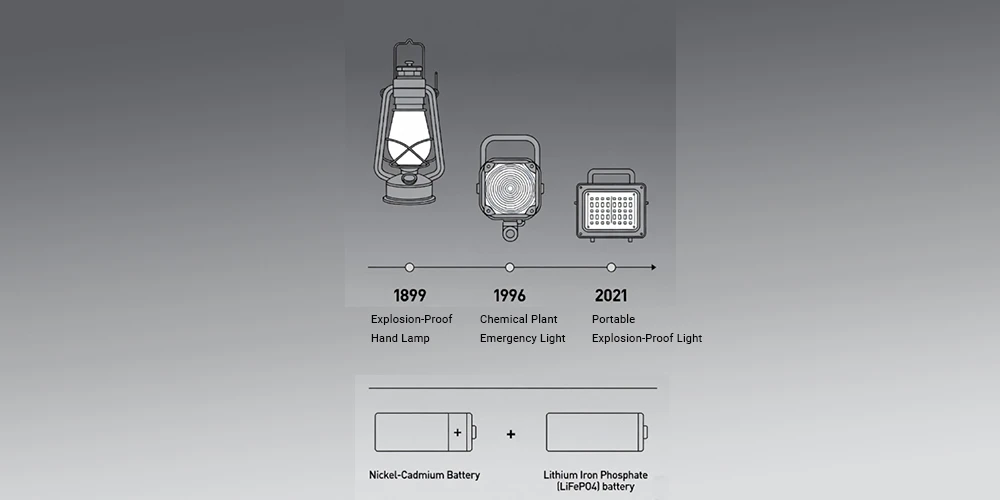
First developed in 1899, Ni-Cd batteries were among the earliest rechargeable chemistries to meet the rigorous demands of industrial safety. For most of the 20th century, they dominated the explosion-proof emergency lighting market—from underground mine lamps to offshore oil platform emergency fixtures. Their unmatched reliability in harsh conditions made them indispensable: in explosive environments where even a split-second failure could trigger disasters, Ni-Cd batteries’ stable output and rapid switchover became a cornerstone of safety compliance. While newer technologies have emerged, they still hold their ground in specialized explosion-proof scenarios where extreme conditions test the limits of other batteries
Lithium Iron Phosphate (LiFePO₄) Batteries: The Modern Game-Changer for Explosion-Proof Lighting
Invented in 1996, LiFePO₄ batteries are a newer subset of lithium-ion technology, but they’ve quickly become the gold standard for modern explosion-proof emergency lighting. Their rise gained momentum as global explosion-proof standards (such as IEC 60079 and GB 3836) raised requirements for safety, sustainability, and long-term reliability. Unlike traditional batteries, LiFePO₄ addresses critical pain points in explosion-proof applications: low fire risk, zero toxic materials, and extended cycle life—all essential for environments where maintenance is difficult and safety is non-negotiable. Today, they’re the preferred choice for most explosion-proof emergency lamps, from portable explosion-proof flashlights to fixed workshop emergency fixtures.
Core Characteristics: Why They Matter for Explosion-Proof Emergency Lighting
Each battery chemistry is engineered to solve specific challenges in explosion-proof scenarios. Let’s break down their key traits and how they translate to emergency lighting performance.
Nickel-Cadmium (Ni-Cd) Batteries: Reliability in Extreme Explosion-Proof Environments
Ni-Cd batteries earned their reputation in explosion-proof lighting for one core advantage: uncompromising performance when other batteries fail. Here’s how this translates to emergency lighting:
Instant Emergency Activation: In explosive environments, power outages leave no room for delay. Ni-Cd batteries deliver 100% reliable, instantaneous power switchover—critical for explosion-proof emergency lamps that must illuminate evacuation routes or equipment control areas within milliseconds. This makes them ideal for high-risk settings like chemical reactor rooms or mine tunnels, where lag time could lead to catastrophic accidents.
Extreme Temperature Tolerance: Explosion-proof lighting often operates in harsh climates—from -40°C (-40°F) outdoor oilfields to 70°C (158°F) chemical processing plants. Ni-Cd batteries thrive in these conditions, maintaining stable output where LiFePO₄ might struggle. For example, in Arctic oil exploration sites or desert refineries, Ni-Cd-powered emergency lamps remain functional when temperature fluctuations would disable other batteries.
Deep Discharge Resilience: Explosion-proof emergency lamps may sit idle for months but need to deliver full power when activated. Ni-Cd batteries handle deep discharges (draining nearly all stored energy) without permanent damage—unlike lead-acid alternatives that degrade if discharged below 50%. This means they can reliably power emergency lighting for hours during extended outages, a critical requirement for compliance with safety regulations.

Key Limitations for Explosion-Proof Lighting
- Memory Effect: If the battery is only partially discharged (e.g., emergency lamps are tested briefly and recharged without full use), Ni-Cd “remembers” the lower capacity as its maximum. Over time, this reduces the emergency lighting’s runtime—putting safety at risk during actual outages.
- Toxic Environmental Impact: Cadmium, a core material, is highly toxic. Improper disposal of Ni-Cd-powered explosion-proof lamps harms ecosystems and violates global environmental regulations (such as the EU’s RoHS directive), which restricts cadmium use in industrial equipment. For companies prioritizing ESG compliance, this is a major drawback.
- Bulky Design: Lower energy density means Ni-Cd batteries are heavier and bulkier than LiFePO₄. This limits their use in portable explosion-proof lamps (e.g., maintenance torches) or fixtures where space is limited.
Lithium Iron Phosphate (LiFePO₄) Batteries: Safety and Efficiency for Modern Explosion-Proof Lighting
LiFePO₄ batteries address the shortcomings of older chemistries while meeting the strict safety and performance demands of modern explosion-proof emergency lighting. Here’s their competitive edge:
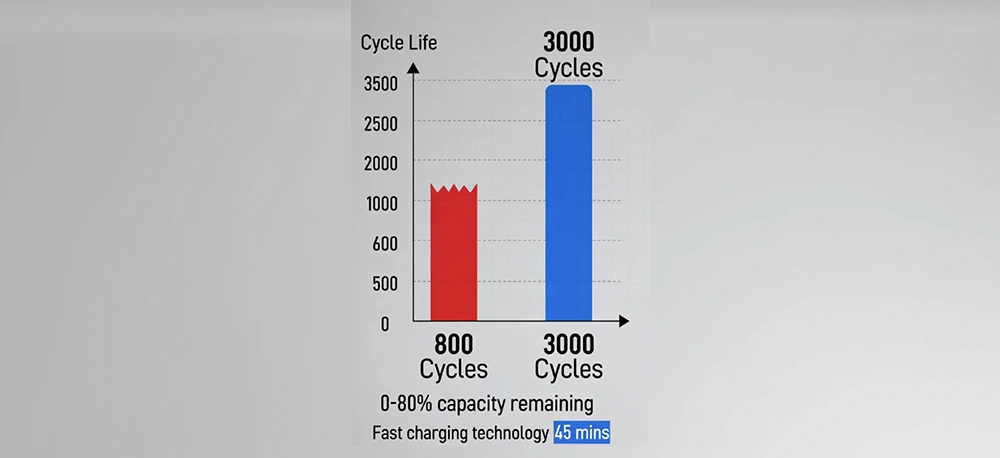
Exceptional Cycle Life for Long-Term Reliability: Explosion-proof emergency lamps are designed for decades of service, and their batteries must match that longevity. A typical Ni-Cd battery lasts ~800 cycles (to 80% capacity), while LiFePO₄ batteries reach 3,000+ cycles (up to 5,000 for high-end models). For emergency lighting that’s tested monthly or activated occasionally, this translates to 10+ years of reliable service—reducing maintenance costs and minimizing the risk of battery failure during critical moments.
Rapid Charging for Minimal Downtime: In industrial settings, explosion-proof emergency lamps can’t be out of service for long. LiFePO₄ charges significantly faster than Ni-Cd: most LiFePO₄-powered explosion-proof lamps reach 0-80% charge in 30 minutes to 1 hour, compared to hours for Ni-Cd. This is crucial for maintenance teams—after testing or activation, lamps can be quickly recharged and returned to standby mode.
Superior Safety for Explosive Environments: Safety is non-negotiable in explosion-proof applications, and LiFePO₄’s thermal stability is a game-changer. Unlike Ni-Cd, which is prone to overheating and fire risk at extreme conditions, LiFePO₄ has a high decomposition temperature (over 200°C) and low risk of thermal runaway. This aligns with Ex certification requirements, reducing the chance of battery-related explosions or fires in hazardous areas.
Eco-Friendly and Compliance-Focused: LiFePO₄ contains no toxic metals (e.g., cadmium, lead), making it compliant with global environmental regulations. For companies operating in regulated industries (e.g., oil and gas, chemicals), this simplifies waste disposal and supports ESG goals. Additionally, LiFePO₄’s high recyclability aligns with circular economy initiatives.
Compact and Lightweight Design: Higher energy density means LiFePO₄ batteries are smaller and lighter than Ni-Cd for the same capacity. This is a boon for portable explosion-proof lamps (e.g., miner’s headlamps, inspection torches) and fixed fixtures where space is limited (e.g., narrow pipelines, compact control rooms). The lightweight design also eases installation and reduces structural stress on fixtures.
No Memory Effect for Hassle-Free Maintenance: LiFePO₄ batteries have no memory effect—partial charges (e.g., after monthly testing) won’t reduce their maximum capacity. This eliminates the need for time-consuming full-discharge cycles during maintenance, simplifying upkeep and ensuring the battery is always ready for use.
Ni-Cd vs. LiFePO₄: Head-to-Head for Explosion-Proof Emergency Lighting
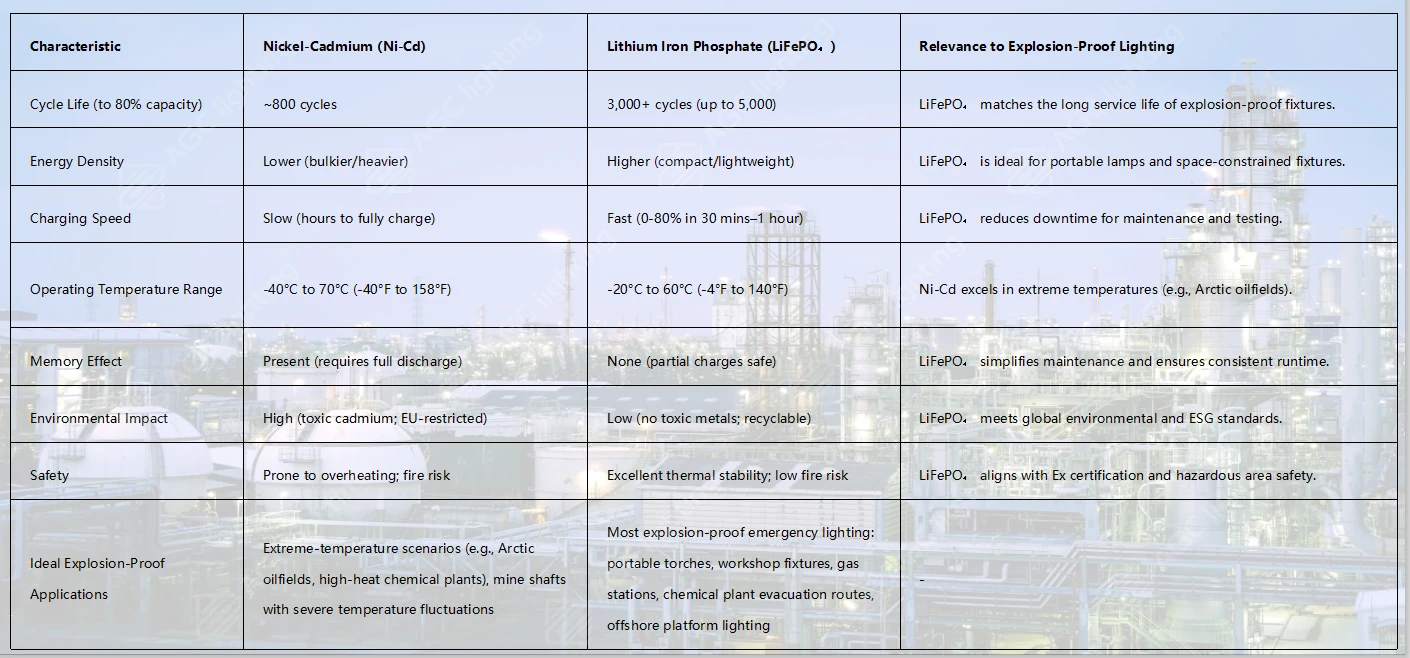
To help you choose, here’s a side-by-side comparison focused on explosion-proof lighting requirements:
Which Battery Is Right for Your Explosion-Proof Emergency Lighting?
The choice hinges on your specific explosion-proof environment and compliance needs:
Choose Ni-Cd If:
You operate in extreme temperature environments where no other battery can perform—e.g., Arctic oil exploration sites (-40°C), high-heat kiln areas (70°C), or deep mine shafts with rapid temperature swings. These are the only scenarios where Ni-Cd’s unique temperature tolerance and instantaneous activation justify its limitations. Ensure your use case aligns with regulatory exceptions for cadmium use (where applicable).
Choose LiFePO₄ If:
You need a safe, compliant, and low-maintenance solution for most explosion-proof emergency lighting scenarios—e.g., chemical plants, gas stations, manufacturing facilities, offshore platforms, or portable maintenance lamps. LiFePO₄ outperforms Ni-Cd in nearly every critical metric for explosion-proof lighting: safety (Ex compliance), longevity (reduced replacement costs), eco-friendliness (regulatory compliance), and convenience (fast charging, lightweight design). It’s the ideal choice for companies prioritizing safety, sustainability, and operational efficiency.
Final Thoughts: The Future of Explosion-Proof Emergency Lighting Power
Ni-Cd batteries paved the way for reliable explosion-proof emergency lighting, and their legacy endures in niche extreme-temperature scenarios where no other technology can compete. However, as global explosion-proof standards (Ex) and environmental regulations grow stricter, LiFePO₄ has emerged as the clear leader for modern applications. Its ability to balance safety, long life, rapid charging, and eco-friendliness aligns with the core needs of explosion-proof lighting: protecting lives, ensuring compliance, and minimizing operational risk.
For explosion-proof lighting manufacturers and end-users alike, choosing LiFePO₄ means investing in a future-proof solution that meets today’s safety demands and tomorrow’s sustainability goals. While Ni-Cd will remain a specialty option, LiFePO₄ is set to dominate the explosion-proof emergency lighting market—powering safer, more efficient, and compliant lighting for decades to come.