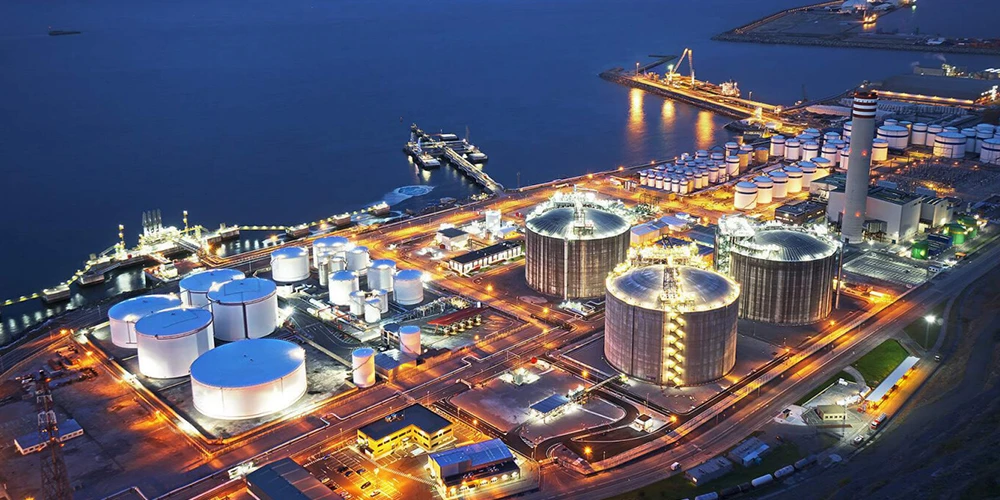

Coastal environments and offshore platforms represent some of the most grueling conditions on Earth for electrical equipment. High salt spray, pervasive humidity, and relentless UV radiation pose a constant threat—not only to internal circuitry but also to the structural integrity of the enclosure itself.
When specifying maritime lighting, two materials dominate the conversation: GRP (Glass-Reinforced Polyester) and Copper-Free Aluminum.
Many users ask: "If GRP is immune to rust, why not manufacture every fixture using GRP?"
This article provides an in-depth analysis of these two materials and reveals the engineering logic behind their selection.
- GRP — The All-Rounder in Extreme Corrosion Resistance
- Copper-Free Aluminum — The Robust Backbone for High-Power and High-Strength Applications
- Selection Guide — Why Aren't All Explosion-Proof Lights Made of GRP?
- 1. Based on Power Consumption (Wattage)
- 2. Based on Explosion-Proof Protection Types
- 3. Based on Maintenance Frequency
- The Synergy of GRP and Aluminum
GRP — The All-Rounder in Extreme Corrosion Resistance
GRP materials are extensively utilized in offshore engineering due to their outstanding chemical stability.
- Absolute Chemical Inertia: The core advantage of GRP lies in its non-metallic nature. It is immune to rusting, pitting, or galvanic corrosion. This means that even in environments subject to direct wave splashing, it requires zero maintenance or repainting.
- Electrical Safety: As a superior insulating material, GRP eliminates the risk of electric shock caused by energized enclosures. Furthermore, its non-conductive properties prevent "galvanic corrosion" (bimetallic corrosion) that typically occurs when dissimilar metals come into contact.
- Lightweight Advantage: GRP weighs approximately only one-quarter as much as steel. For vessels and large platforms where the center of gravity is critical, reducing the weight of the superstructure is vital for enhancing overall stability.
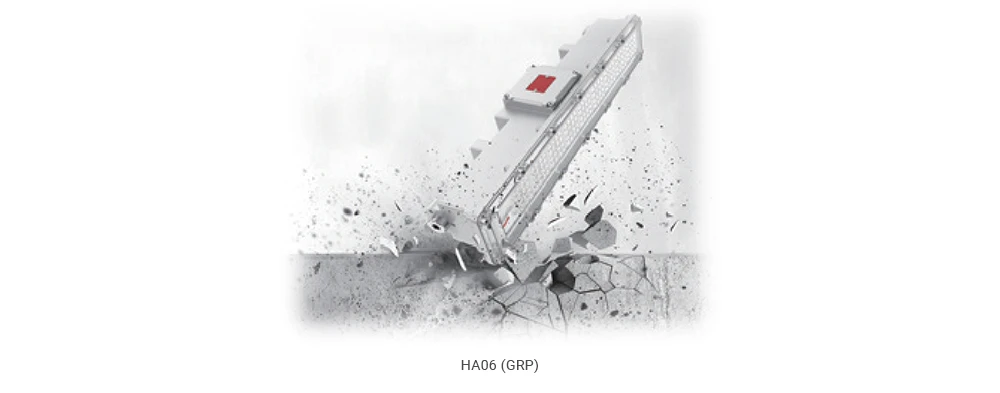
- Superior Impact Resistance: Unlike aluminum alloys, which may suffer permanent denting or cracking under heavy impact, GRP exhibits unique mechanical toughness. The interlaced fiberglass structure within the GRP effectively dissipates impact forces. It possesses a certain "elastic memory," allowing it to return to its original shape after minor collisions without leaving dents that could compromise the structural sealing, as is common with metal.
- UV Resistance and Anti-Aging: Industrial-grade GRP is far more than simple plastic; its surface is typically reinforced with a thick Gel Coat. This "protective skin" contains highly efficient UV absorbers, preventing the base resin from yellowing or chalking under the scorching sun.
Copper-Free Aluminum — The Robust Backbone for High-Power and High-Strength Applications
While GRP offers significant advantages, copper-free aluminum remains dominant in specific critical applications.
- Thermal Performance: The lifespan of an LED fixture is directly dictated by its thermal management. The thermal conductivity of aluminum alloy far exceeds that of GRP. For high-power floodlights (typically above 100W), the aluminum enclosure acts as a massive heat sink, rapidly dissipating internal heat to the ambient environment. In contrast, heat accumulation within a GRP enclosure would lead to rapid lumen depreciation or even premature LED failure.
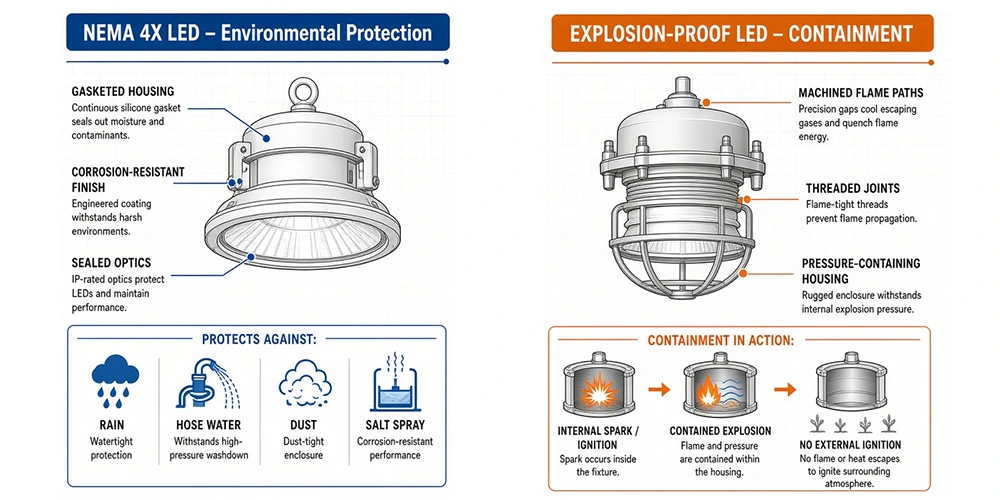
- Mechanical Strength and Explosion-Proof Types: In flameproof (Ex d) luminaires, the enclosure must withstand the internal pressure generated by an explosion without suffering damage. Aluminum alloy provides superior ductility and mechanical strength, allowing for the machining of precision flameproof threads and mating surfaces—features that GRP cannot achieve with the same level of reliability.
- Exceptional Structural Stability: A Non-Deforming "Skeleton" On decks exposed to gale-force winds or in engine rooms with intense vibrations, copper-free aluminum—with its high rigidity—ensures that brackets and enclosures do not loosen or suffer from metal fatigue. It is the ideal choice for load-bearing installation points in the harshest environments.
- Specialized Surface Treatments: Making Metal Corrosion-Resistant
- Marine-Grade Coating: The term "copper-free" typically refers to a copper content of less than 0.1% (or 0.4% depending on the standard), which minimizes electrochemical corrosion at the source.
- Protection Synergy: When combined with a marine-grade epoxy powder coating, the material can withstand physical impacts while maintaining a formidable defense against salt spray erosion.

Selection Guide — Why Aren't All Explosion-Proof Lights Made of GRP?
In practical applications, engineers typically adhere to the following logic when specifying materials:
1. Based on Power Consumption (Wattage)
Low-Power / Linear Lights: GRP is the preferred choice. These fixtures generate minimal thermal stress, allowing the lightweight and corrosion-resistant advantages of GRP to be fully realized.
High-Power Floodlights (100W+): Copper-free aluminum is mandatory to ensure safe heat dissipation and prevent component overheating.
2. Based on Explosion-Proof Protection Types
Increased Safety (Ex e) / Non-Sparking (Ex n): These are commonly constructed from GRP, resulting in a lightweight and streamlined design.
Flameproof (Ex d): These rely almost exclusively on copper-free aluminum or stainless steel to meet the rigorous pressure-containment requirements of the enclosure.
3. Based on Maintenance Frequency
If the lighting is installed in extremely inaccessible locations (such as the masthead or high-altitude gantries) and the power requirements allow, GRP is the premier choice for reducing long-term maintenance costs due to its "fit-and-forget" durability.
The Synergy of GRP and Aluminum
GRP stands as the ultimate solution for those pursuing a "maintenance-free" and "zero-corrosion" strategy, making it ideal for low-to-medium power linear lighting and junction boxes.
Conversely, Copper-free Aluminum remains the reliable safeguard for "high-performance" and "complex environments," particularly where high thermal dissipation and high-wattage illumination are non-negotiable.
Selection Advice: In a typical maritime project, these two materials are often used in a complementary manner. A strategic mix involves installing GRP linear lights in cabin walkways and corridors, while utilizing copper-free aluminum floodlights—protected by specialized marine coatings—for large-area deck illumination.
If you have any questions regarding fixture selection for specific hazardous zones, please feel free to contact us. AGC is ready to provide you with a bespoke, one-on-one lighting solution tailored to your requirements.