
- Grain Barn Environment: The Invisible Risks Demanding Explosion-Proof Lights
- Core Requirements for Explosion-Proof Lights in Grain Barns: Beyond Just "Explosion-Proof"
- Key Selection Mistakes to Avoid: Common Pitfalls in Grain Barn Lighting
- The Value of Compliant Explosion-Proof Lights: Beyond Safety
- Safety Lighting as the Cornerstone of Grain Barn Operations
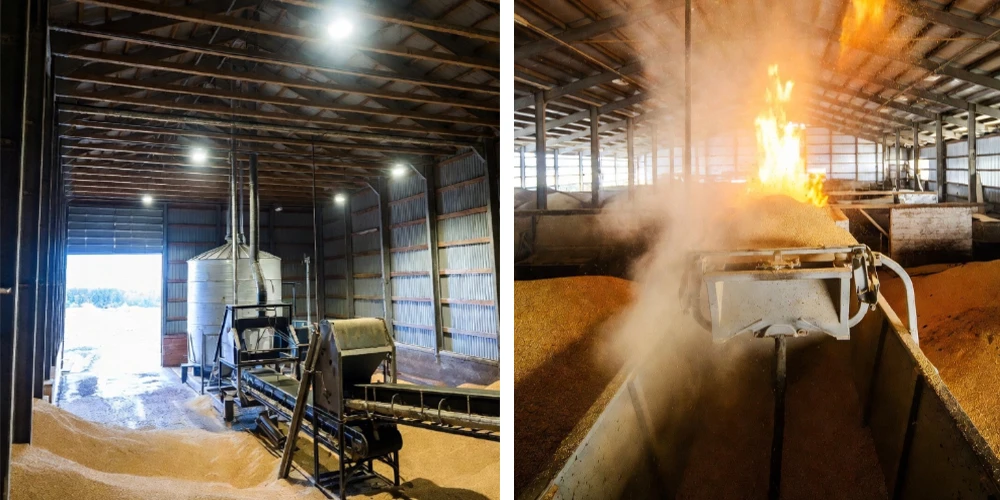
In grain storage andprocessing facilities known as grain barns, safety is the unshakable foundation of stable operations. These spaces harbor unique and hidden risks: grain dust from wheat, corn, rice, and other crops can form explosive dust clouds when suspended in the air. Any electrical equipment failing to meet safety standards might become an ignition source, triggering catastrophic explosions. For this reason, explosion-proof lights are far more than mere "lighting tools" in grain barns—they serve as the crucial last line of defense against dust explosion hazards.
For grain barn managers, agricultural engineers, and equipment purchasers seeking to understand explosion-proof lighting solutions, a host of questions naturally arise: What dangers come with using ordinary lights in grain barns? What core requirements must explosion-proof lights satisfy? And how to select and apply them correctly? This article will delve into the key knowledge of explosion-proof lights in grain barn applications using professional yet accessible language, helping you establish a comprehensive and reliable safety lighting system.
Grain Barn Environment: The Invisible Risks Demanding Explosion-Proof Lights
Grain barns are typical "dust explosion hazard zones," where the combination of environmental characteristics and operational scenarios makes electrical lighting a high-risk link. Understanding these risks is the first step toward safe compliance.
Grain dust—including wheat flour, corn starch, and soybean meal dust—is a combustible solid dust. When its concentration in the air reaches the "explosion limit" (generally 10-600 g/m³, varying by grain type) and encounters an ignition source such as sparks or high-temperature surfaces from ordinary lights, a violent dust explosion can occur. Data from the International Electrotechnical Commission (IEC) shows that over 70% of grain processing accidents are linked to dust explosions caused by non-compliant electrical equipment.
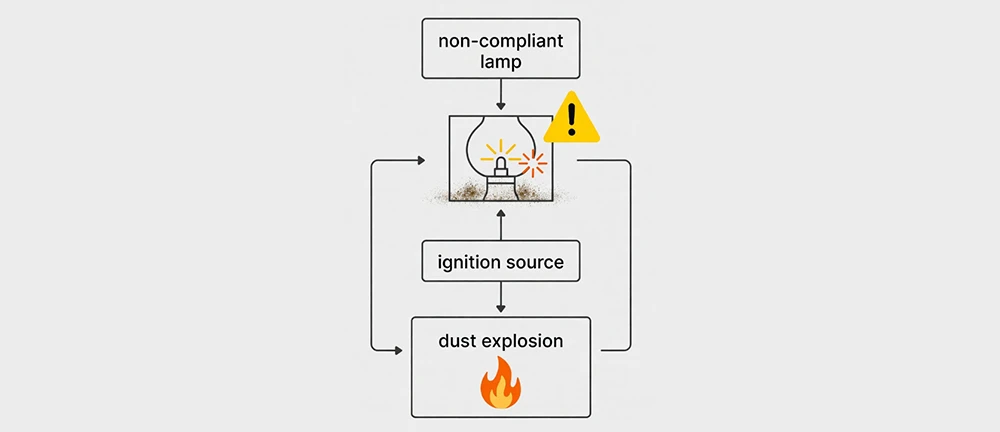
Beyond the primary risk of dust explosions, grain barns present other environmental challenges. Grain storage requires controlled humidity to prevent mold growth, and frequent ventilation can lead to moisture buildup. Additionally, fumigants like phosphine used for pest control are corrosive and capable of damaging ordinary electrical components. During grain loading, unloading, and drying, massive amounts of dust are generated, which easily accumulate on light surfaces. Ordinary lights’ heat dissipation ports or gaps can trap this dust, leading to overheating and ignition. Moreover, grain barns often operate 24/7, especially during harvesting and processing seasons, demanding lights with high durability and stable performance to avoid failures in critical situations.
Internationally, grain barns are classified as specific hazardous zones. The EU’s ATEX Directive categorizes them as Zone 21 (where combustible dust clouds occur frequently) or Zone 22 (where such clouds occur occasionally). The IECEx Standard aligns with this zone classification, requiring electrical equipment to meet dust explosion protection requirements. In North America, the U.S. NEC/NFPA 652 mandates explosion-proof electrical equipment for dust hazard facilities, and Canada’s CEC includes corresponding dust explosion protection clauses. Non-compliant lighting can result in fines, facility shutdowns, or even legal liability in the event of an accident.
Core Requirements for Explosion-Proof Lights in Grain Barns: Beyond Just "Explosion-Proof"
To adapt to the harsh and high-risk environment of grain barns, explosion-proof lights must meet multi-dimensional requirements. Compliance with explosion-proof standards is the foundation, while adaptation to actual application scenarios is the key to ensuring long-term safety and efficiency.
Explosion-proof performance is the core compliance threshold. Priority should be given to lights with dust explosion protection types such as "Ex tb IIIC IP65 T4 Db" (dust ignition-proof type) or "Ex ib IIIC IP65 T4 Db" (intrinsically safe type for dust). The former prevents dust from entering the lamp housing to avoid ignition, while the latter limits electrical energy to eliminate ignition sources—both are well-suited for Zones 21 and 22. Temperature class is another critical factor, requiring a minimum of T4 (maximum surface temperature ≤ 135°C). Since the minimum ignition temperature of grain dust generally ranges from 300-400°C, the lamp’s surface temperature must be far below this threshold to prevent igniting accumulated dust. Additionally, explosion-proof lights must pass international certifications like ATEX and IECEx, as well as local certifications such as UL for the U.S. and CSA for Canada, to ensure compliance with regional regulations.
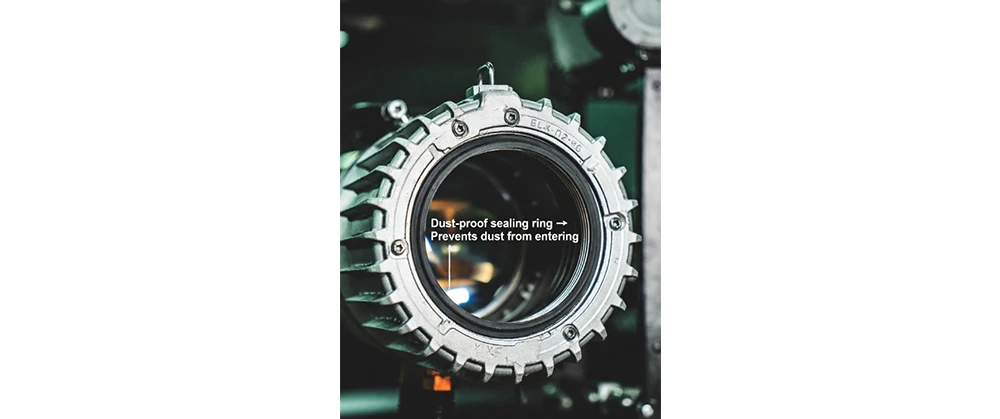
Environmental adaptability is equally important, as lights must withstand high humidity, grain dust accumulation, and corrosive air in barns. The minimum protection grade (IP rating) shall be IP65, and IP66 is highly recommended for actual application: the first numeral 6 (IP6X) means dust-tight, which can completely prevent the intrusion of grain dust into the luminaire; the second numeral 5 (IPX5) is for protection against water jets from any direction, and the upgraded second numeral 6 (IPX6) can resist powerful high-pressure water jets, perfectly matching the regular high-pressure cleaning demand of grain barns.
For outdoor grain silos, IP66 or higher is recommended. The lamp housing should be made of aluminum alloy with anti-corrosion coating or 316L stainless steel to resist moisture, fumigants, and grain acidification residues. A smooth, streamlined lamp surface helps avoid dust accumulation in grooves or gaps, and some high-end models feature "self-cleaning coatings" to reduce manual cleaning frequency.
Lighting performance must strike a balance between safety and operational efficiency. Grain barns are typically 8-15 meters high with large spans, so explosion-proof lights should adopt a wide-beam optical design (beam angle 120°+) to ensure uniform illumination without dark areas in grain piles, walkways, or operating platforms—preventing accidents caused by poor visibility. Glare control is also essential; lamps should be equipped with anti-glare covers or diffusers, as strong glare can cause eye fatigue for operators during loading, unloading, or inspection, increasing operational risks. Choosing LED explosion-proof lights is advisable, as they consume 50% less energy than traditional metal halide lamps and have a service life of ≥50,000 hours. This reduces maintenance frequency (climbing to replace lamps in tall barns is risky) and lowers long-term operating costs.
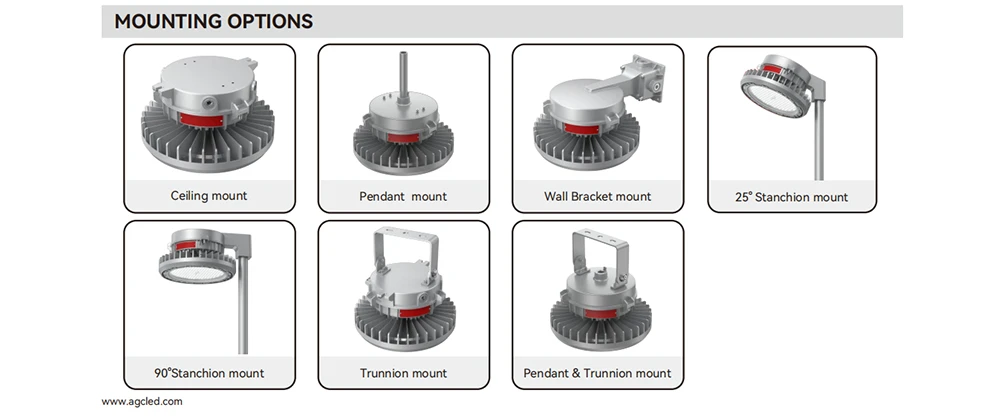
Installation and maintenance considerations further enhance usability. Explosion-proof lights should support ceiling mounting, bracket mounting, or pendant mounting (for large silos) to adapt to different grain barn structures, with sturdy, anti-vibration mounting brackets to withstand the vibrations of grain loading and unloading. The cable entry should use explosion-proof cable glands to prevent dust or moisture from entering through cable gaps, and the cable itself should be flame-retardant and dust-proof. A detachable lamp design (allowing cover removal without tools) facilitates bulb replacement or cleaning, and some models offer remote monitoring functions to alert for faults in advance.
Key Selection Mistakes to Avoid: Common Pitfalls in Grain Barn Lighting
Many grain barn managers focus solely on "explosion-proof certification" while overlooking scenario-specific adaptability, which can lead to potential safety hazards. One common mistake is confusing "gas explosion-proof" with "dust explosion-proof" luminaires. Gas explosion-proof luminaires (e.g., Ex d IIC T4 Gb) are engineered for flammable gases such as methane—they lack official dust explosion-proof certification, even if some have dust-proof IP ratings. Using them in grain barns (a dust hazard zone) is therefore deemed non-compliant use. It is essential to select luminaires certified for dust explosion protection, such as Ex tb IIIC T4 Db (dust enclosure protection type, for Zone 21) or Ex ib IIIC T4 Db (intrinsically safe type for dust, for Zone 21).
Another pitfall is prioritizing "high brightness" while ignoring temperature class. Some users opt for lamps with a T3 temperature class (surface temperature ≤ 200°C) in pursuit of high lumen output, but grain dust (such as wheat dust) has a minimum ignition temperature of approximately 340°C. T3 lamps may still ignite accumulated dust under long-term use, making T4 (≤135°C) the safest choice for grain barns.
Neglecting the protection level in humid barns is also a critical error. Grain barns in rainy areas or those using humidification systems require at least IP65 protection. Lamps with IP54 (splash-proof) will allow moisture and dust to enter, leading to short circuits or corrosion of internal components over time.
The Value of Compliant Explosion-Proof Lights: Beyond Safety
For grain barn operators, investing in certified explosion-proof lighting is no extra cost but a high-value, long-term investment with multiple core benefits. First and foremost, it mitigates catastrophic risks: a grain dust explosion can cause millions in direct economic losses from grain and facility damage, plus potential casualties, while explosion-proof lights eliminate electrical ignition sources to fundamentally reduce such risks—OSHA data shows compliant explosion-proof equipment cuts dust explosion hazards by over 90%.
It also ensures regulatory compliance and avoids severe penalties. Strict safety regulations govern grain barns globally: the EU’s ATEX Directive levies fines up to 10% of annual turnover for non-compliance, and U.S. OSHA may order indefinite shutdowns for violating facilities. Certified explosion-proof lighting acts as a legal operation pass, helping facilities meet inspection standards and avoid operational disruptions.
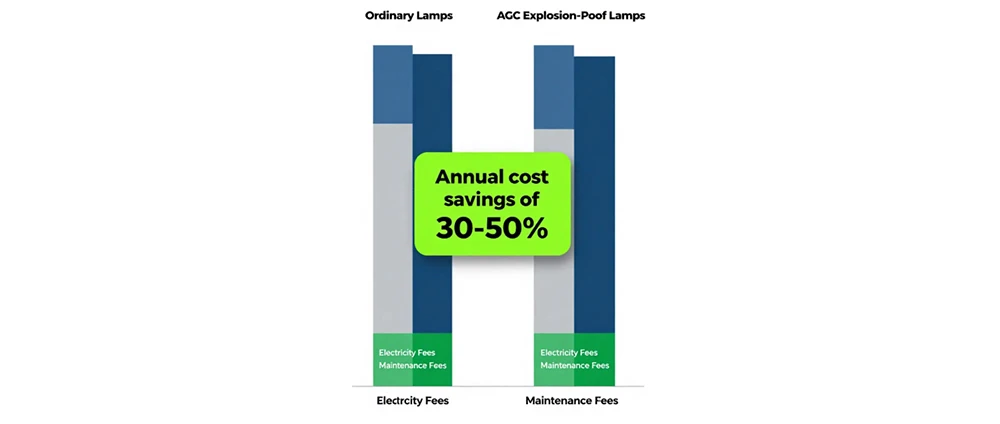
Moreover, it slashes maintenance costs and boosts operational efficiency. LED explosion-proof lights feature an ultra-long lifespan (50,000 hours, equivalent to 5 years of 24/7 operation) and low energy consumption, cutting electricity bills by 30-50% versus traditional metal halide lamps. Their robust build reduces replacement frequency and the risks of high-altitude maintenance work, while dust and corrosion resistance further minimizes upkeep time and costs, allowing teams to focus on core operations.
Last but not least, compliant operations safeguard brand reputation. Grain storage and processing are tightly tied to food safety, and a single safety accident can severely tarnish an enterprise’s image and erode customer trust. Investing in explosion-proof safety and regulatory compliance is thus the cornerstone of building a credible, reliable brand.
Safety Lighting as the Cornerstone of Grain Barn Operations
Grain barns are high-risk environments where the combination of "dust + electricity" poses a fatal threat. Explosion-proof lights, as core safety equipment, are not just about "lighting up the space" but about safeguarding lives, property, and business continuity.
When selecting explosion-proof lights for grain barns, remember that "certification is the foundation, scenario adaptation is the key, and compliance is the bottom line." Prioritize products with dust explosion-proof certification (Ex tD/Ex iaD), IP65+ protection, T4 temperature class, and energy-efficient LED technology. These products will not only help you meet regulatory requirements but also create a safe, efficient, and cost-effective operating environment.
If you need customized explosion-proof lighting solutions for specific grain barn scenarios—such as silos, drying workshops, or grain processing plants—our technical team is ready to provide professional advice. We are committed to delivering compliant, reliable, and cost-effective explosion-proof products for grain storage enterprises worldwide.