
In hazardous explosive environments like chemical plants, oil refineries, dust workshops, and offshore platforms, the structural design of explosion-proof luminaires is directly linked to operational safety, installation efficiency, and post-maintenance convenience.
As a key structural component of modern explosion-proof luminaires, the independent junction chamber- a separate enclosed cavity dedicated to cable connection, terminal wiring, and line protection—has become a mainstream design for medium- and high-end explosion-proof lighting products due to its outstanding practicality.
However, like all structural designs, independent junction chambers are not a one-size-fits-all solution. They bring obvious advantages in safety and maintainability while having inherent drawbacks such as increased initial cost and larger product volume.
This article will explain the core functions of independent junction chambers in explosion-proof luminaires in professional and plain terms, objectively analyze their pros and cons, and provide scenario-based selection guidance, helping you make rational decisions for explosion-proof lighting procurement and application.
- What is an Independent Junction Chamber for Explosion-Proof Luminaires?
- Why Independent Junction Chambers for Modern Explosion-Proof Luminaires
- Isolate Wiring Risks, Fundamentally Improve Explosion-Proof Safety
- Avoid Damaging Main Cavity Sealing, Extend Luminaire Service Life
- Optimize Wiring Space, Improve On-Site Installation Efficiency
- Facilitate Post-Maintenance and Line Inspection, Reduce Downtime Costs
- Disadvantages of Using Independent Junction Chambers in Explosion-Proof Luminaires
- Higher Initial Procurement Cost
- Larger Product Volume and Increased Weight
- Higher Requirements for Assembly and Sealing Craftsmanship
- Redundant Design for Low-Risk Simple Scenarios
- Choose Rationally: Adaptation Is the Optimal Solution
What is an Independent Junction Chamber for Explosion-Proof Luminaires?
An independent junction chamber is a separate, sealed cavity that is structurally isolated from the light source chamber and power supply chamber of an explosion-proof luminaire, with independent sealing components and fasteners. It is specially designed for cable inlet/outlet, terminal block connection, wire sorting, and line insulation protection in explosion-proof luminaires.
It is different from the integrated wiring design (cable connection directly in the power supply chamber or light source chamber) and is a specialized structural design derived from the high requirements of hazardous environments for wiring safety and maintainability. The independent junction chamber forms a dedicated "wiring hub" for explosion-proof luminaires, and its independent sealing and explosion-proof structure are the fundamental guarantees of its functional advantages.
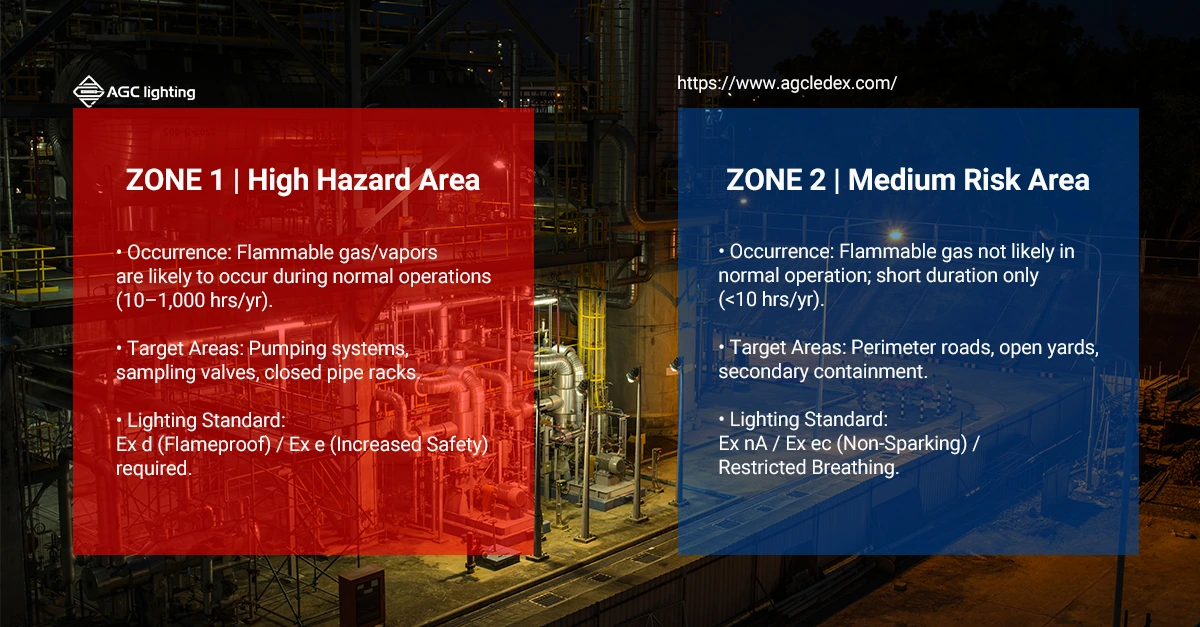
In modern explosion-proof luminaire design, it is often used in combination with the light source chamber and power supply chamber to form a three-cavity structure (light source chamber + power supply chamber + independent junction chamber), which is the standard design for explosion-proof luminaires applied in Zone 1, Zone 2, and other high-risk hazardous areas.
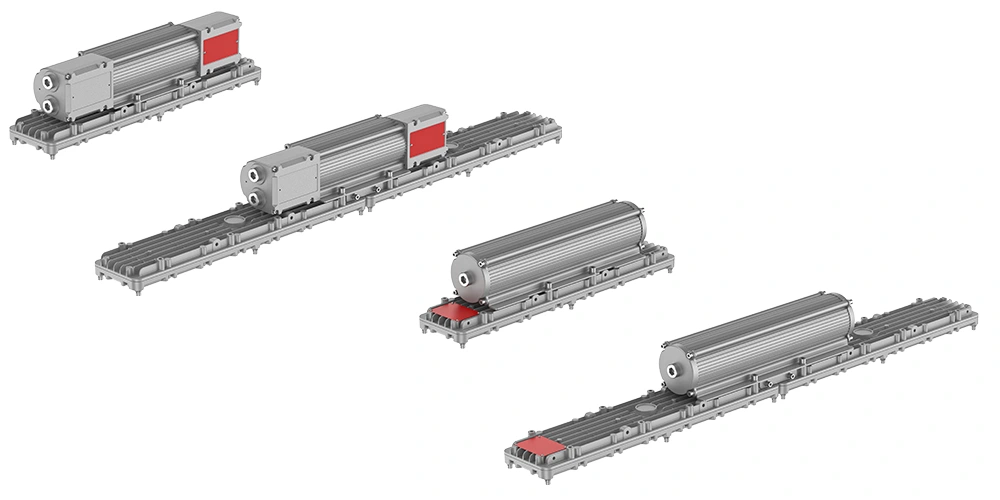
Here is an example of our HA11 LED Explosion-proof Linear Light for Zone 1 with an independent junction chamber.
Why Independent Junction Chambers for Modern Explosion-Proof Luminaires
The wide application of independent junction chambers in explosion-proof luminaires stems from the perfect fit of their independent and sealed design with the actual needs of hazardous environment construction, operation, and maintenance. Their advantages in safety, installability, and maintainability far surpass the integrated wiring design, which constitutes their core application value.
Isolate Wiring Risks, Fundamentally Improve Explosion-Proof Safety
In hazardous environments, electric sparks generated during wiring connections, poor contact-induced local high temperatures, or line short circuits caused by wire wear are all potential ignition sources that may trigger explosions or fires.
The independent junction chamber forms a dedicated physical isolation barrier for wiring work: all cable connection, terminal crimping, and wire connection operations are completed in this closed cavity. Even if minor sparks or high temperatures are generated during wiring or subsequent operation, they are completely confined within the independent junction chamber and cannot contact external flammable gases, dust or vapors, eliminating the risk of the wiring part becoming an ignition source at the source.
At the same time, the independent explosion-proof and sealing structure of the junction chamber further prevents line leakage and external hazardous medium intrusion, doubling the operational safety of explosion-proof luminaires.
Avoid Damaging Main Cavity Sealing, Extend Luminaire Service Life
The sealing performance of the light source chamber and power supply chamber is the core guarantee for the normal operation of explosion-proof luminaires. Once the sealing ring is damaged or the sealing structure is destroyed, the explosion-proof and waterproof performance of the luminaire will be lost, leading to component failure and safety risks.
With an independent junction chamber, all wiring, line modification, and cable replacement work only requires opening the junction chamber cover, without disassembling the light source chamber or power supply chamber.
This avoids repeated disassembly and assembly of the main cavity sealing structure during installation and maintenance, effectively preventing sealing ring aging, deformation, and damage caused by human operation, and ensuring the long-term integrity of the luminaire's explosion-proof and waterproof performance, thus extending the overall service life of the explosion-proof luminaire.
Optimize Wiring Space, Improve On-Site Installation Efficiency
Explosion-proof luminaires are often installed in narrow spaces such as high altitudes, pipeline gaps, and tank tops, and on-site wiring operations have high requirements for space and operability. The integrated wiring design has limited internal space in the main cavity, with numerous components such as circuit boards and light source modules, leading to cramped wiring, difficult terminal crimping, and easy wire confusion.
The independent junction chamber is designed with a dedicated internal space for wiring, with a reasonable layout of terminal blocks, cable glands, and wire sorting structures. It can easily meet the needs of multi-cable inlet/outlet, thick cable connection, and wire separation, and the operating space is sufficient for on-site electricians to complete wiring quickly and standardly.
This greatly reduces the difficulty of on-site installation, shortens the construction period, and is especially suitable for large-scale explosion-proof lighting project construction.
Facilitate Post-Maintenance and Line Inspection, Reduce Downtime Costs
Explosion-proof luminaires in hazardous environments require regular line inspection and occasional line modification or fault troubleshooting.
For the integrated wiring design, maintenance personnel need to disassemble the entire luminaire to check the wiring, which is time-consuming and laborious, and easily causes secondary damage to the luminaire components.
The independent junction chamber enables fast line inspection and maintenance: just open the junction chamber cover to directly check the connection status of terminals, the integrity of cables, and the insulation performance of lines.
If a wiring fault occurs, it can be repaired and replaced in a targeted manner without affecting the normal operation of the light source and power supply modules.
This shortens the maintenance downtime of explosion-proof luminaires, reduces the labor cost of maintenance, and is crucial for continuous production in industrial sites with high requirements for production efficiency.
Disadvantages of Using Independent Junction Chambers in Explosion-Proof Luminaires
All advantages of the independent junction chamber come from its independent structural design and additional sealing components, and this design feature also brings inevitable inherent drawbacks. These limitations make it not the best choice for all explosion-proof lighting application scenarios, and it is necessary to make rational selection based on actual needs.
Higher Initial Procurement Cost
The independent junction chamber adds an additional cavity structure, which requires matching mold development, additional high-quality sealing rings, fasteners, terminal blocks and cable glands. At the same time, the assembly process of the luminaire is more complex, increasing the production and processing costs.
Compared with explosion-proof luminaires with an integrated wiring design, the unit price of products with an independent junction chamber is significantly higher. For large-scale procurement of explosion-proof lighting products in low-risk environments, the overall initial investment cost will increase, which is a prominent drawback of this design.
Larger Product Volume and Increased Weight
The additional independent junction chamber will inevitably increase the overall volume and weight of the explosion-proof luminaire, especially for linear explosion-proof batten lights and compact explosion-proof downlights. The extended volume may make it difficult to install in narrow and limited installation spaces, such as small equipment gaps, narrow underground pipe corridors, and compact workshop operation areas.
In addition, the increased weight of the luminaire imposes higher requirements on installation brackets, mounting bases and fixing bolts. For installation positions with load-bearing limitations (such as lightweight metal brackets and suspended ceilings), additional reinforcement measures are needed, which increases the difficulty of on-site installation and fixation.
Higher Requirements for Assembly and Sealing Craftsmanship
The independent junction chamber has an additional sealing interface and structural connection part, which puts forward higher requirements for the assembly craftsmanship of explosion-proof luminaire manufacturers. If the assembly is not in place (such as uneven sealing ring installation, loose fasteners) or the sealing component quality is unqualified, the junction chamber itself will have sealing hidden dangers, leading to water and dust ingress, and even affecting the overall explosion-proof performance of the luminaire.
For small manufacturers with immature craftsmanship, the independent junction chamber may not play its due protective role, and even become a safety hazard due to poor assembly. This means that the selection of explosion-proof luminaires with an independent junction chamber needs to be matched with regular manufacturers with mature production craftsmanship.
Redundant Design for Low-Risk Simple Scenarios
The independent junction chamber is a structural design developed for the high safety and maintainability requirements of high-risk hazardous environments. For low-risk explosion-proof environments (such as Zone 2 non-continuous flammable gas environments) or simple application scenarios with infrequent installation, maintenance, and line modification, the advantages of the independent junction chamber cannot be fully realized, and it even becomes a redundant design.
In such scenarios, the integrated wiring design can fully meet the usage requirements and has more obvious advantages in cost, volume, and installation flexibility. Blindly choosing an explosion-proof luminaire with an independent junction chamber will only cause unnecessary cost waste without bringing corresponding practical value.
Choose Rationally: Adaptation Is the Optimal Solution
The independent junction chamber is an excellent structural design for explosion-proof luminaires in high-risk, severe working conditions and large-scale engineering projects. Its independent sealing and wiring design fundamentally solves the wiring safety hazards of explosion-proof luminaires in hazardous environments, optimizes on-site installation and post-maintenance efficiency, and effectively extends the service life of luminaires.
However, its drawbacks, such as higher initial cost, larger volume, and higher craftsmanship requirements, are objective realities. It is not a "universal design" for all explosion-proof lighting scenarios, and the integrated wiring design still has irreplaceable advantages in low-risk, simple application scenarios and cost-sensitive procurement projects.
For enterprises and project contractors, when selecting explosion-proof luminaires, there is no need to blindly pursue the independent junction chamber design, nor to ignore wiring safety for the sake of saving costs.
The optimal solution is to make a comprehensive judgment based on the on-site explosion-proof risk grade, installation space, maintenance frequency, and project budget, and match the most suitable wiring structure design to the actual application requirements. This is the core principle to balance the safety, practicality, and economic efficiency of explosion-proof lighting products.
If you are unsure which wiring structure design is suitable for your on-site explosion-proof lighting application, you can contact our team at any time. We will provide professional, customized product solutions and on-site application guidance based on your actual needs!