

In flammable and explosive hazardous environments such as chemical plants, gas stations and dust workshops, explosion-proof luminaires are essential for safe production. As a commonly used power supply component for explosion-proof luminaires, potted power supplies have become a popular choice for many scenarios due to their excellent protective performance. However, they are not the only power supply solution for explosion-proof luminaires and have inherent drawbacks such as poor heat dissipation and being non-repairable (requiring full replacement in case of failure).
Many buyers often struggle with whether to choose explosion-proof luminaires equipped with potted power supplies when making purchases, unsure of their core advantages and practical usage limitations. This article explains the key features of potted power supplies in plain language, objectively analyzes their pros and cons for use in explosion-proof luminaires, and provides guidance on scenario-based selection, helping you avoid procurement pitfalls and choose the right power supply solution for your explosion-proof luminaires.
- What is a Potted Power Supply for Explosion-Proof Luminaires?
- Why Are Potted Power Supplies a Common Choice?
- Ultimate Protection, Eliminating Ignition Source Leakage at the Source
- Robust and Durable, Adapting in Hazardous Environments
- High Stability, Longer Service Life, Reduced Inspection Costs
- Disadvantages of Using Potted Power Supplies
- Limited Heat Dissipation Performance
- Non-Repairable in Case of Failure, Requiring Full Replacement
- Higher Initial Procurement Cost
- Heavier Weight, Minor Impact on Installation
- Choose Rationally, Adaptation Is the Optimal Solution
What is a Potted Power Supply for Explosion-Proof Luminaires?
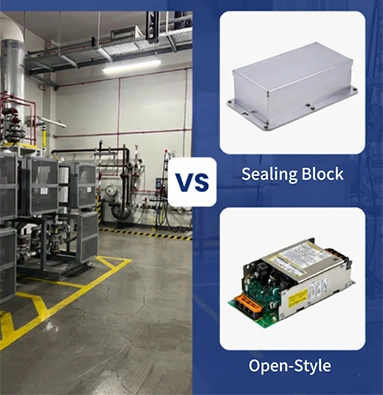
A potted power supply (also known as an encapsulated power supply) is a power module where core internal components of the explosion-proof luminaire's power supply—such as circuit boards, chips and terminal blocks—are fully enclosed and sealed with professional insulating and protective materials (e.g., modified epoxy resin, silicone rubber) through a potting process, ultimately forming a solid sealed block with no exposed components.
The open-frame power supply (with only basic protection and exposed internal components) are the two mainstream power solutions for explosion-proof luminaires, with the core difference being the presence of a fully sealed protective layer. A potted power supply is equivalent to adding an all-round "protective shell" to the power core, which is the fundamental source of both its advantages and disadvantages.
Why Are Potted Power Supplies a Common Choice?
The widespread use of potted power supplies in explosion-proof luminaires stems from the perfect fit of their fully sealed design with the safety requirements of hazardous environments. Their protective performance and stability far surpass those of open-frame power supplies, which constitutes their core value.
Ultimate Protection, Eliminating Ignition Source Leakage at the Source
In hazardous environments, even a tiny electric spark or local high temperature can trigger an explosion or fire upon contact with flammable gases or dusts—a major hidden danger for explosion-proof safety.
The sealed layer of a potted power supply forms a physical barrier: even if internal components generate sparks or high temperatures due to voltage fluctuations or malfunctions, they are completely contained within the sealed layer and cannot come into contact with external hazardous media, eliminating the possibility of the power supply becoming an ignition source at the source. Meanwhile, the fully sealed structure effectively prevents electric leakage and short circuits, further enhancing the operational safety of explosion-proof luminaires.
Robust and Durable, Adapting in Hazardous Environments
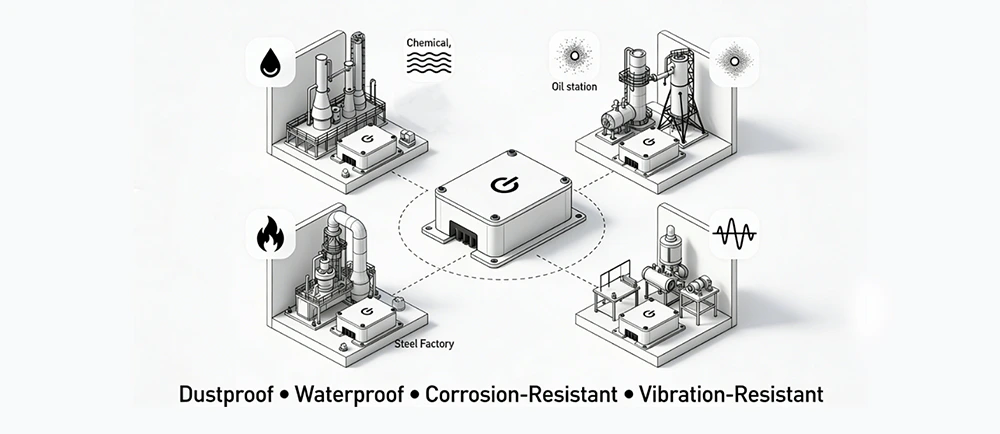
High humidity and corrosive gases in chemical plants, heavy dust in gas stations, continuous vibration near workshop equipment, and wind, rain and direct sunlight outdoors—these severe conditions cause significant wear to power supplies. Open-frame power supplies are prone to component oxidation, loose solder joints, and circuit short circuits from dust ingress.
In contrast, the fully sealed structure of a potted power supply provides dustproof, waterproof, corrosion-resistant and vibration-resistant performance: external dust, moisture and corrosive gases cannot penetrate; internal components are fixed in the potting material, so vibration will not cause loose solder joints or component detachment. It operates stably under various severe working conditions, greatly reducing the probability of power supply malfunctions.
High Stability, Longer Service Life, Reduced Inspection Costs
Explosion-proof luminaires are often installed in hard-to-reach locations such as high altitudes, tank tops and narrow corners, making subsequent inspection and maintenance difficult and costly.
Protected by the sealed layer, the components of a potted power supply age much more slowly than those of an open-frame power supply, with a normal service life of 5–10 years—essentially matching the lifespan of the entire explosion-proof luminaire. By comparison, open-frame power supplies, affected by the environment, typically have a lifespan of only 1–3 years and require frequent replacement. For enterprises, potted power supplies reduce the frequency of inspection and replacement of explosion-proof luminaires, saving labor and spare parts costs.
Disadvantages of Using Potted Power Supplies
All characteristics of potted power supplies derive from their fully sealed design, a feature that brings advantages but also inevitable drawbacks—these limitations are why they are not suitable for all explosion-proof luminaire applications.
Limited Heat Dissipation Performance
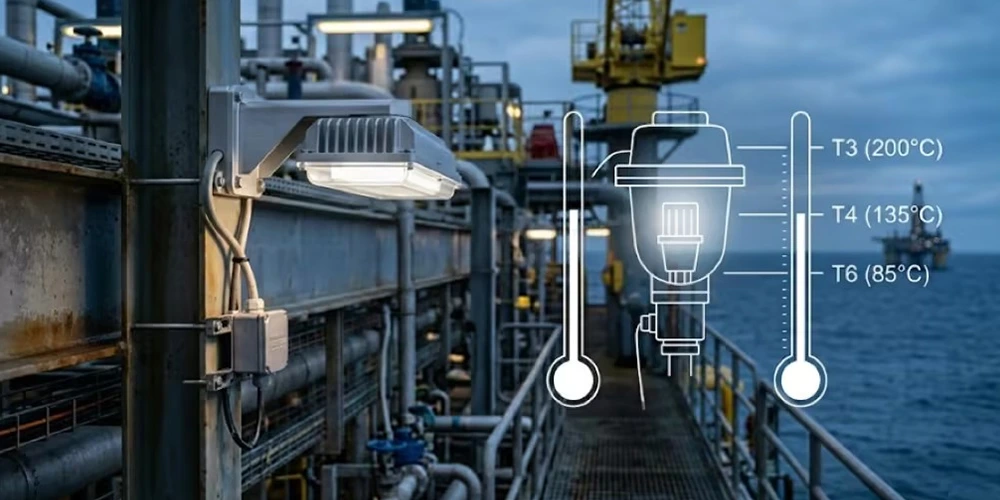
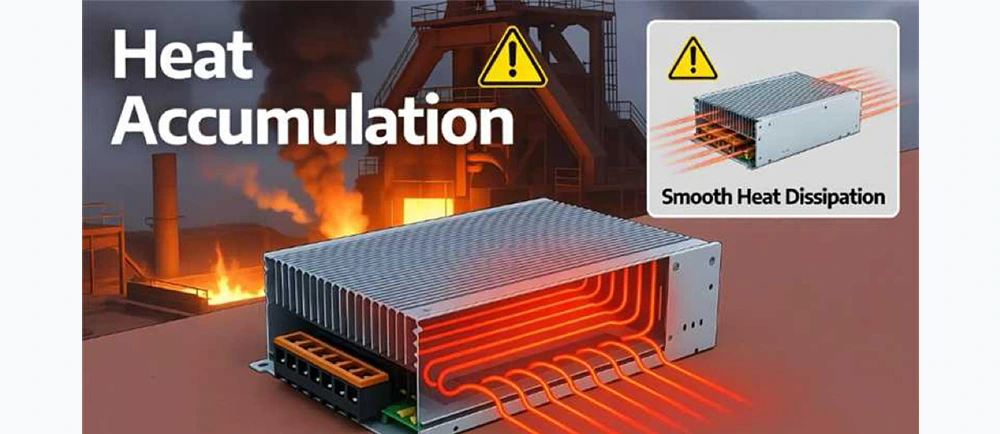
The thermal conductivity of potting materials is far inferior to that of metal and air convection. Heat generated during power supply operation can only be slowly conducted to the outside through the potting layer. If explosion-proof luminaires are installed in high-temperature environments such as steel mills and smelting workshops, or if the power supply's power rating is mismatched, heat cannot be dissipated in a timely manner and will accumulate inside the sealed layer. This may cause overheating of internal components, affecting service life and even leading to malfunctions.
Non-Repairable in Case of Failure, Requiring Full Replacement
The components of a potted power supply are completely encapsulated in the sealing material. In the event of a malfunction, it is impossible to open the sealed layer to inspect or repair individual components—even a single damaged chip means the entire potted power supply module must be replaced, resulting in high maintenance costs and poor flexibility.
In contrast, if an open-frame power supply malfunctions, maintenance personnel can directly inspect the faulty part and replace a single component to restore operation, with lower maintenance costs and greater convenience.
Higher Initial Procurement Cost
The production of potted power supplies requires special potting materials, precise vacuum potting processes, and the inherent cost of the materials themselves. This makes the unit price of a potted power supply much higher than that of an open-frame power supply of the same power rating, increasing the initial procurement cost of the entire explosion-proof luminaire. For enterprises purchasing explosion-proof luminaires on a large scale, the overall investment will be significantly higher.
Heavier Weight, Minor Impact on Installation
Potting materials have a certain weight, and combined with the fully sealed structure, a potted power supply is considerably heavier than an open-frame power supply. While the weight difference of a single power supply is small, for explosion-proof luminaires requiring dense installation or mounting on lightweight brackets, it increases the load on installation points and imposes slightly higher requirements for mounting and fixation.
Choose Rationally, Adaptation Is the Optimal Solution
Potted power supplies are an excellent safety choice for explosion-proof luminaires in high-risk and severe environments. Their fully sealed protective performance solves the core safety hidden dangers of hazardous environments at the source, and their stability and long service life also reduce long-term maintenance costs. However, their drawbacks such as poor heat dissipation, non-repairability and high initial costs are objective realities.
They are not a standard configuration for explosion-proof luminaires, and open-frame power supplies can also meet usage requirements in low-risk, favorable-environment and easy-to-maintain scenarios, with greater cost and maintenance advantages.
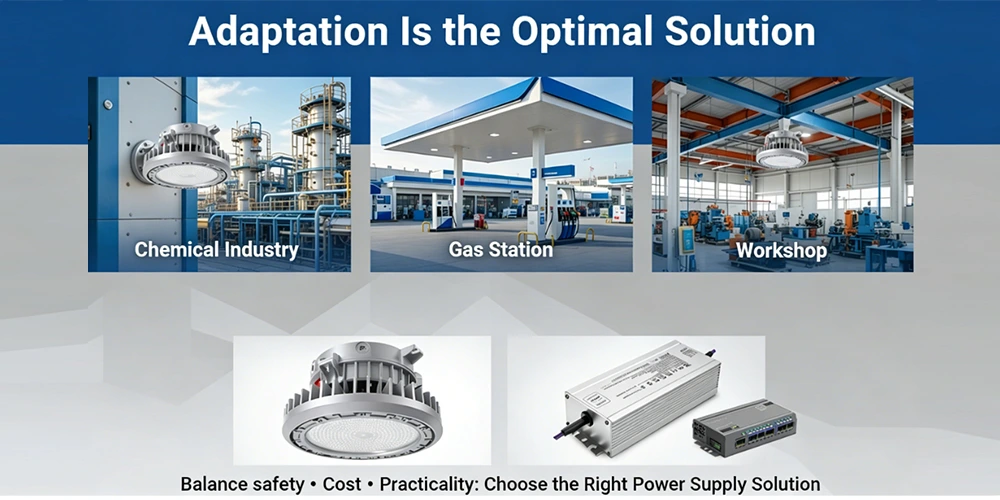
For enterprises, when selecting a power supply solution for explosion-proof luminaires, there is no need to blindly pursue potted power supplies, nor to neglect safety to save costs. Making a comprehensive judgment based on the on-site risk grade, working conditions and maintenance convenience to match the power supply solution to actual usage requirements is the optimal approach that balances safety, cost and practicality.
If you are unsure which power supply solution is suitable for your explosion-proof luminaires in your specific on-site environment, you can contact our technical team for professional customized recommendations and product solutions!