Both Zone 21 and Zone 22 describe how often an explosive dust-in-air mixture is present.
Zone 21 is a location where an explosive dust cloud is likely to occur occasionally in normal operation. Zone 22 is a location where a cloud is not likely in normal operations, and, if one forms, it persists only briefly.
For hazardous location lighting, Zone 21 calls for Category 2D equipment (EPL Db) with a dust-tight enclosure, usually marked Ex tb. Zone 22 usually allows Category 3D (EPL Dc), usually marked Ex tc, except where the dust is conductive.
What is the difference between Zone 21 and Zone 22?
Zone 21 defines an area where combustible dust is likely to occur occasionally during normal operations. Zone 22 defines an area where combustible dust is not likely to occur during normal operation, and if it does occur, persists only for a short period.
Under EN/IEC 60079-10-2 (Classification of areas - Explosive dust atmospheres), the primary driver of zoning is the release source:
- Zone 20: Continuous hazard inside containment (cyclones, silos, mills). Luminaires are virtually never installed here.
- Zone 21: Primary grade of release. Areas immediately outside bag-dump stations, feed hoppers, conveyor transfer points, or sampling ports.
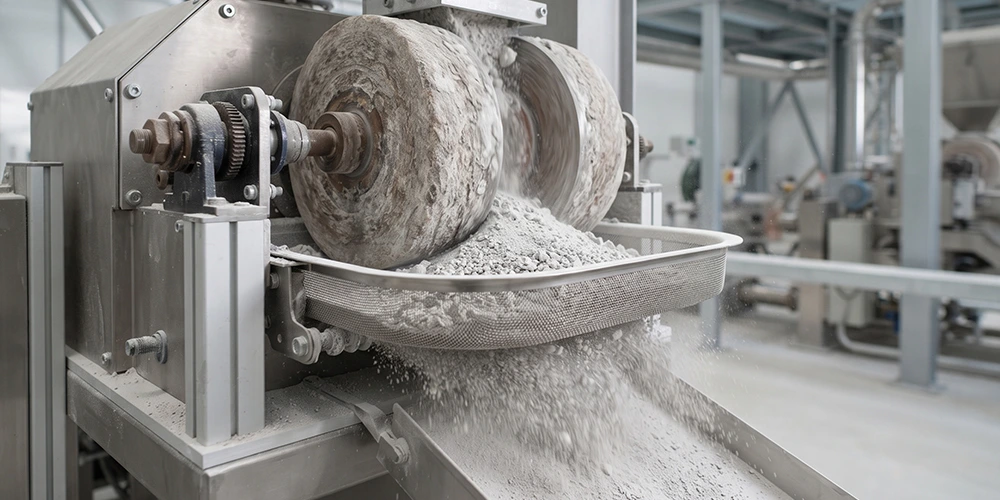
- Zone 22: Secondary grade of release. Surrounding warehouse floors, bagging lines with local exhaust, or areas where dust escapes only during accidental mechanical seal leaks.
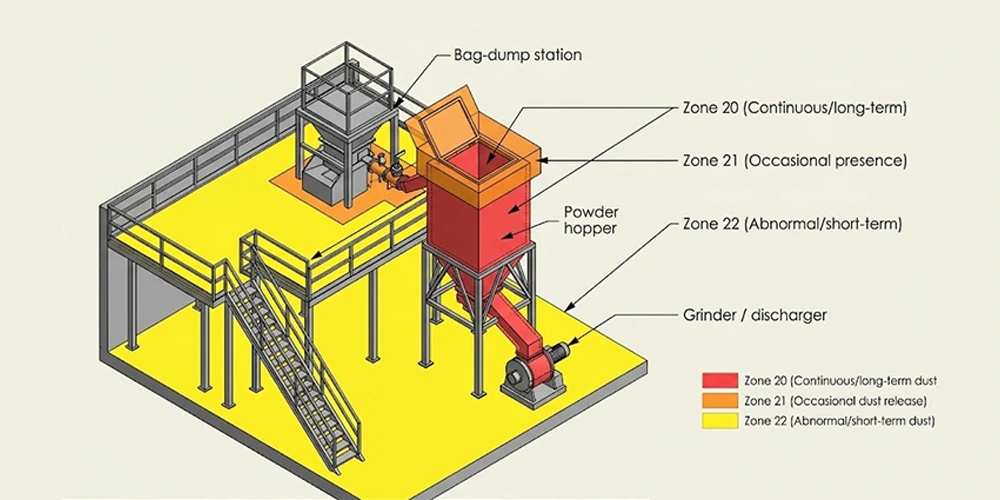
For more details about ATEX zone classification, please check our previous post: What Do Zone 0, 1, 2, 20, 21 and 22 Mean for Explosion-Proof Lighting.
The lighting requirements for Zone 21 and Zone 22:
|
|
Zone 21 |
Zone 22 |
|
Hazardous presence |
Likely occasionally in normal operation |
Unlikely, brief abnormal periods |
|
ATEX equipment category |
Category 2D |
Category 3D (2D if conductive dust is present) |
|
Equipment protection level (EPL) |
Db |
Dc |
|
Typical protection type |
Ex tb (protection by enclosure) |
Ex tc (protection by enclosure) |
|
Ingress Protection (Non-conductive IIIA/IIIB) |
Minimum IP6X |
Minimum IP5X |
|
Can equipment rated for the higher zone be used here? |
Yes (Zone 21 gear works in Zone 22)
|
N/A
|
|
Typical applications |
Bag-emptying stations, open feed points, and filter discharge points where dust is released as part of the process |
Packaging areas, finished-goods warehouses, and rooms surrounding process equipment when housekeeping keeps dust layers thin and infrequent |
Why does the zone change the lighting requirements?
A dust zone describes the chance that a cloud exists. The luminaire has to make sure it is never the ignition source when one does.
A luminaire can ignite dust in two ways: a hot surface or arc inside the enclosure contacts a cloud, or a layer of dust settles on a hot surface and smolders or ignites.
In Zone 21, a cloud is a normal event, so the enclosure has to keep dust out entirely. That is why Zone 21 equipment is dust-tight. If dust reaches the driver on the LED board, there is an ignition source and fuel together.
In Zone 22, a cloud is rare, so the standards accept a lower protection level (Dc) and, for non-conductive dust, a dust-protected enclosure (IP5X).
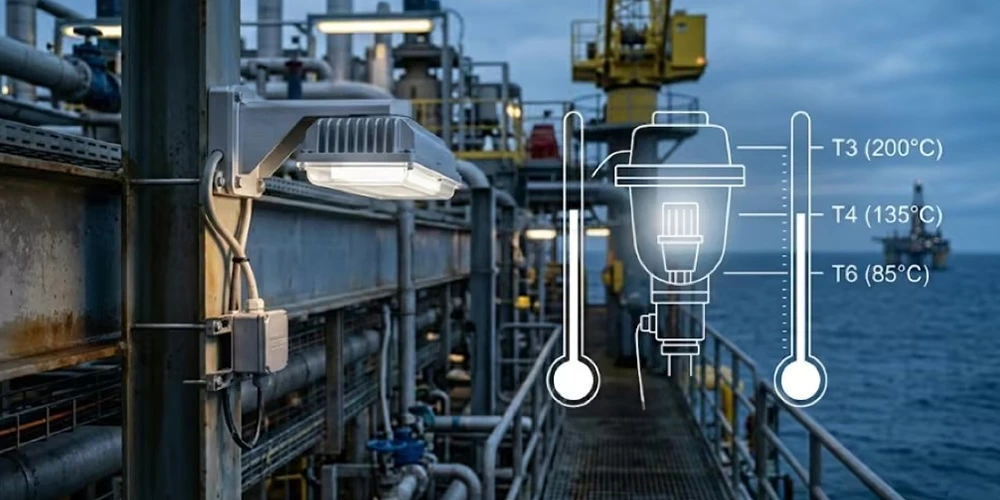
Surface temperature is controlled in both zones. For dust, the limit is set by the lower of two values: the ignition temperature of the dust cloud and the glow temperature of the accumulated dust, reduced by a safety margin.
Many luminaires carry a maximum surface temperature marking such as T80 °C or T90 °C. That marking must be checked against the specific dust present on site.
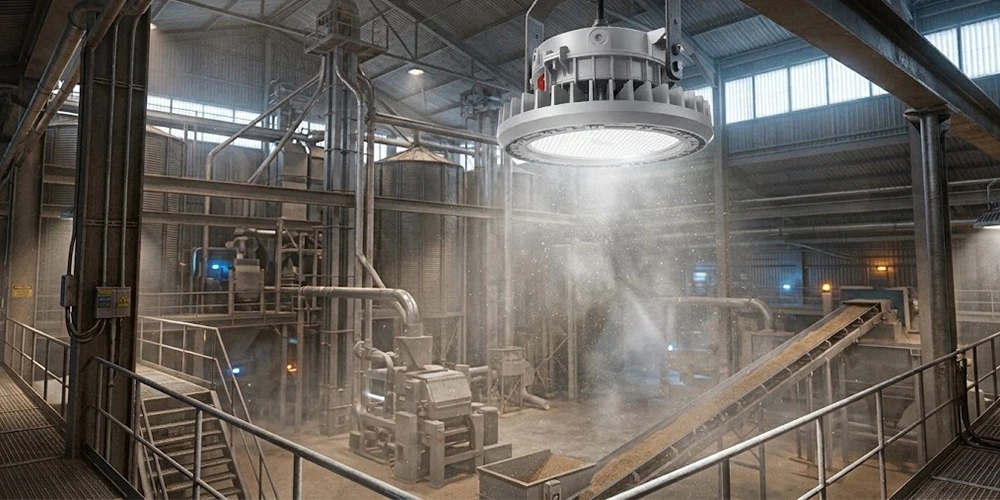
Can you use a Zone 21 luminaire in Zone 22?
A Zone 21 luminaire can go in Zone 22 if its dust group and temperature class still fit the dust. A Zone 22 luminaire cannot go in Zone 21.
Equipment with higher protection is acceptable in lower risk zone, and equipment certified only for Zone 22 is not permitted in Zone 21.
“Wouldn’t that mean overspending in Zone 22?”
Sometimes.
The cost of a higher category on a few fixtures is small compared with the cost of discovering, after a process change or a classification review, that an area is now Zone 21. Fewer luminaire types on a site also simplifies spares and maintenance. This is a project decision, and the zone assignment itself should stay accurate.
Is Zone 22 always the lower specification?
No. Conductive dust changes the rule.
For conductive dust, the ATEX category requirement for Zone 22 rises to Category 2, the same as Zone 21.
For Group IIIA (flyings) and Group IIIB (non-conductive dust like flour/grain), Zone 22 allows IP5X housings. For Group IIIC (conductive dust like carbon black or metal powder), IEC 60079-31 mandates IP6X even in Zone 22.
So you should check the luminaire’s certificate and dust group marking (IIIA, IIIB, or IIIC) against the dust environments.
Check this early, because a Zone 22 schedule that assumed Category 3D throughout can be wrong for areas handling metal dusts.
Working from a zone classification report and a luminaire schedule?
Share with us, and our team can recommend suitable lighting solutions.