Most engineers and site managers pay close attention to Ex explosion-proof ratings when selecting lighting for hazardous locations, but few realize that corrosion is an invisible killer quietly shortening equipment life and eroding safety.
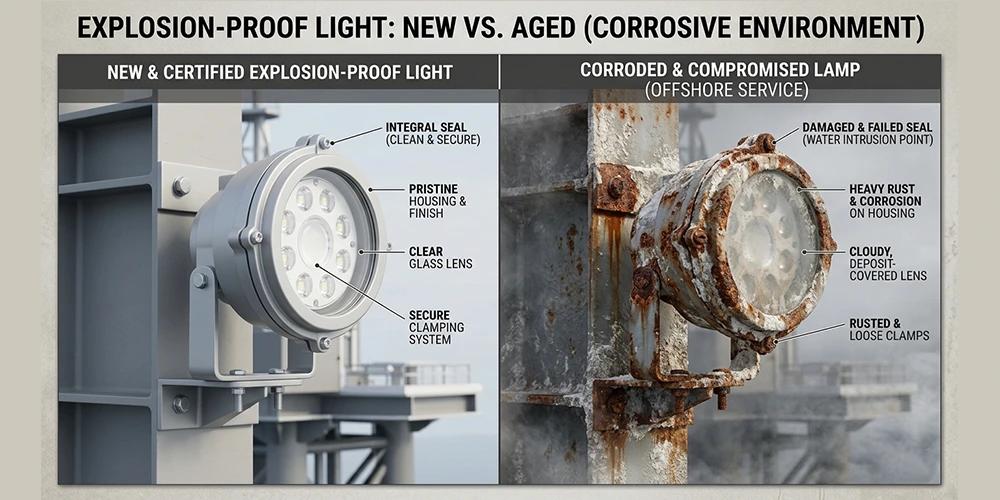
A common scene in industrial sites: an explosion-proof light still holds valid certification, shows no signs of impact or electrical burnout, yet stops working completely. The housing is rusted, seals are cracked, moisture has seeped inside, and the once-reliable flameproof structure is no longer intact. This is not an accident—it is the inevitable result of ignoring corrosion.
Corrosion is never just a surface defect. For explosion-proof lights, it directly shortens service life, drives up maintenance costs, and eventually turns certified safe equipment into a hidden safety hazard.
Where Corrosion Attacks Most
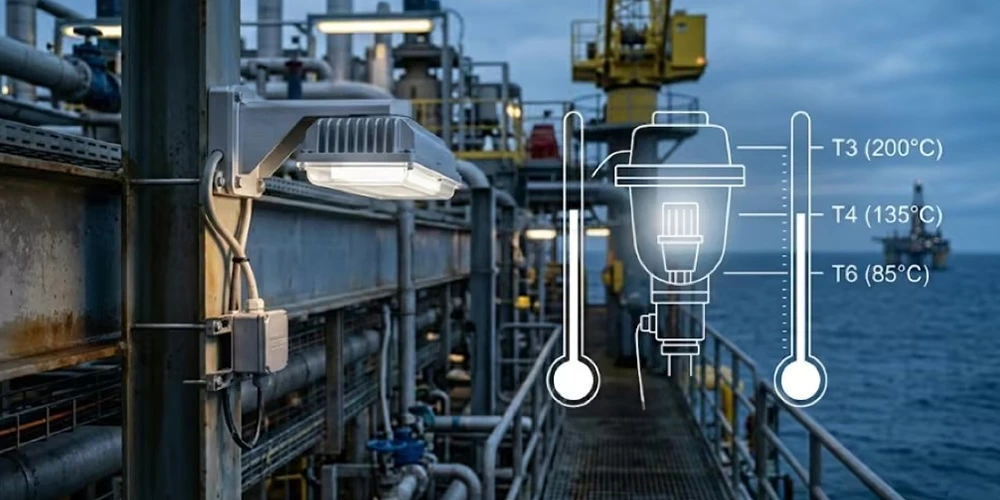
The harshest corrosive environments almost always overlap with hazardous areas, creating double pressure on lighting equipment. Offshore platforms and coastal facilities face persistent salt spray and high humidity; chemical and petrochemical plants are exposed to acid, alkali, sulfide and other corrosive gases; wastewater treatment plants combine heavy moisture with biological corrosion; and high-temperature, high-humidity workshops accelerate material aging.
In these places, corrosion does not stop—it erodes light fixtures nonstop, every single day.
How Corrosion Ruins Explosion-Proof Lights
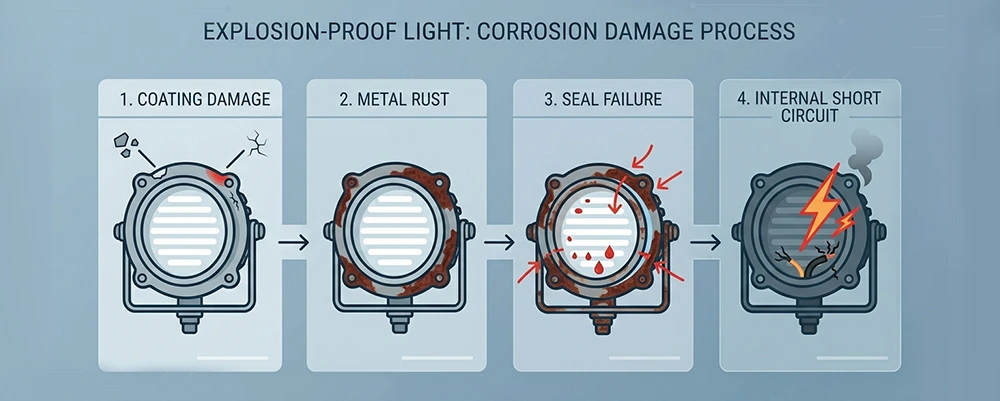
Corrosion follows a clear chain of damage that starts from the surface and ends in safety risks. It first breaks down the protective coating, exposing the internal metal to air and corrosive media. Then metal oxidizes and rusts, weakening structural strength and seizing threaded connections. Seals harden and fail, allowing water vapor and dust to enter the fixture.
Once inside, moisture damages circuits, causes poor contact and short circuits, leading to abnormal temperature rise and electrical arcing. The most dangerous result is the loss of flameproof integrity: a certified explosion-proof light can no longer contain internal sparks, turning it into a potential ignition source for flammable gases or dust.
In short, corrosion destroys seals, damages circuits, and finally defeats the core safety function of explosion-proof lighting.
Material Choice Is the Best Anti-Corrosion Defense
Not all metal or structural materials perform the same against corrosion, and the right material choice is the most effective first line of defense.
Copper-free aluminum alloy is our preferred solution for most industrial scenarios. It avoids galvanic corrosion, delivers stable anti-corrosion performance, stays lightweight and offers excellent heat dissipation, making it ideal for general industrial and offshore non-core areas with professional surface treatment.
For highly corrosive scenes such as chemical plants and wastewater stations, GRP linear lights are a better choice. This material is completely rust-proof, has strong chemical and salt spray resistance, and is non-metallic with no spark risk.
Many users fall into misunderstandings: ordinary aluminum with copper content corrodes quickly in salt and chemical environments; stainless steel is not universal, with high cost, heavy weight, and limited resistance to strong acids; thin surface coatings peel off easily and cannot provide long-term protection.
Choose the Right Light for Your Corrosive Environment
For offshore and coastal platforms, prioritize marine-grade corrosion resistance with copper-free aluminum or 316L stainless steel, and be sure to include anti-condensation and high-protection sealing design. For chemical plants, focus on GRP or heavy anti-corrosion coating structures that can block strong corrosive gases. For wastewater treatment sites, equip lights with both moisture-proof and anti-corrosion functions, and inspect seals and connectors regularly.
The most important principle is: never rely only on Ex certification. A truly safe explosion-proof light must be designed to resist the corrosion of your working environment.
Conclusion
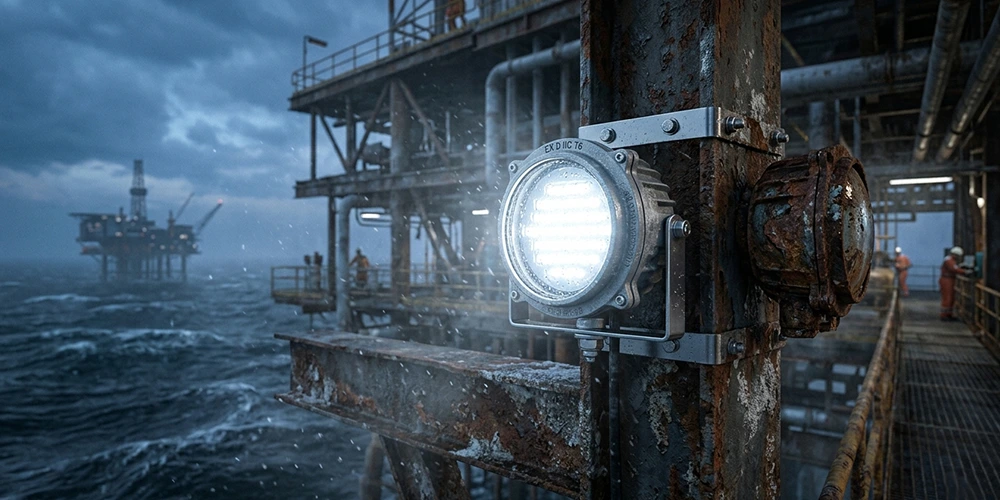
Explosion-proof does not mean durable. In hazardous areas, corrosion is the key factor that determines the real service life and long-term safety of lighting equipment.
Whether it is copper-free aluminum for general industrial use or GRP for high-corrosion scenes, choosing the right anti-corrosion material is as important as choosing the right explosion-proof level. For teams working in offshore, chemical, wastewater, or coastal hazardous environments, corrosion resistance is not an extra option—it is a necessary safety requirement.