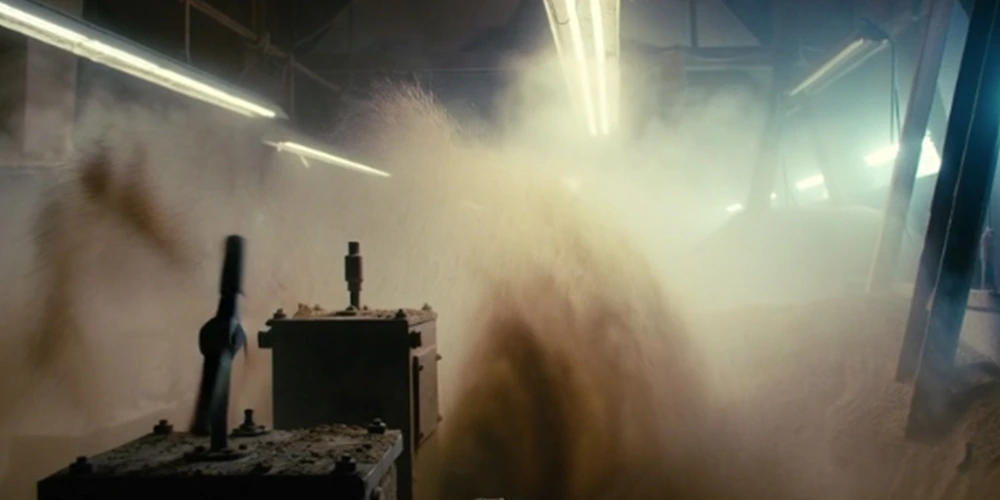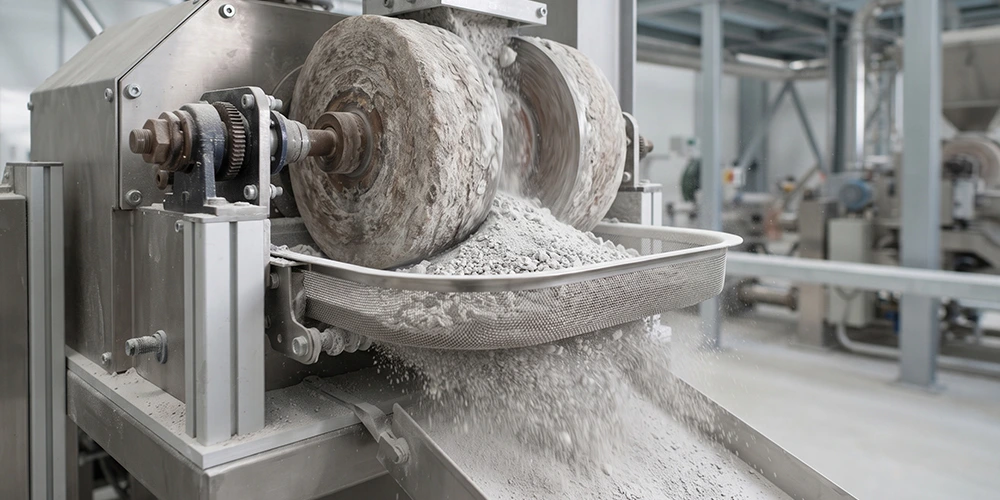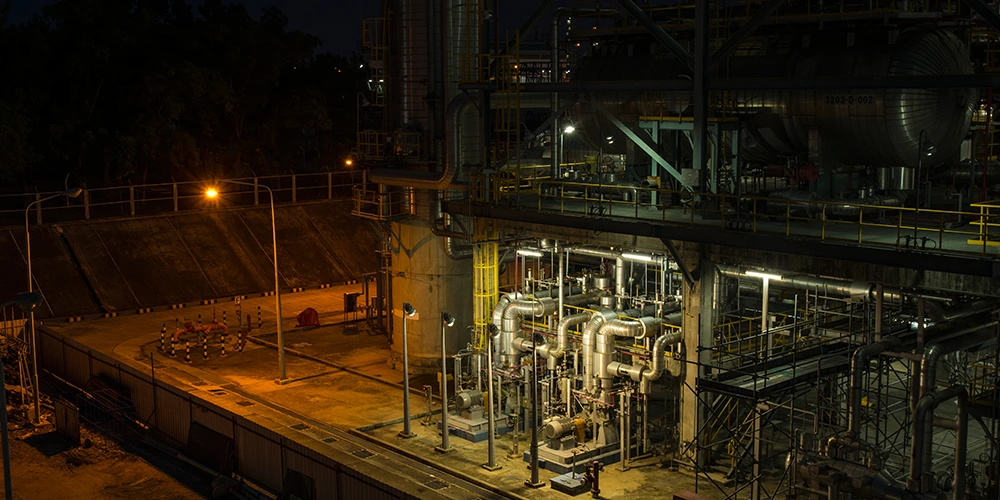

In industrial scenarios such as grain processing plants, woodworking workshops, coal mines, and chemical powder production lines, dust accumulation is a common but easily overlooked problem. What many fail to realize is that combustible dust, when mixed with air and exposed to an ignition source, can trigger devastating dust explosions or fires. Lighting equipment, as a permanent electrical device in these spaces, is a high-risk potential ignition source if not specially designed.
Explosion-proof lighting, engineered to eliminate all possible ignition points, is not just a "compliance option" but a life-saving necessity in dust-hazardous areas. This article breaks down the hidden ignition risks of dust accumulation, explains the core value of explosion-proof lighting, and clarifies its key application requirements—helping industrial managers, safety engineers, and equipment purchasers grasp the critical knowledge of dust explosion prevention.
- The Invisible Danger: How Dust Accumulation Leads to Ignition
- Explosion-Proof Lighting: The Core Solution for Dust Hazard Zones
- Key Application Standards & Zone Classification for Dust Hazard Areas
- Why Conventional Lighting Can’t Replace Explosion-Proof Lighting in Dust Zones
- Explosion-Proof Lighting Is the "First Line of Defense" Against Dust Ignition
The Invisible Danger: How Dust Accumulation Leads to Ignition
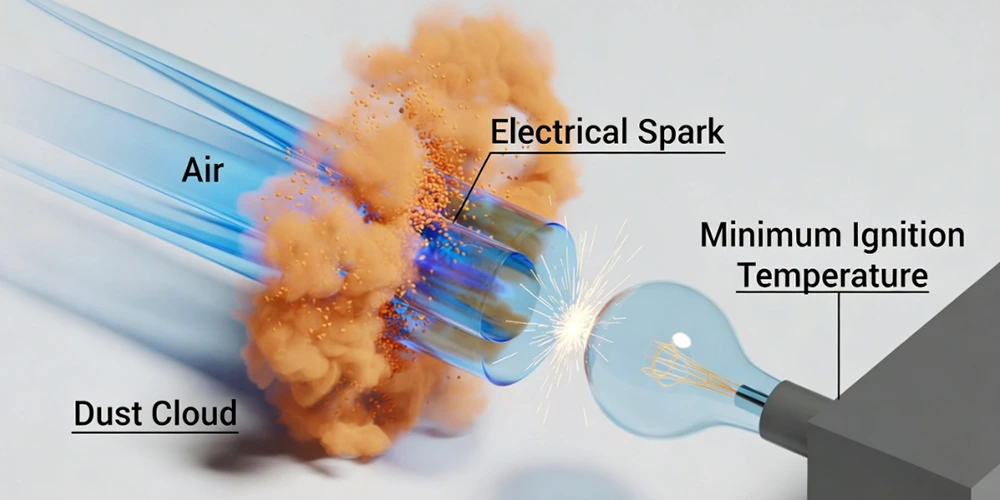
Combustible dust (e.g., grain dust, wood dust, coal dust, plastic powder, metal powder) is the core hazard of dust explosions, and its ignition is a three-element chain reaction (combustible dust + air + ignition source). Lighting equipment becomes a trigger for this chain for three key reasons:
- Electrical Arcing & Sparking: Conventional lighting may produce electrical arcs or sparks due to wiring faults, switch contact wear, or bulb breakage—even a tiny spark can ignite dust clouds suspended in the air.
- Surface Overheating: Incandescent lamps, non-heat-dissipating LED fixtures, or damaged ballasts can cause surface temperatures to exceed the minimum ignition temperature (MIT) of combustible dust. Accumulated dust on the lamp surface further traps heat, accelerating temperature rise and igniting the dust layer or surrounding dust clouds.
- Mechanical Friction: Loose parts in ordinary lighting (e.g., lamp shade, base) may generate friction sparks during operation, which is enough to ignite highly flammable dust (e.g., aluminum powder, magnesium powder).
Notably, even a thin layer of dust (as little as 0.8mm) on lighting equipment can cause heat accumulation and ignition risks. In closed or poorly ventilated spaces, the risk of dust cloud formation and explosion is exponentially increased.
Explosion-Proof Lighting: The Core Solution for Dust Hazard Zones
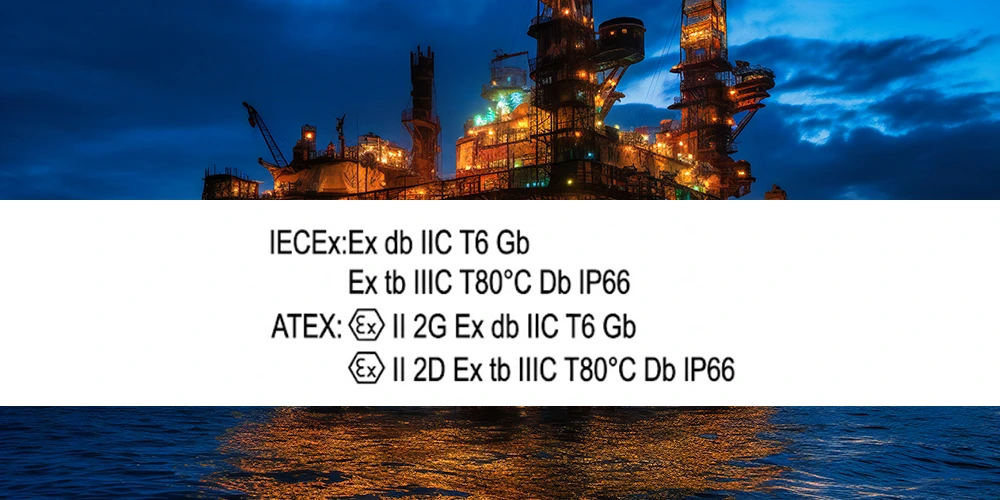
Explosion-proof lighting is designed in strict accordance with international and regional explosion-proof standards (e.g., ATEX, IECEx, NEC Article 500, CEC Division 1/2) to eliminate all potential ignition sources in dust-hazardous environments. Its core design principles and functional features target dust ignition risks directly:
Explosion-Proof Enclosure Design
Adopts a robust metal or high-strength non-metallic enclosure with flameproof joints (gap design). Even if an internal ignition occurs accidentally, the enclosure can contain the flame and cool the combustion products to prevent them from igniting the external dust cloud or dust layer.
Overheat & Spark Suppression
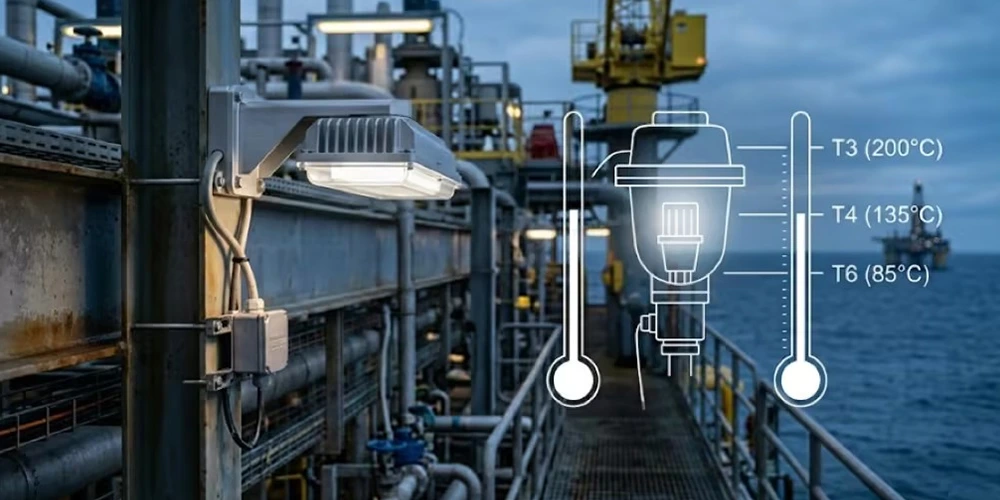
Uses low-temperature light sources (e.g., high-efficiency LED) with built-in intelligent temperature control and heat dissipation systems, ensuring the surface temperature is always below the MIT of common combustible dust.
Wires and connectors use flame-retardant, dust-tight materials with sealed connections to prevent electrical arcing and spark leakage; internal circuits are equipped with overcurrent/overvoltage protection to avoid fault sparks.
Dust-Tight & IP Rating Compliance
Meets high IP protection ratings (at least IP65, and IP66/IP67 for severe dust environments) to prevent dust from entering the lamp interior and accumulating on heat-generating components, avoiding heat trapping and ignition.
Anti-Friction & Impact Resistance
All structural parts are fixed and sealed without loose components; the lamp surface is smooth and wear-resistant to prevent friction sparks from collision or vibration, and the enclosure is impact-resistant to avoid damage from falling objects in industrial sites.
Key Application Standards & Zone Classification for Dust Hazard Areas
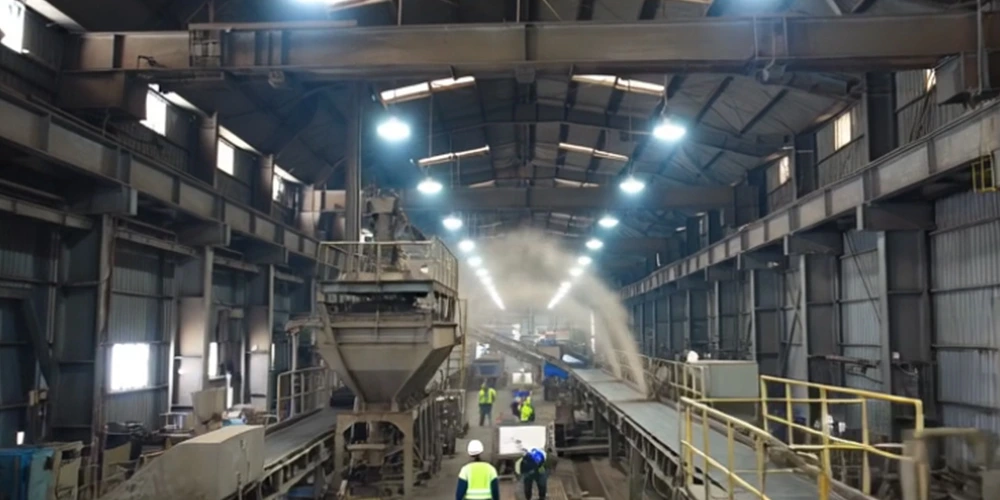
To select and install explosion-proof lighting correctly, it is critical to classify dust hazard zones and comply with corresponding standards—one size does not fit all for different dust types and site conditions:
Zone Classification (per IEC 61241 & NEC/CEC):
- Zone 20: A permanent dust cloud or continuous dust layer exists (e.g., grain silo interiors, coal mine conveyor chutes). Requires highest level explosion-proof lighting (Ex tD A21).
- Zone 21: Dust clouds may form under normal operating conditions (e.g., woodworking workshop processing areas, powder mixing stations). Requires Ex tD A21/A20 explosion-proof lighting.
- Zone 22: Dust clouds form only under abnormal conditions (e.g., grain processing plant packaging areas, dust collection system secondary areas). Requires Ex tD A22 explosion-proof lighting.
Core Compliance Requirements:
- The lamp’s maximum surface temperature (T-rating) must be 25°C lower than the MIT of the site’s combustible dust (e.g., T6 for dust with MIT ≤ 85°C).
- All electrical components must be certified for dust explosion-proof; installation must use dust-tight wiring accessories and avoid exposed wiring.
- Regular cleaning and maintenance of the lamp surface to prevent dust accumulation—even explosion-proof lighting cannot eliminate risks from excessive dust buildup.
Why Conventional Lighting Can’t Replace Explosion-Proof Lighting in Dust Zones
Many enterprises attempt to use "sealed ordinary LED lamps" or "waterproof lamps" as a substitute for explosion-proof lighting to save costs, but this creates a fatal safety loophole:
Conventional sealed lamps lack flameproof enclosure design—internal ignition will directly spread to the outside and ignite dust.
Their heat dissipation performance is poor; dust accumulation easily causes overheating, and there is no overheat protection mechanism for dust hazards.
Sealing parts are easy to age and crack in industrial environments, leading to dust entry and internal component failure.
Compliance note: In North America (US/Canada), the NEC Article 502 and CEC dust hazard regulations explicitly mandate explosion-proof lighting for Zones 20/21/22; non-compliant lighting will result in project acceptance failure, fines, and even legal liability for accidents.
Explosion-Proof Lighting Is the "First Line of Defense" Against Dust Ignition
Dust accumulation is a silent killer in industrial sites, and lighting equipment is a high-risk ignition source that cannot be ignored. Explosion-proof lighting, through targeted design and strict compliance with explosion-proof standards, cuts off the dust ignition chain from the source—protecting personnel safety, equipment operation, and enterprise property.
For industrial sites with combustible dust, selecting explosion-proof lighting is not just a safety investment, but a legal and operational prerequisite. It is equally important to match the lamp to the dust hazard zone, conduct regular cleaning and maintenance, and train staff on dust explosion prevention knowledge—only a comprehensive safety system can truly eliminate hidden dust ignition hazards.
If you need to select explosion-proof lighting for specific dust scenarios (e.g., food processing, metal powder production), refer to the official standards of ATEX, IECEx, NFPA (NEC), or CSA Group (CEC) for authoritative guidance, and choose certified products from professional explosion-proof equipment manufacturers.