
In high-risk industries such as oil, gas, mining, and chemical processing, explosion-proof lighting is not merely a tool for illumination—it is a non-negotiable safety barrier, a streamline for operational efficiency, and a cornerstone of environmental responsibility. Guided by global safety certifications like ATEX (mandatory for the EU) and IECEx (globally recognized voluntary certification), special color and purpose-designed explosion-proof lights translate abstract safety protocols into intuitive visual cues.
- Beyond Visibility—Color & Purpose as Core Safety Drivers
- Amber: Lighting That Puts Ecology First
- Red (620-750nm): The Lifeline for Emergency Responses
- Green (500-570nm): "Safe to Proceed" Visual Confirmation
- Blue (450-495nm): Maintenance & Restricted Access Control
- White (4000K-5000K): High-Definition General & Precision Lighting
- Purple (380-450nm): High-Efficiency Sterilization & Explosion-Proof Protection
- Special Purpose Explosion-proof Lights: Tailored for High-Risk Scenarios
- Emergency Backup Explosion-proof Lights
- High-Power Explosion-proof Floodlights
- Miniature Explosion-proof Indicator Lights
- Portable Explosion-proof Work Lights
- Business & Compliance Takeaways: Choosing the Right Explosion-proof Lighting
Beyond Visibility—Color & Purpose as Core Safety Drivers
Choosing the right color and functional type aligns with both technical compliance (e.g., IEC 60079 technical standards) and practical goals: reducing human error, minimizing ecological impact, and ensuring seamless workflows in explosive environments. Below is a detailed breakdown of how special colors and tailored purposes drive value across high-risk scenarios.
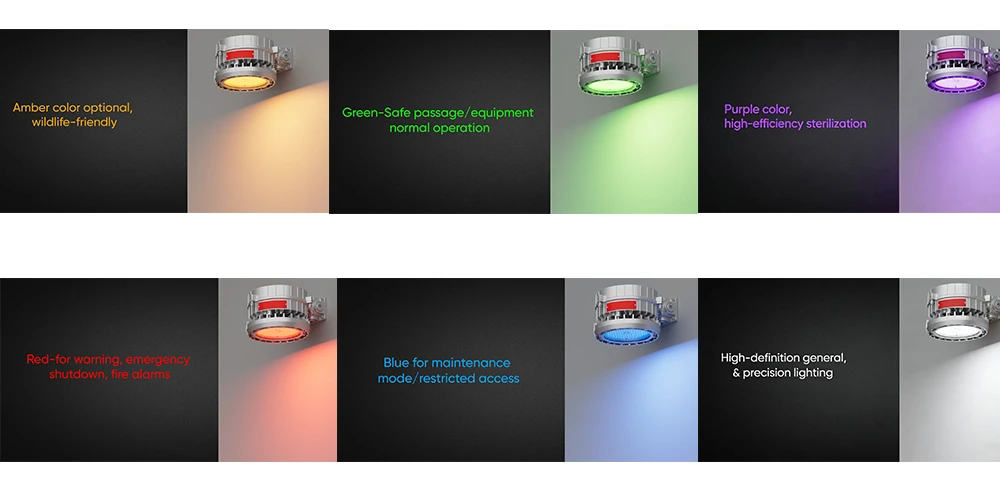
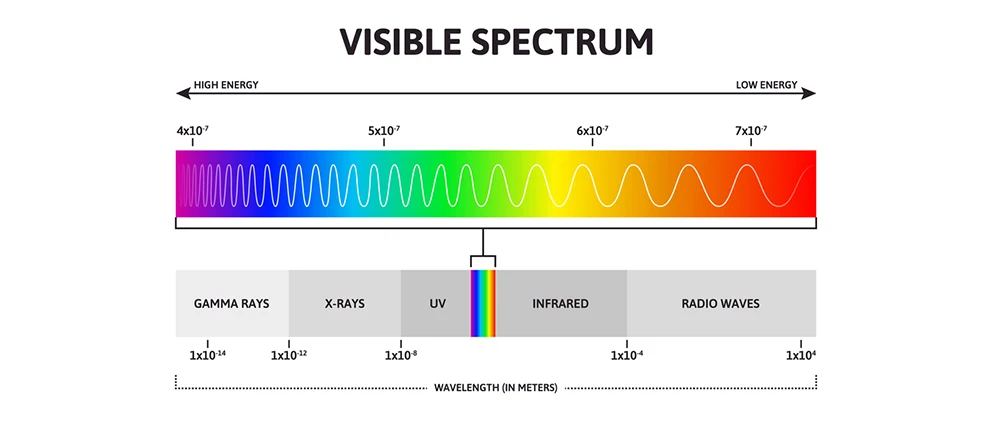
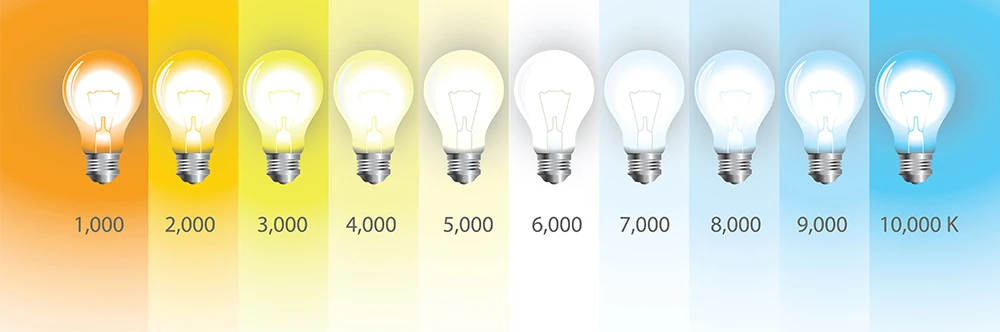
Every color option for explosion-proof lighting is built to solve real headaches across different industries—their designs weave in key technical specs (like wavelength and color temperature) plus critical compliance rules (such as the ATEX Directive 2014/34/EU and IECEx certification). The "white" visible light from the sun and artificial sources isn’t actually a single color at all—it’s a mix of multiple hues, including the key trio: red, green, and blue. Most regular light fixtures cover a color temperature range that spans 2700K all the way up to 6500K.
Amber: Lighting That Puts Ecology First
Core Perks: Protecting wildlife, cutting light pollution, and holding up strong in tough outdoor spots.
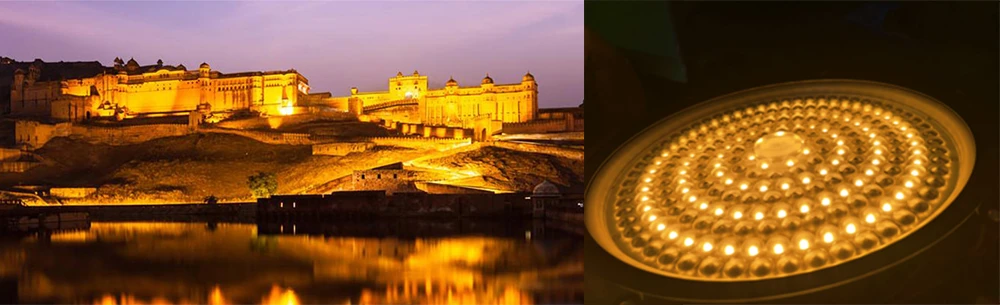
Amber light has a long wavelength and warm color spectrum, so it barely messes with the natural biological rhythms of wildlife—think nocturnal animals and marine creatures. Unlike cool-colored lights, it doesn’t throw off the navigation of birds, sea turtles, or insects. That’s why it’s the top pick for hazardous setups in outdoor and coastal areas.
Where You’ll See It: Offshore oil rigs, coastal refineries, mining sites near nature reserves, and gas pipelines that run through ecological protection zones.
What Makes It Stand Out (Compliance + Tech Wins): It checks all the boxes for the EU’s Ecodesign Directive (ErP) when it comes to low light pollution. Plus, its low-glare glow eases eye strain for night-shift workers—and the corrosion-resistant housing (a non-negotiable for getting explosion-proof certification) means it holds up great in salty, dusty environments.
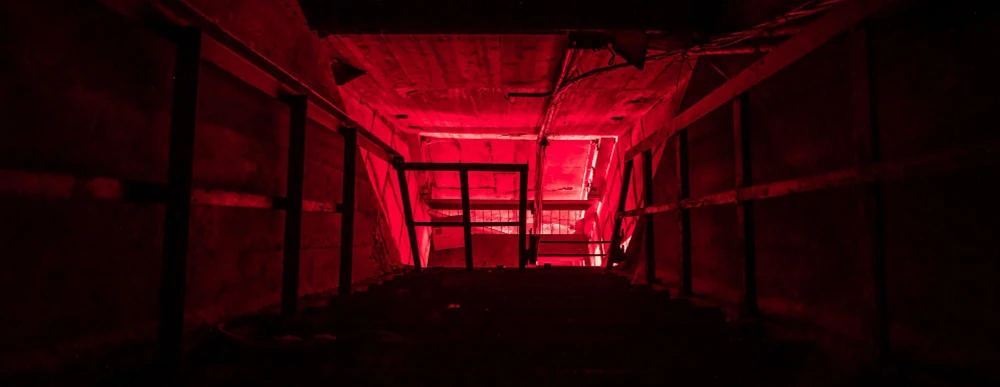
Red (620-750nm): The Lifeline for Emergency Responses
Core Value: Instant hazard alerts, superior smoke penetration, and optimized for human visual sensitivity.
Red is a universally understood emergency signal—and its unique wavelength cuts through smoke, fog, and dust far more effectively than other colors. This is critical for guiding safe evacuation in explosive environments, where every second counts.
Application Scenarios: Emergency shutdown zones in chemical plants, fire escape routes in oil refineries, and high-risk operational areas—like gas storage tanks—where instant warnings are a must.
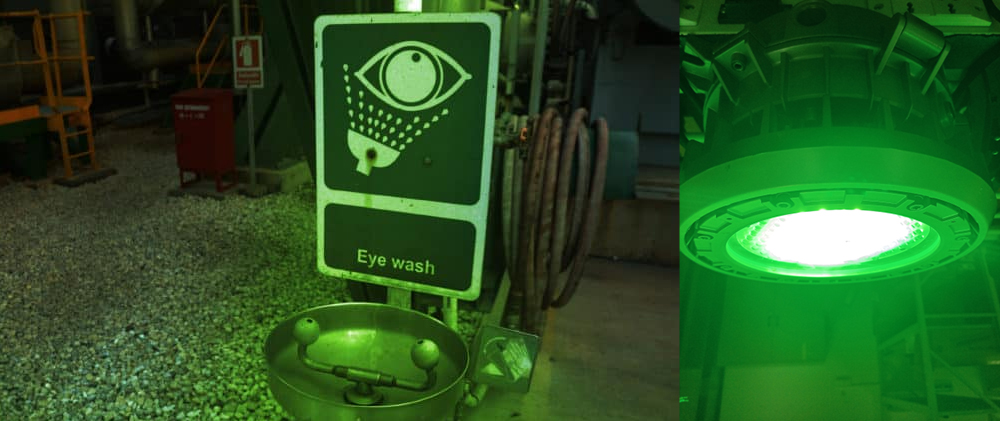
Green (500-570nm): "Safe to Proceed" Visual Confirmation
Core Value: Operational normalcy + safe access + workflow optimization.
Green signals "safety" and "normalcy" in industrial settings, helping workers quickly distinguish compliant equipment, authorized access routes, and stable operational status—reducing decision-making time and human error.
Dangerous chemicals are present on most industrial and mining sites. To prevent any severe eye damage should an accident occur, the industry standard is to use green LED lights next to the eyewash stations. When the eyesight is compromised, green is the last colour a person is able to differentiate, leading them to the life-saving eyewash station.
- Application Scenarios: Safe passageways in mining tunnels, certified equipment operation stations in pharmaceutical factories (where explosive dust may be present), "all-clear" zones after maintenance in oilfields.
- Compliance & Technical Advantages: Aligns with ISO 3864 (safety signs and colors) for visual safety communication; high color rendering index (CRI ≥ 80) ensures clarity even in low-light conditions, and ATEX/IECEx-certified housing prevents ignition risks.
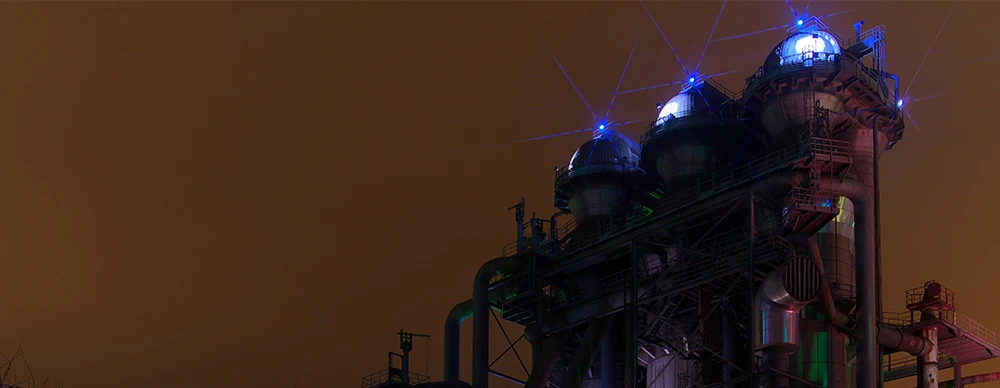
Blue (450-495nm): Maintenance & Restricted Access Control
Core Value: Restricted zone identification + maintenance safety + anti-counterfeiting (for sensitive areas).
Blue light is less common in general industrial lighting, making it ideal for signaling restricted access or ongoing maintenance—preventing accidental interference with equipment under service and protecting unauthorized personnel from hazards.
- Application Scenarios: Equipment maintenance zones in power plants (where explosive gas may accumulate), restricted laboratories in chemical facilities, sensitive instrument areas in offshore rigs.
- Compliance & Technical Advantages: Low brightness intensity (avoids glare during close-range maintenance) while maintaining visibility; corrosion-resistant and waterproof (IP66+ rating) for use in humid or chemical-exposed environments; compatible with ATEX/IECEx audit requirements for zone-specific lighting.
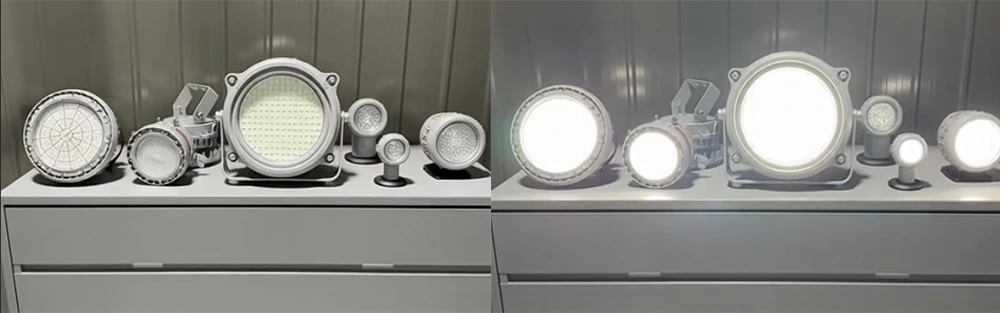
White (4000K-5000K): High-Definition General & Precision Lighting
Core Value: Universal visibility + precision operation + multi-scenario adaptability.
White explosion-proof lighting offers neutral, high-color-rendering illumination (CRI ≥ 90), making it essential for scenarios requiring detailed work, color accuracy, or general area lighting where no specific color coding is needed.
- Application Scenarios: Chemical laboratories (where color differentiation of samples is critical), equipment inspection stations in manufacturing plants, and general lighting in explosion-proof workshops.
- Compliance & Technical Advantages: Meets both ATEX and IECEx requirements for general hazardous area lighting; flicker-free design reduces eye strain during long shifts; adjustable brightness (dimmable 10%-100%) optimizes energy efficiency without compromising visibility.
Purple (380-450nm): High-Efficiency Sterilization & Explosion-Proof Protection
Core Value: Efficient sterilization + explosion-proof safety + long-term adaptability to harsh environments.
Purple (ultraviolet) light is a specialized explosion-proof lighting option, designed to work with ultraviolet sterilization tubes. It operates silently, realizing efficient sterilization while achieving explosion-proof protection—effectively eliminating harmful microorganisms in high-risk environments, and is suitable for stable long-term use in severe working conditions.
- Application Scenarios: The choice for sterilization in hazardous environments such as petroleum, chemical, military industry, medicine, and mines, as well as in dangerous places like offshore oil platforms and oil tankers
- Compliance & Technical Advantages: Explosion-proof ultraviolet lamps, when used in conjunction with ultraviolet germicidal tubes, operate silently throughout the process, are highly efficient, and environmentally friendly. While effectively sterilizing, they also have an explosion-proof function, making them suitable for long-term use in flammable, explosive, high-temperature, humid, and various corrosive, harsh environments.
AGC focuses not only on the safety and robust reliability of explosion-proof lighting fixtures, but also offers a wide range of light distribution and color temperature options. We provide all the RGB-Amber color configurations mentioned above.
Should you be interested, please feel free to reach out at info@agcled.com. We are more than happy to deliver professional explosion-proof lighting solutions for you!
Special Purpose Explosion-proof Lights: Tailored for High-Risk Scenarios
Beyond color coding, explosion-proof lights are designed for specific functional needs—ensuring optimal performance in the unique challenges of hazardous environments.
Emergency Backup Explosion-proof Lights
- Purpose: Provide immediate illumination during power outages (a common trigger for accidents in explosive environments).
- Key Features: Red or amber color (red for emergency alerts, amber for low-glare evacuation), backup battery (≥90 minutes of operation), automatic activation (no manual intervention), and compliance with IEC 60079-28.
- Application: Fire escape routes, emergency shutdown stations, and critical equipment areas in oil refineries and chemical plants.
High-Power Explosion-proof Floodlights
- Purpose: Long-distance illumination for large outdoor hazardous areas.
- Key Features: White or blue color (white for general coverage, blue for restricted large zones), high lumen output (≥10,000 lumens), IP68 waterproof rating, and corrosion-resistant aluminum housing.
- Application: Offshore drilling platforms, open-pit mines, and large-scale chemical storage yards.
Miniature Explosion-proof Indicator Lights
- Purpose: Signal equipment status (on/off, compliant/non-compliant) in tight spaces.
- Key Features: Green (normal), red (fault), or amber (standby) color, compact design (≤5cm diameter), low power consumption, and ATEX/IECEx certification for Zone 0/1 hazardous areas.
- Application: Control panels in gas pipelines, small-scale equipment in pharmaceutical factories, and instrument panels in mining machinery.
Portable Explosion-proof Work Lights
- Purpose: Mobile illumination for maintenance, inspection, or emergency response.
- Key Features: Rechargeable battery, adjustable color (white for precision work, red for emergency), shock-resistant housing, and hand-held or magnetic mounting design.
- Application: On-site maintenance of oil pipelines, emergency repairs in mining tunnels, and temporary lighting for offshore platform inspections.
Business & Compliance Takeaways: Choosing the Right Explosion-proof Lighting
For manufacturers, project managers, and safety officers, selecting special color and purpose explosion-proof lights requires balancing three core factors: target market compliance, application scenario needs, and ecological responsibility.
1. Compliance Alignment
- If operating in the EU, prioritize ATEX-certified lights (mandatory per Directive 2014/34/EU), ensuring color and function meet regional safety standards (e.g., ErP for ecological lighting).
- If targeting global markets: Opt for IECEx-certified products—their unified testing and public traceability streamline entry into Asia, Africa, and the Americas without repeating certifications.
- Bonus: IECEx-certified lights can often be adapted to ATEX requirements with minimal adjustments, thanks to shared IEC 60079 technical standards.
2. Scenario-Driven Selection
- Outdoor/ecological zones: Amber lights (wildlife-friendly + low light pollution).
- Emergency/evacuation routes: Red lights (smoke penetration + alert signaling).
- Precision work/inspection: White lights (high CRI + clarity).
- Maintenance: blue lights (targeted functionality).
- High-Efficiency Sterilization: Purple light (targeted functionality)
3. Long-Term Value
Color-coded and purpose-built explosion-proof lighting reduces accident rates (by up to 30% per industry reports), lowers maintenance costs (via long service life, durable construction, and modular design), and enhances brand trust—critical for high-risk industries where safety is non-negotiable.
Special color and special purpose explosion-proof lights are more than just "illumination tools"—they are an integrated solution for safety, efficiency, and sustainability in hazardous environments. By leveraging color psychology, technical compliance (ATEX/IECEx), and scenario-specific design, businesses can turn lighting into a competitive advantage: complying with local laws, protecting workers and ecosystems, and optimizing operations.