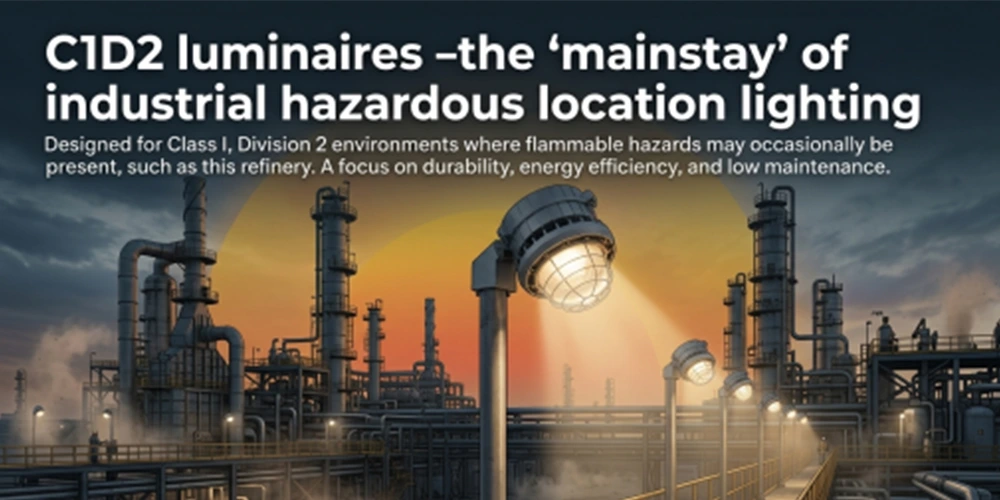

In the North American industrial sector, electrical safety is governed by the rigorous logic of the NEC 500 system. For electrical engineers managing oil and gas or chemical projects, it is an undeniable fact: Class I, Division 2 (CID2) rated luminaires dominate the majority of installation schedules.
Industry newcomers often find themselves asking: Given that more robust and stringently required CID1 fixtures exist, why has CID2 become the mainstream standard? This is not merely a matter of cost compromise, but a strategic decision rooted in the profound philosophy of North American electrical safety.
1. The "Probability Game" of Area Classification
The core of the NEC 500 system lies in the frequency of hazard exposure.
- Division 1 (D1): Hazardous substances are present continuously, intermittently, or periodically under normal operating conditions.
- Division 2 (D2): Hazardous substances are handled or processed, but will only escape in the event of abnormal conditions, such as equipment failure or a pipe rupture.
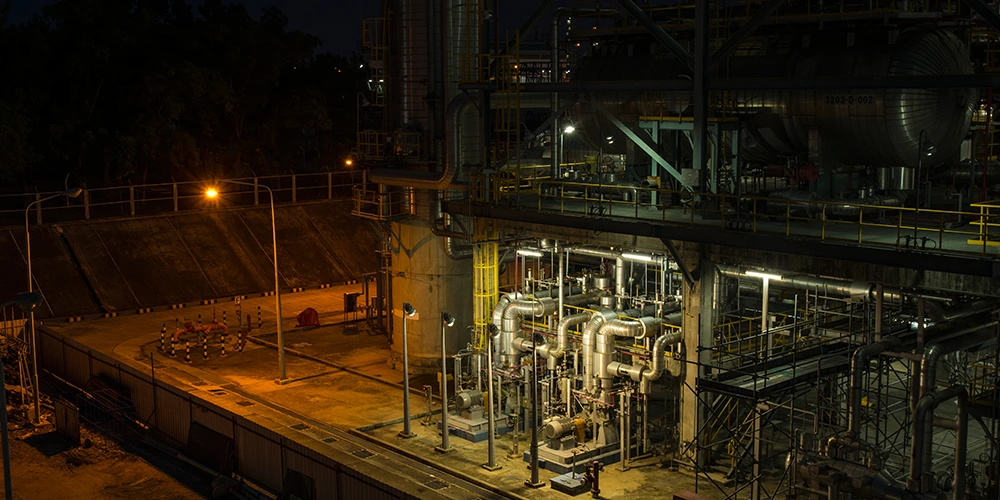
According to engineering statistics, the area designated as Division 2 in a typical modern refinery is often dozens of times larger than that of Division 1. As modern process technologies continue to enhance sealing performance, the vast majority of a site—excluding a few specific emission points—remains safe 99% of the time. This physical distribution directly dictates that C1D2 luminaires represent the most extensive demand on-site.
2. "Non-incendive" vs. "Explosion-proof": A Fundamental Shift in Philosophy
This represents the core design distinction within North American standards:
The "Contained Explosion" Logic of Division 1
For D1 areas, regulations mandate that luminaires must be Explosion-proof (XP). The underlying logic is containment: assuming hazardous gases have already entered the fixture and an internal explosion occurs, the enclosure must be strong enough to withstand the pressure and cool the escaping flames through precision-machined threads or flame paths. This construction is inherently heavy, bulky, and expensive.
The "Spark-Free" Logic of Division 2
In D2 areas, the NEC does not require "explosion-containment" capability. Instead, it mandates Non-incendive characteristics. The core principle is prevention: under normal operating conditions, no internal components shall produce sparks or thermal effects sufficient to ignite the surrounding atmosphere.
The LED "Dimensional Strike"
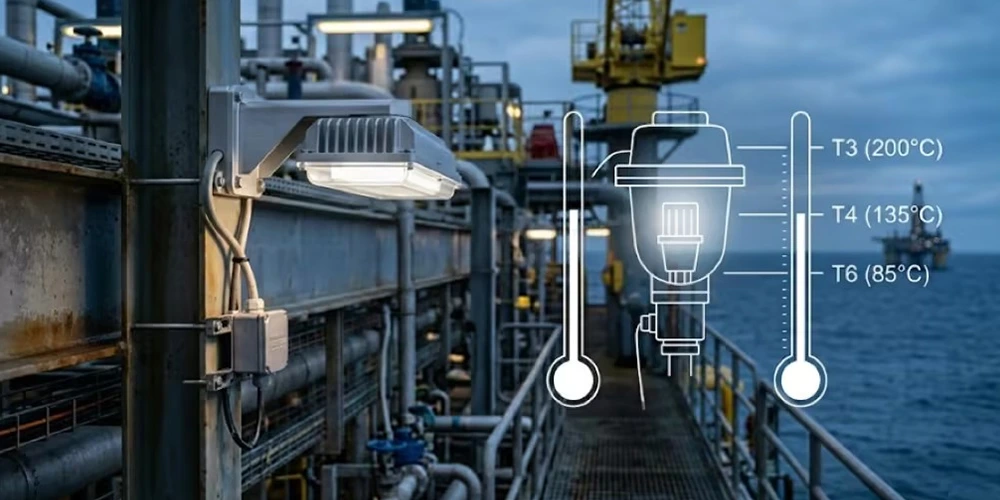
Traditional HID lamps (like Metal Halide) were often a liability in D2 areas due to their reliance on electric arcs and extreme operating temperatures. In contrast, modern LED luminaires naturally eliminate arcs and offer superior surface temperature control (T-ratings). Combined with high-grade industrial sealing (IP ratings), LEDs provide near-perfect reliability in Division 2 environments without the need for the "heavy-cast iron" architecture required for Division 1.
3. The "Total Economics" of Installation Systems
In the North American market, luminaire selection is inextricably linked to Wiring Methods.
The Shackles of C1D1: Installation requires the use of heavy-duty Rigid Metal Conduit (RMC), and mandatory conduit seals (seal-offs) must be installed at every fixture entry point. This not only inflates material expenses but also effectively doubles the labor hours required for installation.
The Flexibility of C1D2: C1D2 allows for more efficient wiring methods, such as Tray Cable (Type TC-ER) or restricted flexible cords. For large-scale projects featuring thousands of light points, this installation flexibility translates into millions of dollars in total cost savings.
4. Maintenance and Longevity: The Dividends of LED Technology
Since C1D2 luminaires are not encumbered by heavy, explosion-proof enclosures, they offer greater flexibility in terms of space and weight to optimize thermal management structures.
Segmented Power: This technology is easily integrated into the lightweight chassis of C1D2 fixtures. It allows for the adjustment of module power levels to precisely match the specific lighting requirements of the site, significantly reducing SKU complexity.
Optical Efficiency: C1D2 luminaires can be equipped with precision-engineered optics to achieve superior light distribution (such as Type V symmetrical patterns). This enables a larger area to be covered with fewer fixtures—a level of photometric performance that is difficult to achieve with the structurally constrained designs of Division 1 hardware.
A Return to Engineering Pragmatism
C1D2 luminaires dominate the market because they strike a perfect balance between safety, cost-effectiveness, and ease of installation. Far from being a compromise, it is the most scientifically sound electrical solution for Division 2 environments.
As industry experts, our recommendation remains consistent: Precision alignment and area-specific selection. While there is no substitute for Explosion-proof (XP) hardware in critical Division 1 zones, opting for high-efficiency, low-maintenance C1D2 LED luminaires in the extensive surrounding process areas is the true mark of professional engineering.