
- Core Philosophy: Prevention Over Containment
- Key Advantages: Delivering Tangible Value
- 1. Lightweight Design & Ease of Installation/Maintenance
- 2. Superior Cost-Effectiveness
- 3. High Protection & Environmental Resilience
- 4. Inherent Safety & Enhanced Reliability
- 5. High Efficiency & Exceptionally Long Service Life
- 6. Smart Features & Functional Integration
- Ideal Application: Protection Levels per IEC 60079 Standards
In industrial sectors where flammable atmospheres are a concern—such as oil and gas, chemical processing, pharmaceuticals, and energy—lighting is more than just illumination; it's a critical component of operational safety.
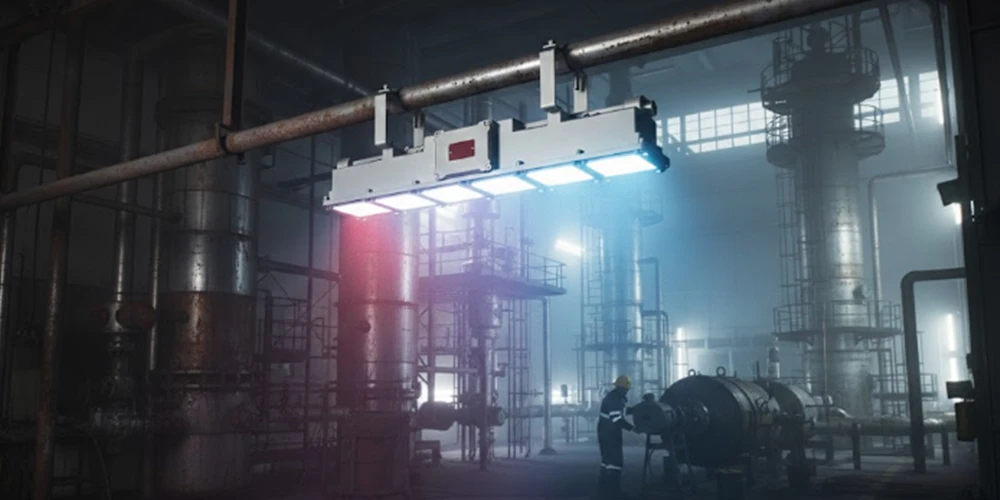
Among various explosion-protection techniques, Increased Safety "Ex e" luminaires have emerged as a preferred choice for many applications. Instead of relying on a heavy, bulky enclosure to contain an explosion, Ex e fixtures employ intelligent engineering to prevent ignition sources from occurring in the first place.
Core Philosophy: Prevention Over Containment
The fundamental advantage of Increased Safety lies in its protective concept, which differs essentially from the common Flameproof "Ex d" method:
Flameproof "Ex d": The philosophy is "Containment." The housing is massively robust to withstand an internal explosion and prevent flames from escaping to ignite the surrounding atmosphere. Think of it as an exceptionally strong "safe."

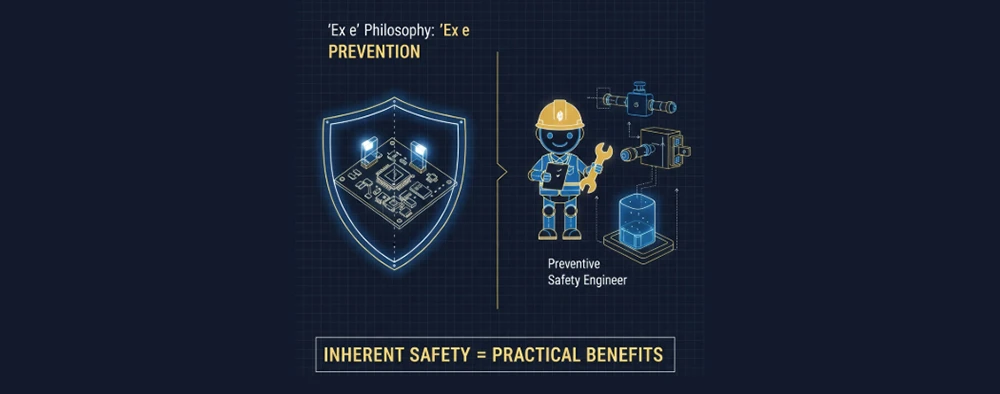
Increased Safety "Ex e": The philosophy is "Prevention." It applies enhanced protective measures to prevent the occurrence of excessive temperatures, arcs, or sparks capable of causing ignition during normal operation and under specified abnormal conditions. It acts more like a "preventive safety engineer."
This focus on inherent safety is the foundation for all its practical benefits.
Key Advantages: Delivering Tangible Value
1. Lightweight Design & Ease of Installation/Maintenance
Constructed with high-strength aluminum alloys or lightweight composite materials, Ex e luminaires are significantly lighter than their Flameproof equivalents. This translates directly to lower installation costs and risk: easier handling, faster mounting, and simpler maintenance in hard-to-reach or elevated locations.
2. Superior Cost-Effectiveness
Lower Initial Cost: The manufacturing process for Ex e enclosures is generally less complex than for the heavy castings required for Ex d.
Reduced Total Cost of Ownership (TCO): Combined with long lifespan, high energy efficiency, and minimal maintenance needs, Ex e luminaires offer compelling long-term savings on energy and upkeep.
3. High Protection & Environmental Resilience
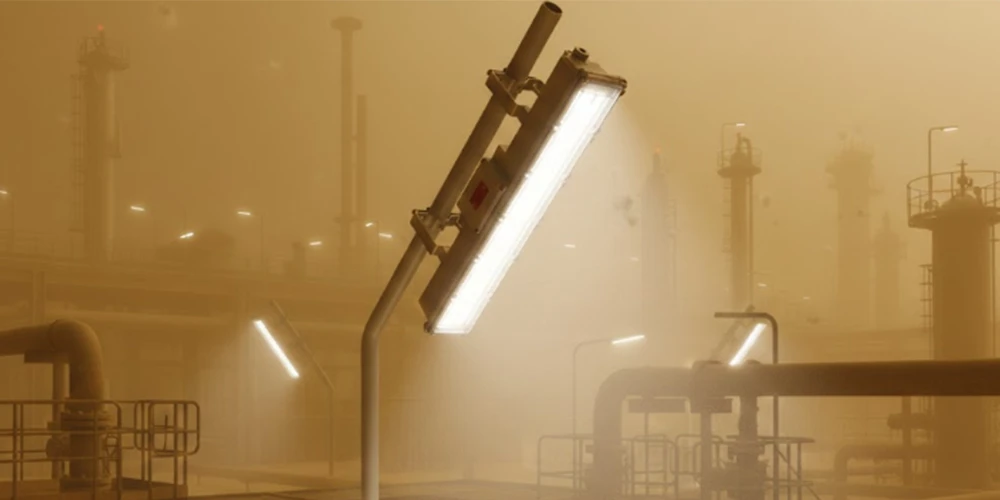
Ex e luminaires typically achieve high Ingress Protection (IP) ratings, such as IP66/67. This ensures complete protection against dust and powerful water jets, making them ideal for demanding environments—outdoors, wash-down areas, or coastal sites. Excellent thermal management also ensures safe surface temperatures under all conditions.
4. Inherent Safety & Enhanced Reliability
This is the core strength. Safety is engineered in through meticulous design:
Enhanced Electrical Safety: Requirements for creepage and clearance distances are significantly increased to prevent tracking and short circuits.
Secure Connections: Terminals are designed to maintain reliable, vibration-resistant connections.
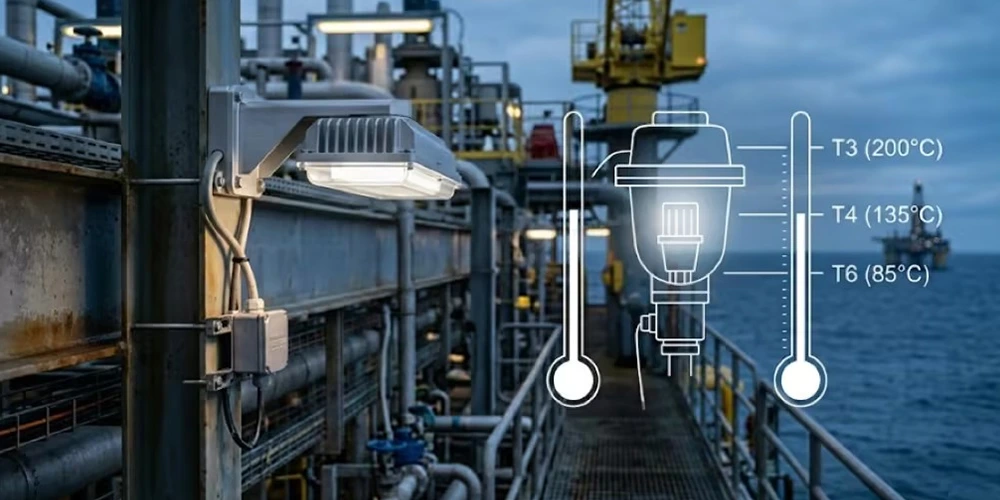
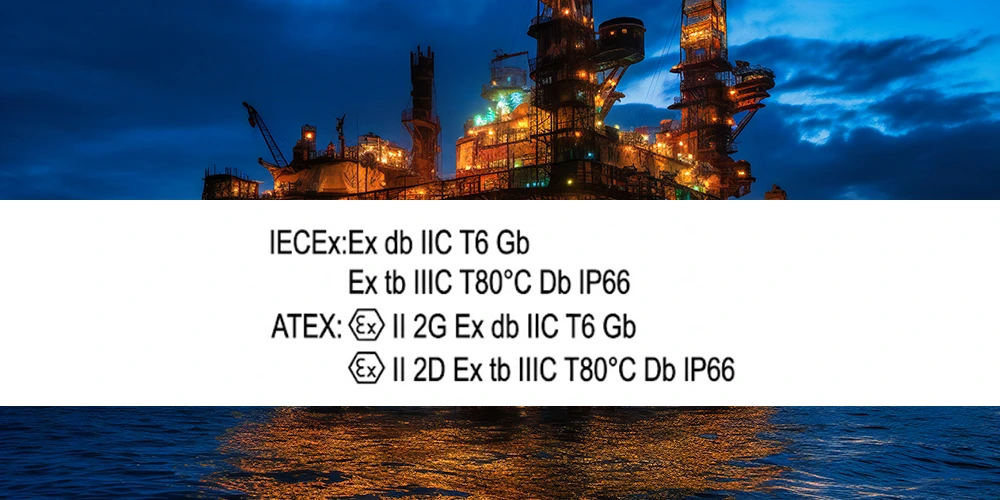
Stringent Temperature Control: Maximum surface temperatures of all components (LEDs, drivers) are carefully controlled and marked (T-class rating).
Protected Components: Critical parts like drivers are often potted or encapsulated for superior protection against moisture, corrosion, and vibration.
5. High Efficiency & Exceptionally Long Service Life
Naturally paired with modern LED technology, Ex e luminaires deliver high luminous efficacy (often >150 lm/W). With LED lifetimes of 50,000+ hours and stable driver operation, they enable maintenance-free operation for years, drastically reducing intervention in hazardous areas.
6. Smart Features & Functional Integration

Modern Ex e luminaires are highly advanced:
Smart Ready: Native support for 1-10V, DALI, or other control protocols allows integration into building management systems for demand-based lighting, energy savings, and remote monitoring.
Optical Flexibility: A variety of lenses allows for precise light distribution, from spot to flood.
Versatile Mounting: Designed for easy pole, wall, ceiling, or pipeline mounting.
Ideal Application: Protection Levels per IEC 60079 Standards
|
Zone Classification |
Explosion Protection Method |
Protection Level (EPL) |
IEC Standard Reference |
|
Zone 1 (High Risk) |
Increased Safety "Ex eb" |
Gb |
IEC 60079-7 |
|
Zone 2 (Normal Risk) |
Increased Safety "Ex ec" |
Gc |
IEC 60079-7 |
|
Zone 0 (Continuous Risk) |
Intrinsic Safety "Ex ia" (Required) |
Ga |
IEC 60079-11 |

The advantages of Increased Safety protection are fully realized when applied within its precisely defined scope. It is critical to match the protection level to the specific zone classification:
For Zone 2 applications, Increased Safety 'Ex ec' (per IEC 60079-7) provides the optimal balance of safety and efficiency where explosive atmospheres are unlikely to occur during normal operation. Zone 2 is defined as an area where a hazardous explosive atmosphere is not likely to occur in normal operation and, if it does occur, will exist for a short time only (e.g., areas around ventilation outlets, the periphery of process plants).
For Zone 1 applications, the more stringent Increased Safety 'Ex eb' (per IEC 60079-7) is required to ensure prevention of ignition sources even in areas where explosive atmospheres occur occasionally. Zone 1 is where an explosive atmosphere is likely to occur occasionally in normal operation. The enhanced construction requirements of the "eb" protection level make it suitable for this higher-risk zone.
Not Suitable for Zone 0: Zone 0, where an explosive atmosphere is continuously present or present for long periods, requires other protection techniques such as intrinsic safety (Ex ia).
The Increased Safety method offers tailored solutions—Ex eb for Zone 1 and Ex ec for Zone 2—ensuring optimal safety and compliance when the correct protection level is specified for the assessed risk.